
Laos or Vietnam: How to Choose the Best Country for Your Trip
Trying to decide between Laos or Vietnam? Both are incredible, but they offer very different types of trips: one slow and peaceful, the other full of contrast and energy.
We’ve spent over a month in each country, traveling north to south, staying in homestays, riding motorbikes, taking every type of bus imaginable, and exploring everywhere from small river towns to major cities.
This guide pulls together everything we learned so you can choose the country that actually fits the style of trip you want.
This comparison is written for travelers like us: budget-minded, culture-focused, introverts or extroverts who prefer real experiences over rushed itineraries, and backpackers deciding how to spend limited time and money.
If that sounds like you, you’re in the right place.
If you just want the quick version: choose Laos for calm days and quiet nature; choose Vietnam for variety, food, and high-energy travel.
But if you want the full picture – crowds, weather, budget, culture, safety, itinerary style, and more – keep reading.
DISCLOSURE: This post may contain affiliate links, which means we may earn a small commission if you book or buy something through them – at no extra cost to you. We only recommend things we’d actually use ourselves. Read more in our Privacy Policy.
Quick Decision: Laos or Vietnam (If You Don’t Want to Read the Whole Post)
- Budget travelers: Choose Laos for the lowest daily costs and a naturally cheaper pace.
- Food lovers: Choose Vietnam for world-class street food and endless variety.
- First-timers in Southeast Asia: Choose Vietnam for easy transport, iconic experiences, and the classic backpacker route.
- Nature lovers: Choose Laos for peaceful, uncrowded scenery or Vietnam for dramatic, high-contrast landscapes.
- People who want somewhere that feels “different”: Choose Laos, especially if you want something quieter and less developed (for now).
Budget Breakdown — Is Laos or Vietnam More Expensive?
Laos vs Vietnam Daily Budget Comparison (Per Person Averages)
Laos
We spent an average of about $25 per person, per day, which came to $841 each for 30 days.

Note: The monthly total includes a few higher cost activities like trekking in Luang Namtha and a hot air balloon ride in Vang Vieng (which is why the total adds up to more than $25 per day).
Without those big extras, the daily spend would remain close to $25 because transport, food, and day to day activities are very cheap.
Guesthouses are affordable, local food rarely costs much, and most nature-based activities are inexpensive or free.
💰You can see our comprehensive Laos budget breakdown here.
Vietnam
We averaged $30 per person, per day, totaling $863 each for 30 days, and we did not do anything outside the norm in terms of tours and more expensive activities.
Here is the breakdown of our actual spending for Laos vs Vietnam:
|
Category |
Laos (USD) |
Vietnam (USD) |
Notes |
|---|---|---|---|
|
Accommodation |
$7 |
$8 |
We splurged a bit at the end of our Laos trip, which brought this average up. Vietnam has great value budget rooms. |
|
Everyday Spends* |
$11 |
$9 |
Food is cheaper and more varied in Vietnam; Laos has fewer “spend” opportunities but ATM fees & more Western food added up. |
|
Transport |
$4 |
$5 |
Laos transport is basic but cheap; Vietnam buses and trains are excellent value. |
|
Tourist Activities |
$3 |
$8 |
Laos has fewer paid attractions; Vietnam has more tours and activities to choose from and far more spendy entrance fees. |
|
Total Per Day |
$25 |
$30 |
Laos is one of the cheapest countries in Southeast Asia; Vietnam remains affordable but you will likely spend just a bit more. |
*Everyday spends include: food, drink, laundry, inner-city transit, toiletries, medicine, small gifts, and SIM cards.
Note: These averages are per person, based on traveling as a couple and sharing costs like rooms and motorbike rentals. Solo travelers may spend slightly more unless staying in dorms.
Where You’ll Actually Save
Laos
Laos is where your budget stretches the furthest. Transport is simple and cheap, nature activities rarely cost much, and the slower pace naturally reduces spending.
Even with several big-ticket activities, you can keep your daily average low.
There are also fewer temptations to spend money because most destinations focus on scenery, culture, and relaxed days rather than paid attractions.
We did basically whatever we wanted (within reason) and still spent a VERY reasonable amount.
Vietnam
Vietnam offers great value for what you get. Food is extremely affordable, intercity transport is surprisingly cheap, and long-distance trains and overnight sleeper buses are incredible value.

Guesthouses give you a lot for the price, and the food quality is consistently high even at the lowest budgets.
TOP TIP: If you want to do any big-ticket tours like a fancy Ha Long Bay cruise or the Ha Giang Loop, your daily average will be higher than ours.
🗺️ Overwhelmed by all the options? Start with our favorite must-see places across Vietnam to build your dream route.
Hidden Costs to Know
Laos
- Limited transport options sometimes mean you pay slightly more.
- Laos visas cost $35 USD per person for many nationalities, including ours.
- Flights into Laos are often expensive if you are flying in directly, but entering overland from a neighboring country is simple and cheap.
🖤 If you’re thinking about crossing the border from Thailand to Laos, save our step-by-step guide to a convenient crossing here.
Vietnam
- Tourist traps and small scams exist, especially around popular day tours, so a little research on bus and tour companies helps avoid overpaying. We paid for “motorbike parking” a couple times before realizing we could usually park for free in an official lot.
- Visa costs vary depending on your nationality; ours were free, but that will not be the case for everyone.
What Each Country Is Best For (Things to Do)
Nature & Landscapes
Laos
Laos leans into quieter, softer nature. The scenery often feels untouched and the pace is slow.

We didn’t really know what to expect when we arrived in Laos but ended up very pleasantly surprised by its natural beauty.
In Laos, you’ll find:
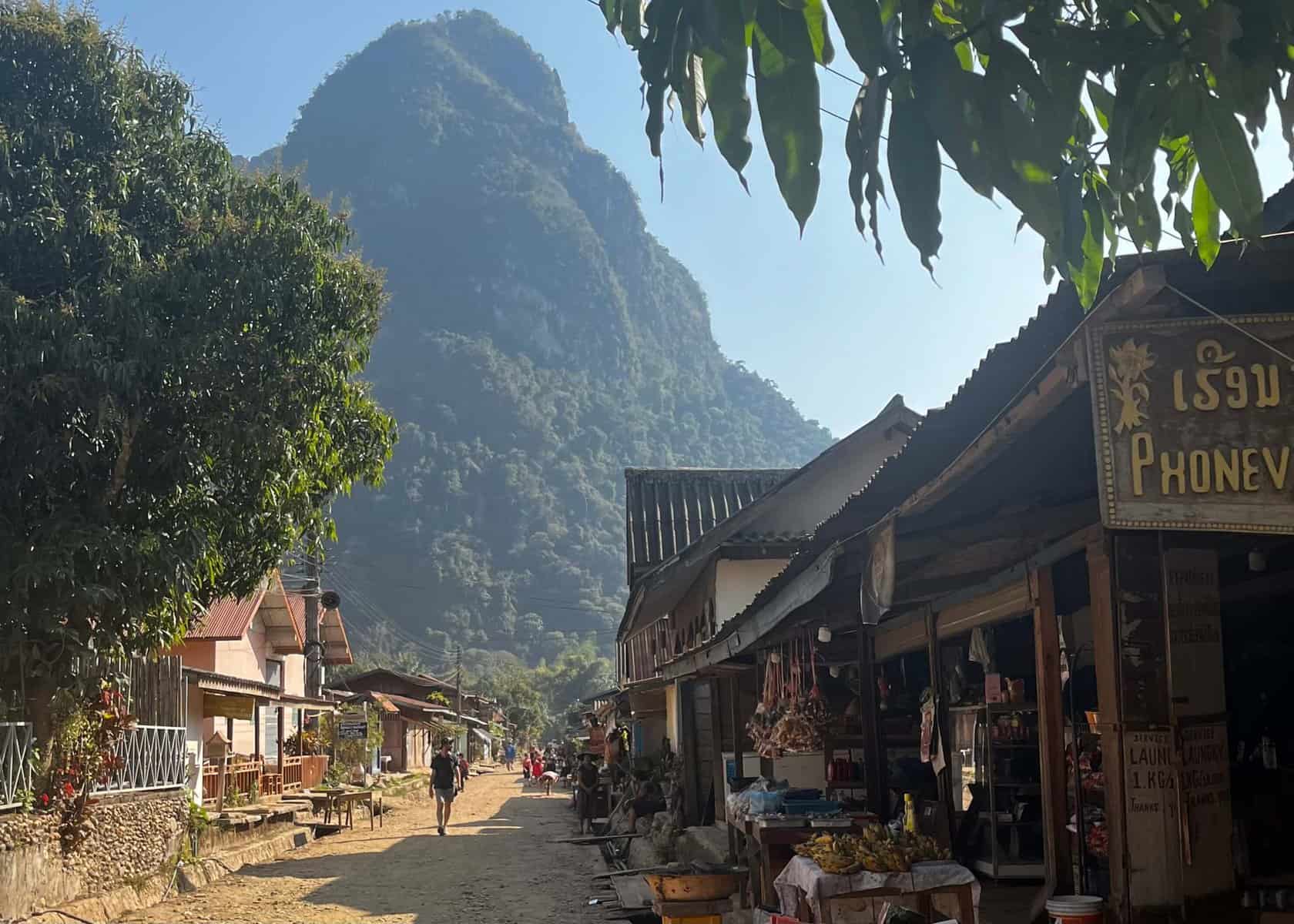
- Karst mountains – Nong Khiaw and Vang Vieng have the dramatic limestone cliffs you see in all the backpacker photos. Stepping out of the van upon arrival in Nong Khiaw took our breath away. The drama!!
- Jungles and rivers – Luang Namtha is surrounded by thick jungle and protected areas, perfect for low-key trekking.
- Waterfalls – Kuang Si near Luang Prabang is the big one, but you’ll find plenty of smaller cascades between Pakse and Kong Lor.
- Motorbike loops you can do without an Easy Rider – the Thakhek/Kong Lor area and the Bolaven Plateau around Pakse are perfect DIY loops. We felt super safe renting a motorbike here.
- Boating opportunities – Drifting down the Mekong to Luang Prabang or taking a long boat to Don Det is peak Laos energy. We were surprised how much of life revolves around the rivers here.
The biggest difference is nature in Laos feels untouched and very, very quiet. Trails aren’t crowded, viewpoints aren’t packed, and you rarely feel rushed.
💦 We love waterfall chasing! See how we found them while motorbiking around the Pakse (Bolaven) Loop.
Vietnam
On the other hand, Vietnam has a bit of everything, often in extremes:
- Rice terraces – Sapa’s terraces are iconic for a reason, especially if you’re hiking in the valleys rather than the main town. A must-do experience in Vietnam.
- Beaches – Da Nang and the coast near Hoi An are easy beaches if you want culture + ocean in one trip.
- Caves – Visit Phong Nha for so many cool caves (although Kong Lor Cave in Laos is still our favorite).
- Mountains – Fansipan, Ha Giang, and the landscapes around Sapa are huge, rugged, and dramatic.
- Climate variety – You can be freezing in Sapa, sweating in Hoi An, and rained on in Ninh Binh all in the same trip.

Overall, Vietnam’s scenery feels bigger, more dramatic, and easier to access, but also more crowded – especially in places like Ninh Binh or Sapa.
Quick takeaway: Both countries have caves and huge landscapes, but Laos is a quieter, more hiking-oriented choice, and Vietnam is the place for variety and postcard-level drama.
Culture & Local Life
Laos
Culture in Laos tends to be gentle and unhurried. Life moves at a slow pace in Luang Prabang, Nong Khiaw and Don Det.
Tourism supports local communities but rarely feels over organised (besides maybe Vang Vieng).

You often feel like you are sharing the space rather than following a set itinerary.
Vietnam
Local life in Vietnam is energetic and social, which we loved. Cities like Hanoi and Ho Chi Minh City feel busy from morning to night. Layers of history show up in the food, architecture and street life.
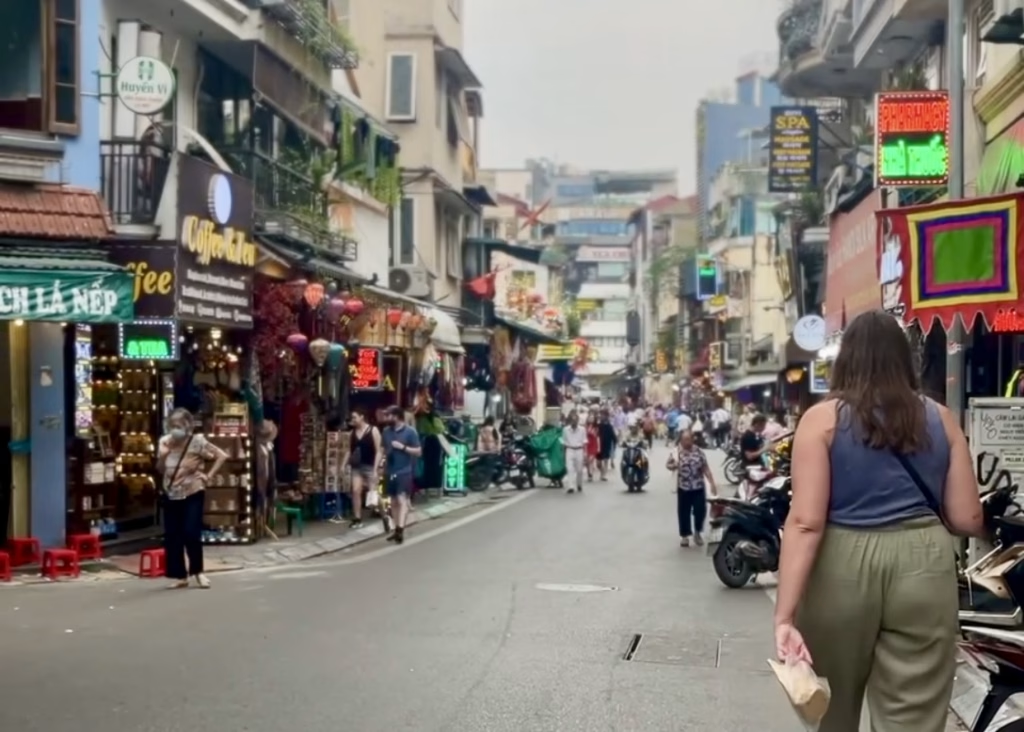
Tourism is well established which makes travel simple, although it sometimes means you need to seek out quieter or more spiritual experiences away from the main areas if that’s what you’re looking for.
Homestays in Sapa (this is our favorite) or craft villages near Hoi An are good examples.
Quick takeaway: Laos offers a more immediately immersive cultural experience, where everyday life feels slow, local, and organically shared with visitors. In Vietnam, cultural depth is absolutely there – but you may need to step beyond the main tourist routes to fully feel it.
That said, culture exists wherever you go, so trust that you’ll encounter it in different forms regardless of your choice.
Outdoor Adventure
Laos
Laos is best for slow, nature-first adventures. You’ll find pure jungle, rivers, and less-crowded viewpoints.
It’s outdoor adventure without the adrenaline-junkie branding (again, minus Vang Vieng…notice a trend 🤪).
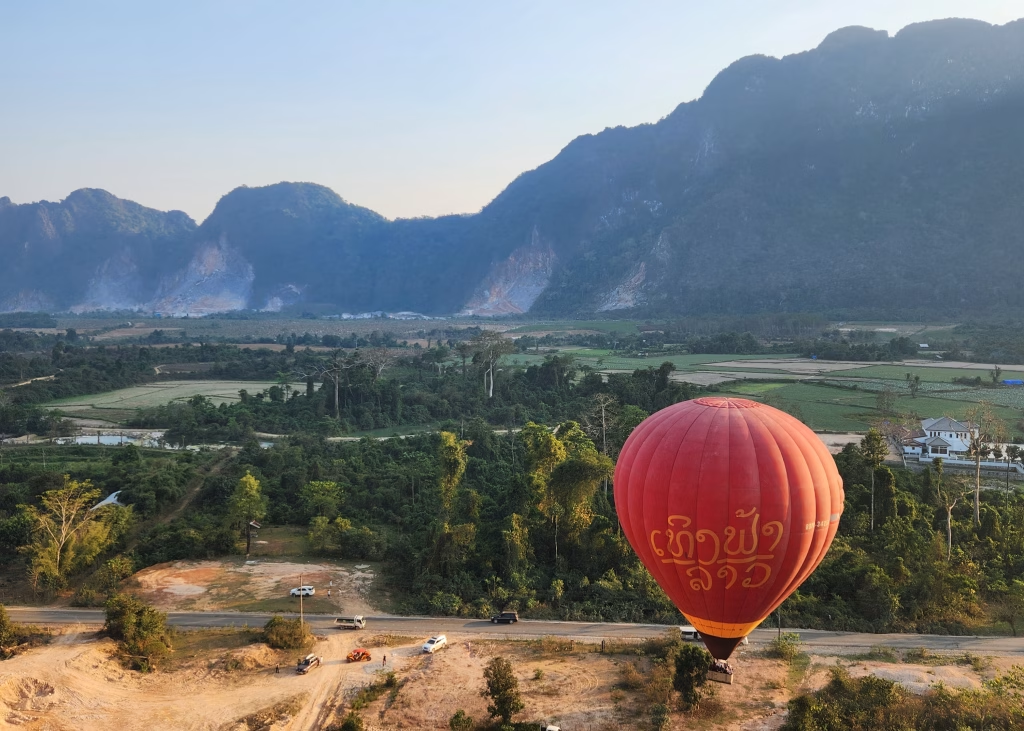
Some outdoor adventure activities we found in Laos are:
- Trekking in Luang Namtha and Nong Khiaw
- Kayaking around Don Det
- Motorbike loops around Kong Lor and the Bolaven Plateau
- Caves like Tham Kong Lor (the underground river is wild)
- Hot air balloon ride in Vang Vieng
Vietnam
Vietnam has literally anything you can think of to do outdoors. It’s generally better for big, structured, bucket-list activities like:
- Canyoning in Da Lat
- Multi-day hikes around Sapa
- Ha Giang Loop – the classic (more dramatic that Laos) motorbike route. Most people hire an Easy Rider to do this.
- Caves – Phong Nha has some of the world’s best, period.
- Kayaking in Ha Long Bay

Quick takeaway: Laos = natural, calm, DIY adventure. Vietnam = more adrenaline, more tours, and more “big name” experiences.
Food & Coffee
Laos
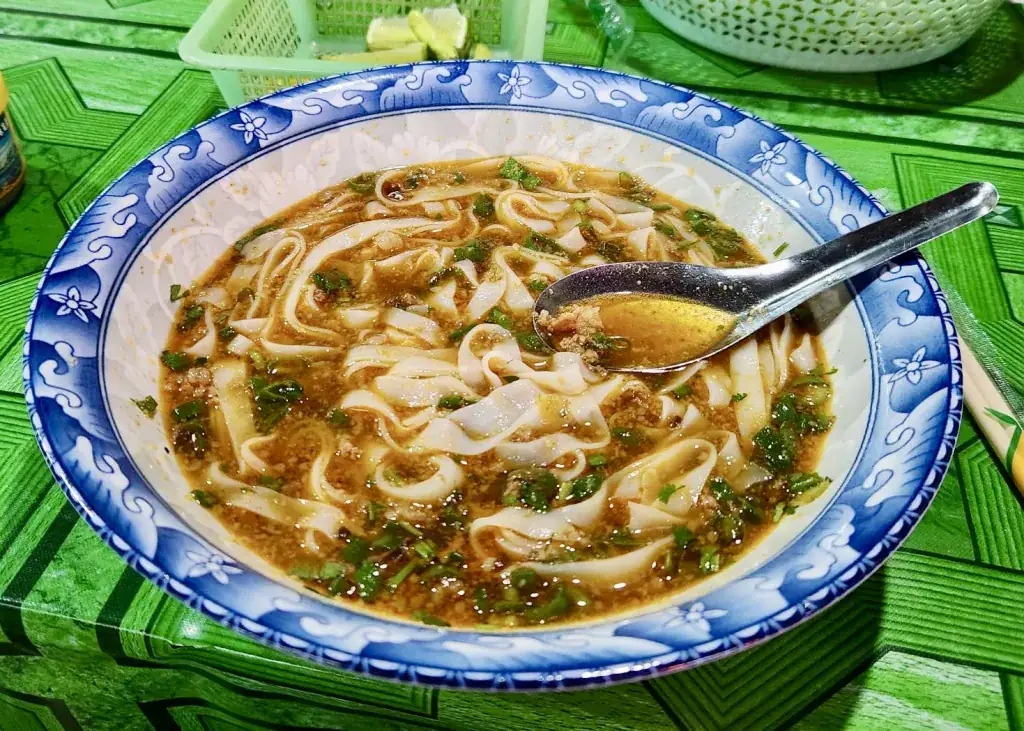
Food in Laos is often simple but rarely disappointing. Dishes like laap (ask for no spice if you’re sensitive), Lao style khao soi, and grilled fish are common and SO good.
Coffee in places like Luang Prabang and (and surprisingly in Pakse as well) is excellent, although the overall variety is more limited compared to Vietnam.
TOP TIP: Check out 100% Arabica Bakery and 124 Thaluang Coffee in Pakse for some genuinely good coffees.
Vietnam
Food is a major highlight in Vietnam and is consistent across the country. Street food in Hanoi (HELLO Bun Cha!!), Hue, Hoi An and Ho Chi Minh City is affordable and full of distinct regional dishes.
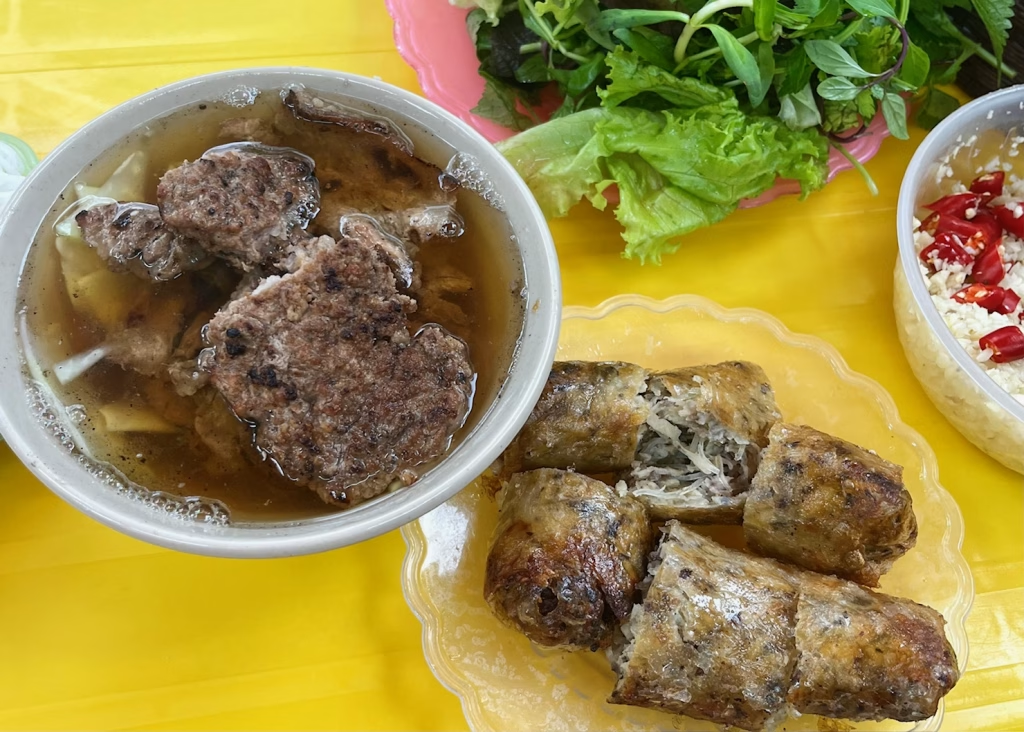
Coffee culture is strong, with everything from drip coffee to coconut and egg coffee served in busy cafes. We loved loved loved the food in Vietnam and can’t wait to go back.
Quick takeaway: Laos has good food and lovely cafés, but Vietnam is simply on another level, especially for street food lovers.
Are you a foodie or coffee lover? These are our:
🍜 Favorite foods (and where to find them) in Old Quarter Hanoi
☕ All the coffees you HAVE to try in Vietnam (there are 8 of them)
Popularity, Crowds & Tourism Experience
How Busy Each Country Feels
Laos
Laos usually feels calm and spacious. Most places outside Luang Prabang and Vang Vieng stay quiet throughout the day.
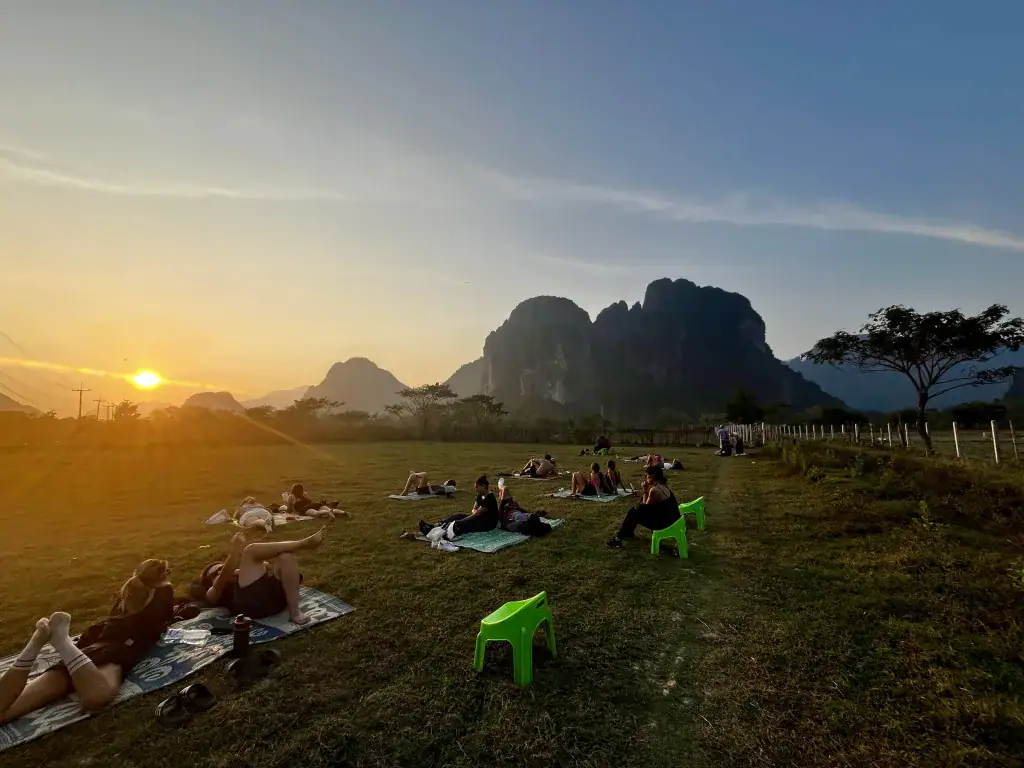
It is easy to find viewpoints, walks and riverside areas with very few other travelers around. You’ll see a lot of other travelers in Don Det as well, but it doesn’t feel overcrowded.
Vietnam
Vietnam feels busier overall. Well known nature spots like Ninh Binh and Sapa attract steady crowds and the cities are global tourism hot spots.
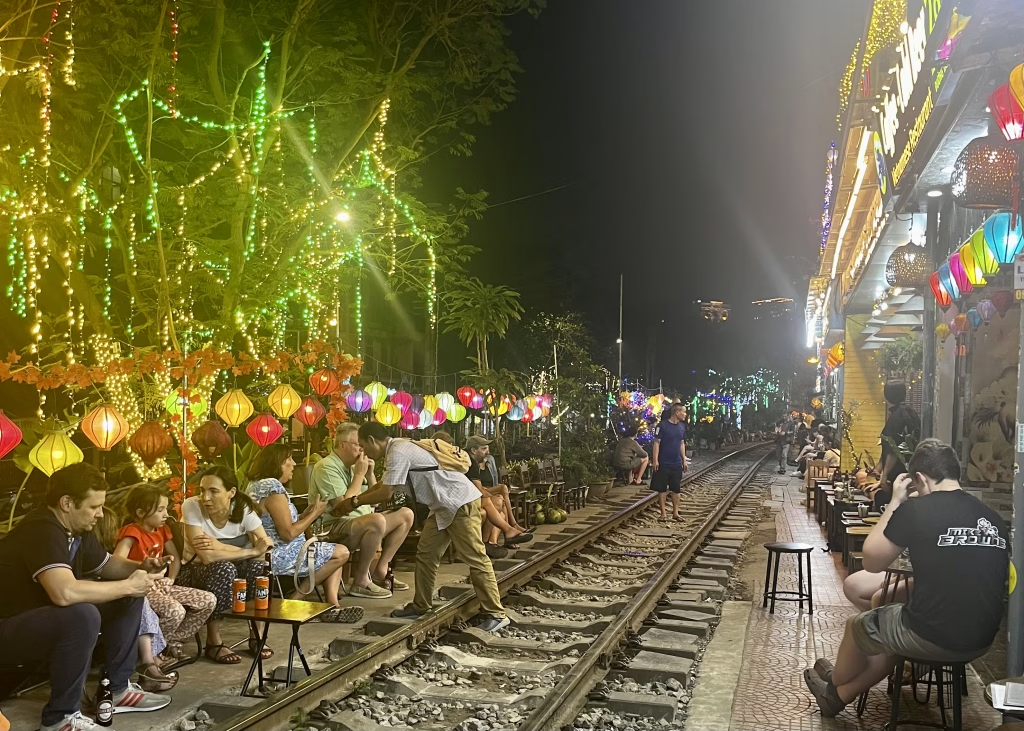
There are still large areas that feel peaceful, including Phong Nha, where you can ride a motorbike for long stretches without seeing many other travellers.
Quick takeaway: Laos generally feels calm and spacious, while Vietnam has busier cities and attractions with pockets of very quiet countryside in between.
Backpacker Scene and Social Aspect
Laos
The backpacker scene is friendly but small. Meeting people is easiest in hubs like Luang Prabang, Vang Vieng and Don Det where travelers tend to gather in the same cafes and guesthouses.
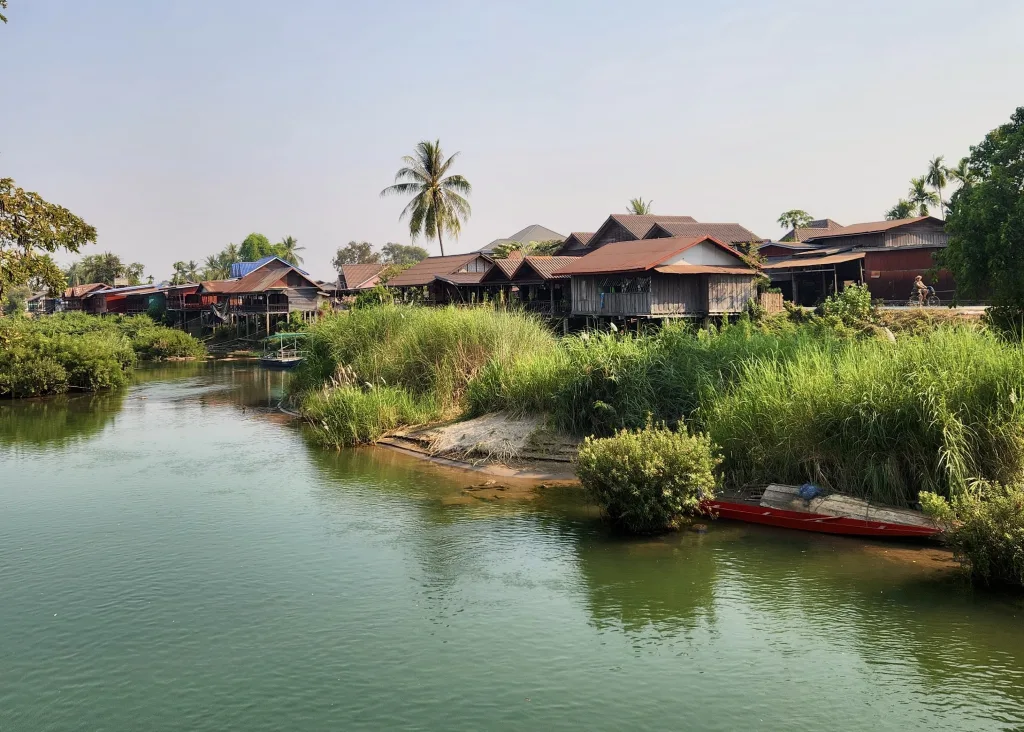
In places like Kong Lor, we were pretty much on our own and stuck to ourselves.
That being said, we still ran into people we met multiple times thoughout our month in Laos, so it’s not unlikely to meet people you can travel with.
Vietnam
Vietnam has a large backpacker network. Trains and buses connect major cities and make it easy for travelers to follow similar routes.

There’s also a very established backpacking scene with tonsssss of hostels, which Laos is still building up.
Quick takeaway: Laos has a small, friendly backpacker scene centred around a few hubs, while Vietnam has a large, well connected network that makes it easy to meet people on common routes.
Over-Tourism Hot Spots to Be Aware Of
Laos
Laos doesn’t really have any over-tourism hot spots per se, but some places do get busier than others.
Vang Vieng Adventure Activities – Hot air balloon rides and paramotoring are very popular in Vang Vieng, and the cheaper operators can get crowded.
Friends we met told us their balloon basket was overfilled, and another group said they were sent out for paramotoring almost in the dark because too many people had been booked in.
This doesn’t just take away from the experience, it is also blatently unsafe. Something to keep in mind when choosing an operator in Vang Vieng.
This is the company we booked with and felt very safe the entire time. It’s a little more expensive than other agencies (though not by much) and we had an amazing time.
Kuang Si Waterfall – This is the most popular natural sight near Luang Prabang and gets busy between late morning and mid afternoon.

Visiting right when the gates open or closer to closing time gives you a much more relaxed visit and better chances for clear photos of the pools (though we high key liked visiting during peak hours as its the hottest part of the day and the water is COLD).
Vietnam
Ha Long Bay -Boat tours run all day and the main viewpoints can feel crowded, especially on day trips from Hanoi.
Overnight cruises offer a calmer experience, and Cat Ba is a good alternative if you want similar scenery with far fewer people.
We did this cruise in Cat Ba because we wanted to avoid at least some of the crowds. It was definitely a good pick and we now recommend it to anyone who asks.
Sapa – The main town sees steady crowds and large tour groups, especially on weekends and during rice terrace season.
Trekking in the valleys with a local guide gives a quieter experience, and staying in homestays in surrounding villages helps you avoid the rush in town.
We also got to do a super cool batik dying workshop in the Hmong village we stayed in. You can read about our experience and book the workshop here too!

Hoi An – The old town becomes very busy in the afternoon and evening when tour buses arrive. Early mornings are peaceful and give you the chance to see the lantern streets and riverside without the crowds.
Staying outside the old town and cycling in is a good workaround. The hostel we stayed was a bit out of town, but provided free bikes to get around.
Quick takeaway: Vietnam has several heavily visited areas that require careful timing, while Laos has fewer overtouristed spots and even the busy ones stay manageable with good planning.
Getting Around — Transport Differences that Matter
Ease of Transport
Laos
Transport in Laos is improving but still feels local. Most routes rely on buses and minivans that can be cramped, slow and unpredictable.
“VIP” labels do not mean much, so don’t bother paying extra for no improved service. We learned this the hard way.
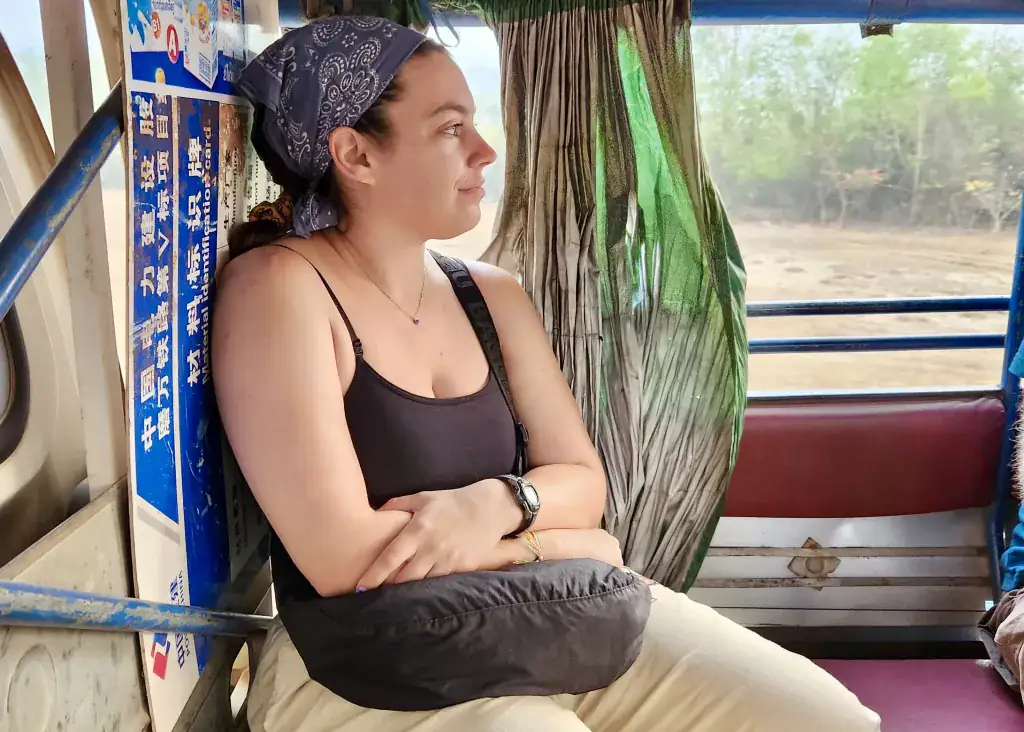
It’s still fairly easy to get around in Laos, but you may sometimes need help from your guesthouse to book.
This is what we did for nearly every travel day – it’s just more convenient than showing up to the bus station and hoping for the best.
While the new China–Laos railway is a game changer and the trains themselves are excellent, the network is still limited to the north and center of the country.
Train tickets can also be relatively expensive compared to everything else in Laos.
The train is an amazing option (and so worth it in our opinion) but the cost is definitely inconvenient at best.
Vietnam
Vietnam is simple and reliable to move around.
The country has a full network of trains, domestic flights and buses, and even the budget options tend to run smoothly (minus non-VIP night buses….just avoid those).

Overnight trains are decent, and VIP buses are 100% worth paying a bit extra for. Long distances feel manageable because the whole system is built for travelers.
Quick takeaway: Vietnam clearly wins for overall ease, comfort and convenience. If comfortable transportation is important to you, Vietnam is definitely for you.
Planning on taking overnight transit in Vietnam? We’ve broken down everything you need to know about class, amenities, and booking here.
🚆 Learn everything you need to know about overnight sleeper trains in Vietnam here
🚍 Read everything you need to know about taking sleeper buses in Vietnam here
Scenic Routes
Laos
Laos has peaceful, slow travel routes that give you a close look at local life.
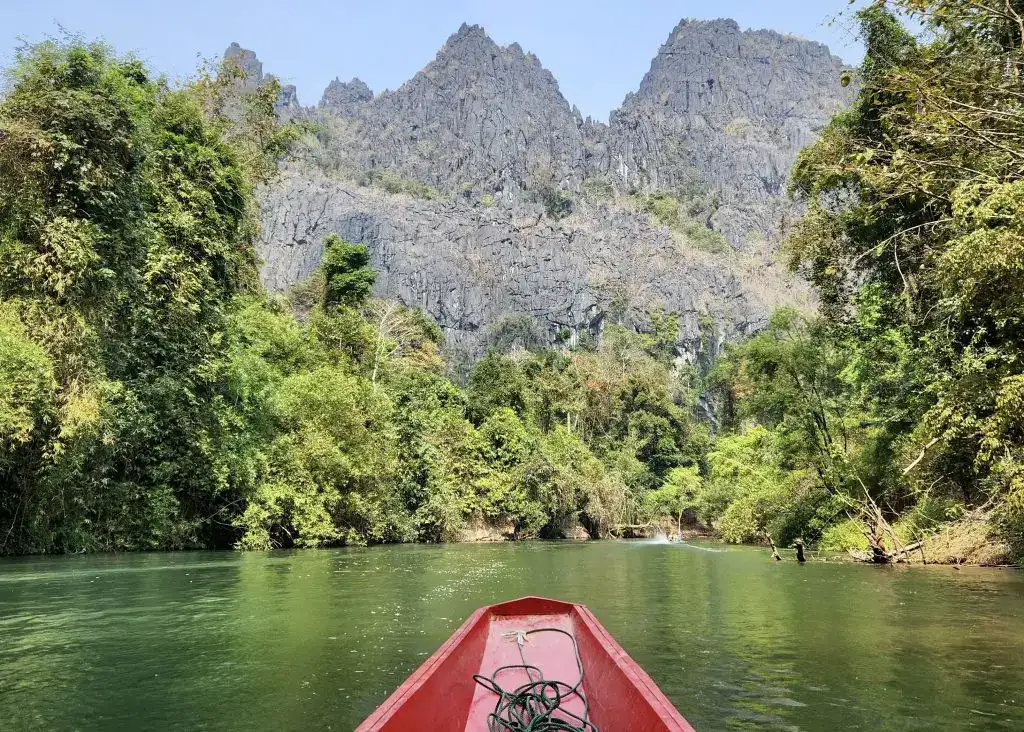
The slow boat along the Mekong is one of the most relaxing journeys in Southeast Asia, the Bolaven Plateau is great for multi day motorbike loops, and mountain roads around Nong Khiaw and Luang Namtha bring constant views.
The scenery is gentle, green and quiet.
Vietnam
Vietnam has a wider variety of scenic routes with a more dramatic feel.
The Reunification Line train passes coastlines and mountain ranges, motorbike routes like the Hai Van Pass and Ha Giang Loop are full of huge views, and the coastal trains between Hue and Da Nang are some of the most beautiful rail journeys in the region.

Quick takeaway: Vietnam is stronger for dramatic variety, but Laos is better if you want peaceful, slow paced scenery.
Travel Time & Convenience
Laos
Travel in Laos takes time unless you stick to the new train corridor between Luang Prabang and Vang Vieng, which is impressively quick.
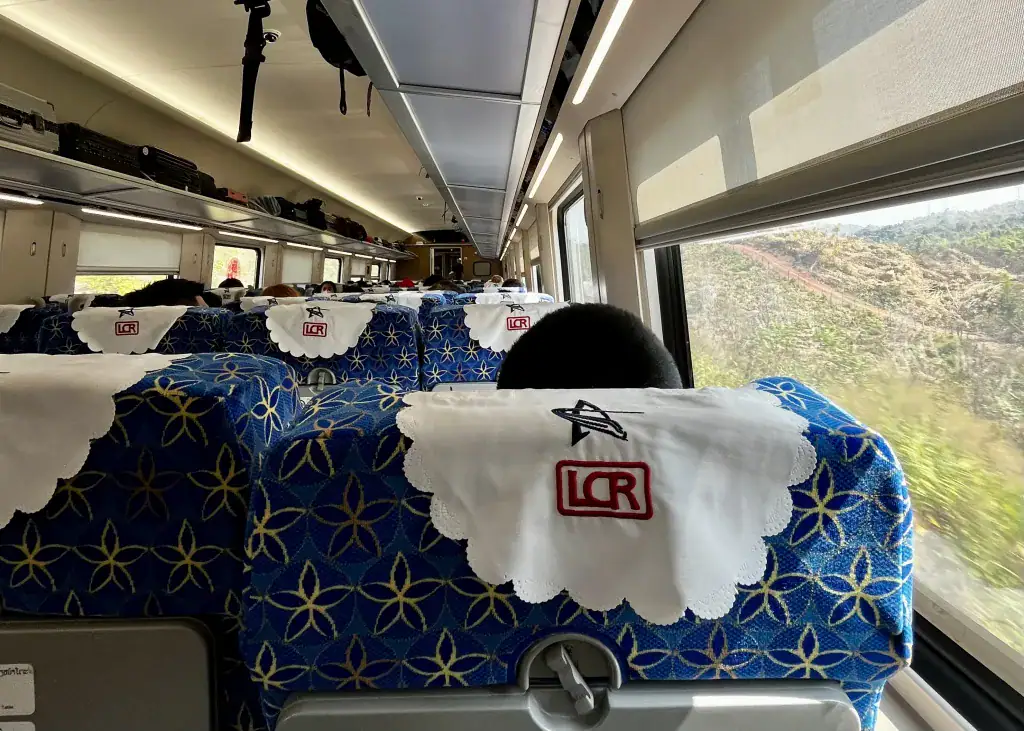
For the rest of the country, expect longer travel days, rougher roads and less predictable timing. It suits travellers who enjoy slow movement between towns and do not mind the occasional travel delay.
We had at least two days where we spent 10+ hours in transit (like from Kong Lor to Pakse), but it was worth it just to get to our next stop in one go.
🇱🇦 Nervous about getting around in Laos? We break down everything we learned about transit in Laos during our month of traveling so you can be prepared for your trip.
Vietnam
Vietnam moves much faster. The transport network is built to connect all major destinations, so you can cover long distances in a (semi) reasonable time.
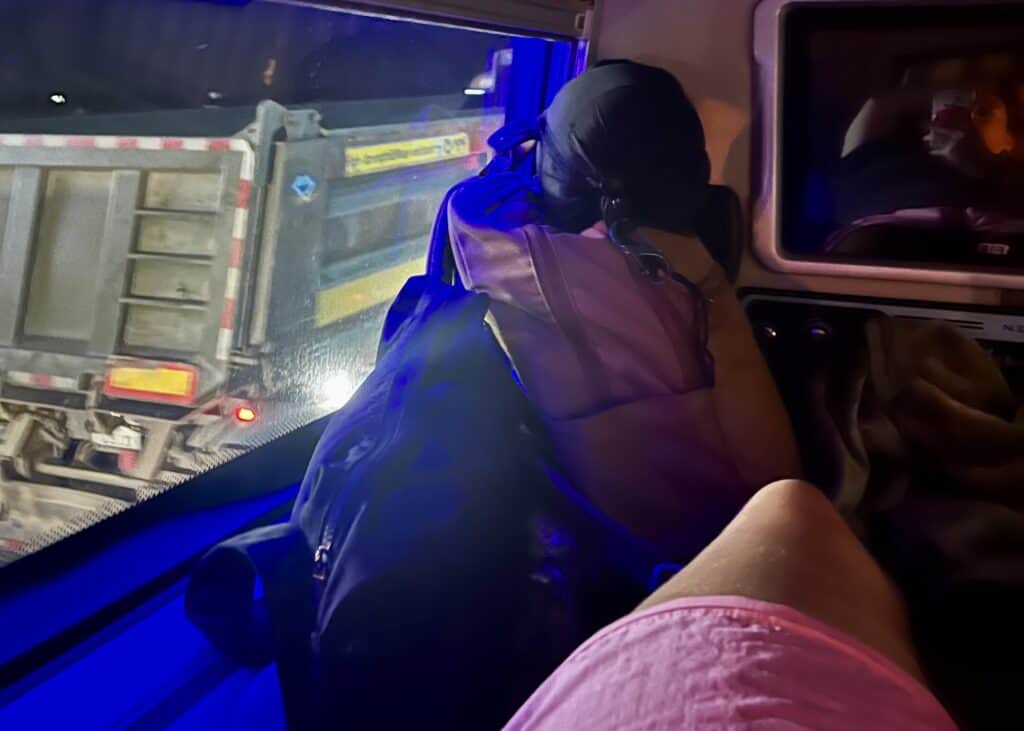
It works well if you are on a tighter schedule or want to visit several regions without losing full days to transit.
Quick takeaway: Vietnam wins for speed and efficiency, unless you are only visiting Luang Prabang and Vang Vieng in Laos. If that’s the case you can take the high speed train, and Laos wins.
🛕 Only visiting Laos for a week? Here are 3 different 1 week itineraries to pick from so you can see exactly what you want to during your trip.
Safety, Comfort & Queer-Friendliness
General Safety
Laos
Laos feels calm and generally very safe. Roads outside the main towns can be VERY rough, so motorbiking requires patience and good road sense.
UXOs still exist in rural regions, but they are not a risk if you stay on marked paths and avoid unguided hiking.

You should also never accept alcohol that is not sealed. You can read about the methanol poisonings that took place in Vang Vieng here.
We only rented motorbikes in places where the roads were quiet and well paved (minus a few dusty stretches on the Pakse Loop).
🛵 We go through the most popular motorbike routes in Laos here, plus tips on staying safe + how to rent a bike.
Vietnam
Vietnam is also very safe, although the traffic is more chaotic, especially in Hanoi and Ho Chi Minh City.
Motorbiking is common, but conditions vary depending on the region. We didn’t rent motorbikes anywhere but Phong Nha in Vietnam.

The overall infrastructure is stronger, so buses, trains and major roads are generally well maintained and predictable.
If you’re planning on visiting Phong Nha in Vietnam, you can follow our 1-day Phong Nha motorbike itinerary here.
Quick takeaway: Both countries are safe, but Vietnam has more chaotic traffic while Laos requires a bit more awareness in rural areas. We were never harassed in any way in either country.
Queer Travelers
Laos
Laos is quiet and conservative in rural areas, so we avoided showing affection and always described ourselves as friends when out in remote villages or on jungle treks.

When we were in Lunag Namtha, Jess panicked and made up a whole story about our boyfriends back home, which was not actually necessary but it was easy to overthink and overcompensate in the moment.
Vietnam
Vietnam felt more openly queer friendly, especially in major cities and backpacker hubs where LGBTQ+ travelers are common.

We still stayed aware of our environment, but we felt far less on guard and never experienced anything uncomfortable.
Quick takeaway: Vietnam is easier for openly queer couples, and Laos is safe but more conservative in rural settings.
Solo Travel
Laos
Laos works well for solo travelers who enjoy quieter places and slower days. It is safe, straightforward to navigate, and still easy to meet people if you stay in hostels in Luang Prabang, Vang Vieng, or even Pakse.

If you head off the main tourist trail, you won’t meet as many people, but it’s still perfectly safe.
Vietnam
Vietnam is ideal for solo backpackers who want a social atmosphere.
There are plenty of hostels, group tours, walking streets, and shared activities in places like Hanoi, Hoi An, and Ho Chi Minh City, which makes it easy to meet people without trying very hard.

The overall travel environment is lively and well suited to anyone who wants company along the way. We met more people in Vietnam than maybe anywhere else in Southeast Asia.
🌆 See how we spent 24 hours in Ho Chi Minh City here
Quick takeaway: Vietnam is best for social solo travel, and Laos is great for solo travelers are willing to get off the beaten path.
Itinerary Styles — What Kind of Trip Do You Want?
If You Want Fast-Paced Variety
Vietnam is the clear winner for travelers who want movement, contrast, and a lot of experiences in a short time. Every region of Vietnam is SO different, it actually blew our minds.
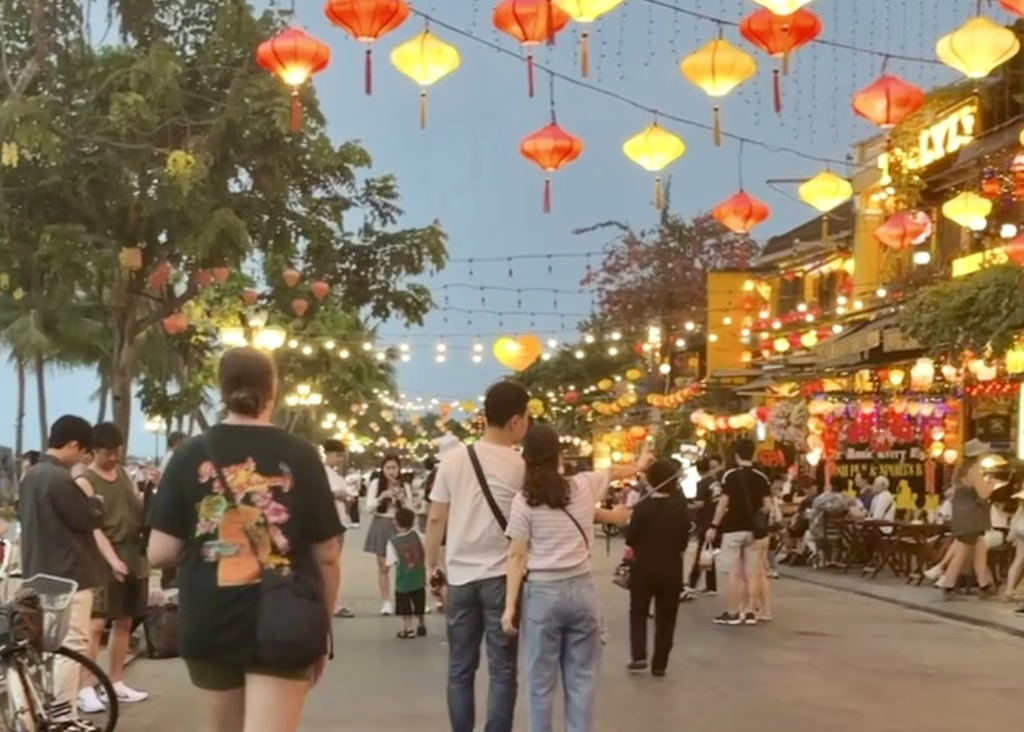
You can go from Hanoi’s street energy to quiet rice fields in Ninh Binh, explore massive caves in Phong Nha, wander the old towns of Hoi An or Hue, ride coastal trains, and finish at the beach all within a single trip.
Even just a two week trip to Vietnam can include cities, mountains, beaches, and culture without feeling too chaotic.
Quick takeaway: Vietnam delivers the most variety with the least effort.
If You Want a Relaxed, Low-Stress Trip
Laos is perfect for anyone who wants a gentle, slow, and easygoing itinerary. Most destinations are small towns, cities that feel like small towns, or nature based.

You spend your time exploring a UNESCO in Luang Prabang, viewpoints in Nong Khiaw, waterfalls on the Pakse Loop, or quiet villages in the south.
There is no pressure to pack your days full, and even the more popular places are still pretty chill. Fewer decisions, fewer logistics, and fewer “must sees” make the whole trip feel less intense.
Quick takeaway: Laos is the best choice for simple days and a calm, easy pace.
Before you head to Laos or Vietnam…
💔 Make sure you have travel insurance sorted. We use SafetyWing because we love the option to pay monthly and whenever we need help their customer service is always super helpful.
📳 For fast access to data we recommend using Airalo for your eSIM services. They’re great if you’re staying in Laos for 7 days or less and you can get $3 off your first purchase with code JULIA1616.
Weather & Seasonality
Laos
Laos is much easier to plan because it follows a clear wet and dry pattern.
- Dry season: November to April with comfortable temperatures in the north.
- Wet season: May to September with short, heavy bursts of rain rather than full days of storms.
- Heat: March and April can be extremely hot in Vientiane, Pakse, and Don Det. We ROASTED in early March when we visited.
- Burning season: Similar timing to northern Vietnam, with haze peaking around March and April in Luang Prabang and the north. The south of Laos is less impacted by burning season, which is partially why we started our trip in the North.
Vietnam
Vietnam’s climate shifts dramatically from region to region, which makes trip planning more weather-dependent.
- North (Hanoi, Sapa, Ha Giang): Four real seasons with cold winters and warm springs.
- Central Coast (Hue, Da Nang, Hoi An): Heavy rain and big storms from October to December. Flooding during this period is common, especially in Hoi An (read about it here), so it’s important to avoid this season if possible.
- South (Ho Chi Minh City, Mekong Delta): Hot year round with a clear wet/dry cycle.
- Burning season can also affect air quality in northern regions from February to April, causing haze and reduced visibility.
Season Chart Key:
- 👍 = Ok to travel
- ✔️ = Not ideal conditions, but still safe
- ⚠️ = Unsafe to travel, flood season
|
Region / Country |
Jan |
Feb |
March |
April |
May |
June |
July |
Aug |
Sept |
Oct |
Nov |
Dec |
|---|---|---|---|---|---|---|---|---|---|---|---|---|
|
Northern Vietnam (Hanoi, Sapa, Ha Giang) |
👍 |
👍 |
✔️ (hazy) |
✔️ (hazy) |
✔️ |
✔️ |
✔️ |
✔️ |
✔️ |
👍 |
👍 |
👍 |
|
Central Vietnam (Hue, Da Nang, Hoi An) |
✔️ |
👍 |
👍 |
👍 |
👍 |
👍 |
👍 |
👍 |
✔️ |
⚠️ |
⚠️ |
✔️ |
|
Southern Vietnam (Ho Chi Minh City, Mekong) |
👍 |
👍 |
👍 |
👍 |
✔️ |
✔️ |
✔️ |
✔️ |
✔️ |
✔️ |
👍 |
👍 |
|
Laos (whole country) |
👍 |
👍 |
✔️ (hot) |
✔️ (very hot) |
✔️ (start of rains) |
✔️ |
✔️ |
✔️ |
✔️ |
👍 |
👍 |
👍 |
Best time to visit Laos:
The best time to visit Laos is November to February, when the weather is dry, temperatures are comfortable, and the scenery is at its most enjoyable.
Best time to visit Vietnam:
The best overall time to visit Vietnam is February to April, when the north is cool, the south is dry, and central Vietnam has its most reliable beach weather.
Pros & Cons of Travel to Laos vs Vietnam
Final Verdict — Should You Choose Laos or Vietnam?
Choose Laos if you want:
- A calm, slow paced trip
- Small towns, gentle culture, and peaceful scenery
- Fewer crowds and a more off the beaten path feel
- A simple itinerary with low stress and lower costs
- Travel between November and February
Choose Vietnam if you want:
- Variety in a short time: cities, beaches, mountains, rice terraces
- Incredible food, iconic landscapes, and lots to do
- Easy transport and efficient routes
- A more social, energetic travel experience
- Travel between February and April
Ultimate choice: Pick Laos for calm and depth, and pick Vietnam for variety and energy. You can’t go wrong – we LOVED both countries. It just depends on the pace you want your trip to have.
FAQs for Deciding Between Laos or Vietnam?
Is Laos cheaper than Vietnam?
Yes. Laos is one of the cheapest countries in Southeast Asia, and your daily budget will almost always be lower than in Vietnam.
Vietnam is still very affordable, but you’re likely to spend a bit more because there is more to do, more variety in each destination, and more paid activities.
Is Vietnam better than Laos for first-timers?
Vietnam is usually the easier choice for first-timers because transport is simple, there are tons of other backpackers, routes are clear, and the food and scenery are consistently impressive.
Laos is better for travelers who want a slower pace and fewer crowds.
Which country is safer – Laos or Vietnam?
Both are very safe for travelers. Vietnam has more chaotic traffic in big cities, while Laos requires more awareness around alcohol and food safety. For most travelers, day-to-day safety feels equally solid in both countries.
See how we stayed safe with these 11 mistakes to avoid in Laos.
Is the food better in Laos or Vietnam?
Vietnam wins by a mile. The food scene is diverse, flavorful, and extremely consistent, from street stalls to sit-down meals.
Laos has some great dishes and good coffee, but it’s not as varied or food-focused.
Can you travel both in 2 weeks?
Yes, but it will be fast. If you only have two weeks, it’s usually better to choose one country and do it well.
If you really want to combine them, you should visit just Luang Prabang, Nong Khiaw, and Vang Vieng in Laos, then fly to Vietnam and visit Hanoi, Ninh Binh and Ha Long Bay.
Already made your decision? Head to our Laos and Vietnam Planning Guides
Laos Guides
- The Perfect 30-Day Laos Itinerar: North to South
- Where to Go in Laos: 9 Unmissable Experiences
- Perfect Luang Prabang Itinerary for First Timers
- Don Det and the 4000 Islands: The Greatest Place in Laos
Vietnam Guides
- One Month Vietnam Itinerary: Adventures on a Budget
- Northern Vietnam Itinerary: Sapa, Lan Ha Bay & More
- Hanoi Itinerary: How to Spend 3 Days in the City
- The Best Things to See in Ninh Binh: Vietnam’s Hidden Gem
🌏 Looking for more Southeast Asia inspo? Check out our complete 3.5 month backpacking route or everything we have to share about Thailand.
