
Motorbiking in Laos: Routes, Rentals, Costs & Safety Tips
Wondering if you should try motorbiking in Laos?
After spending several days riding through the south, we can confidently say it was one of the highlights of our month in the country – an unforgettable mix of dramatic landscapes, remote villages, and winding mountain roads.
Whether you’re tackling the famous Thakhek Loop, chasing waterfalls on the Bolaven Plateau, or simply exploring smaller day routes, motorbiking is one of the best ways to experience Laos off the beaten path.
In this guide, we’ll cover everything you need to know before hitting the road – routes, costs, safety tips, and essential gear – so you can plan your adventure with confidence.
If you’re ready for a challenge and an adventure you’ll never forget, keep reading to plan your Laos motorbiking trip.
DISCLOSURE: This post may contain affiliate links, which means we may earn a small commission if you book or buy something through them – at no extra cost to you. We only recommend things we’d actually use ourselves. Read more in our Privacy Policy.
What It’s Really Like Motorbiking in Laos
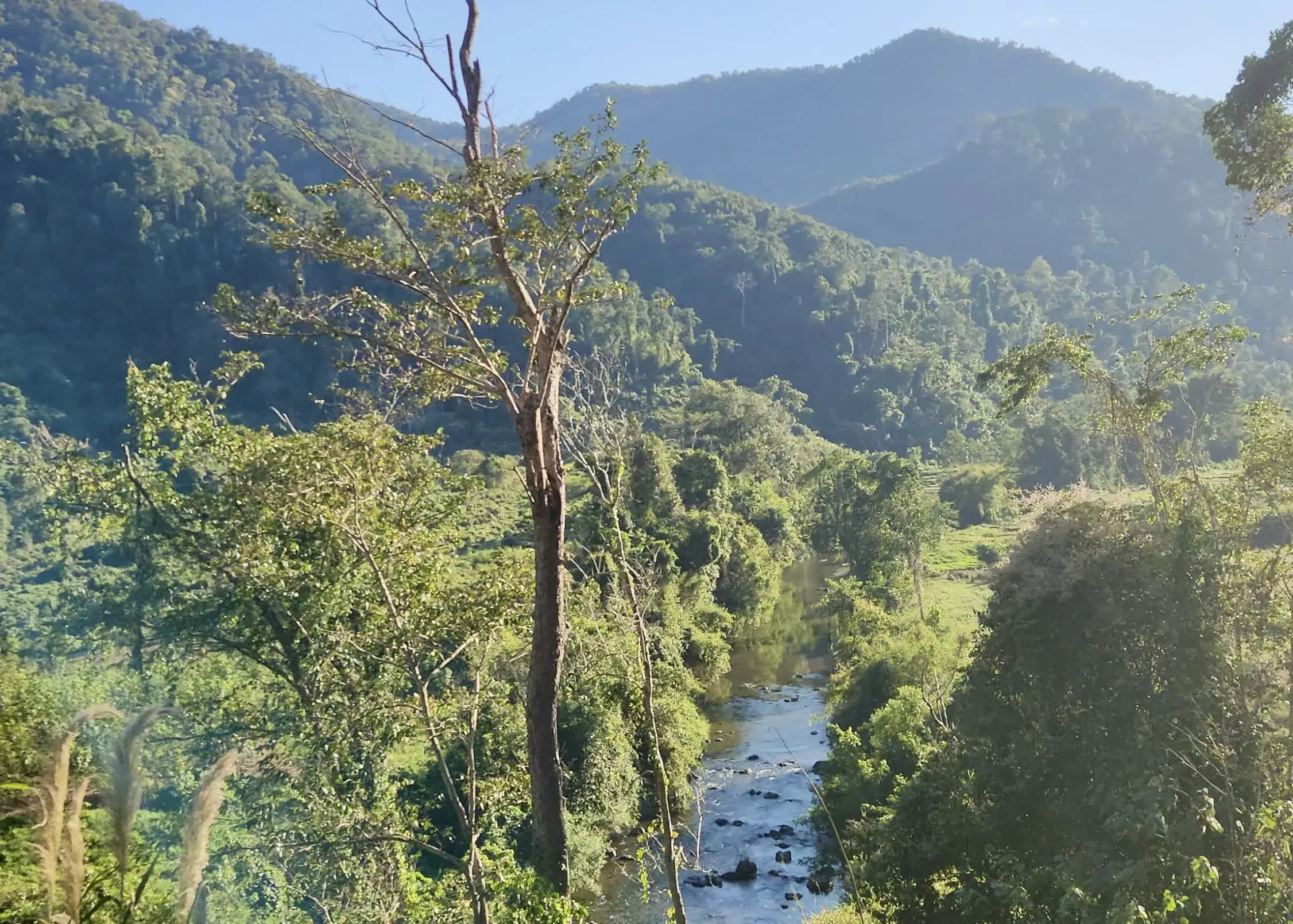
Laos is one of the most scenic countries in Southeast Asia, with dramatic limestone karsts, dense jungles, and winding mountain roads that seem made for motorbike adventures.
Unlike its more developed neighbors, Laos still feels rugged and untouched in many areas, making it the perfect destination for travelers who love the freedom of the open road and a little adventure.
One of the biggest draws of motorbiking in Laos is the slower pace of life.
Traffic is minimal outside the cities, and once you’re out in the countryside, it’s just you, the road, and endless breathtaking landscapes. We LOVED motorbiking here!
What to Expect From the Roads in Laos
Laos has a mix of road conditions, from well-paved highways to rough dirt tracks that turn into mud pits during the rainy season.
If you’re traveling between May and October, expect some washed-out sections and extra challenges, especially in remote areas.
The dry season (November–April) is the best time to ride, as roads are in their best shape.
TOP TIP: Burning season in Laos runs from March to late April. Try to plan your Laos motorbike trip in January or February for the best air and weather conditions.
Who This Motorbike Guide is For
This guide is for travelers who want to experience Laos by motorbike without breaking the bank.
Whether you’re a budget traveler looking for an affordable way to get around, an adventure seeker wanting to explore off-the-beaten-path destinations, or a solo traveler wondering if Laos is safe for motorbiking alone, this guide covers everything you need to know.
Most Popular Laos Motorbike Loops & Routes
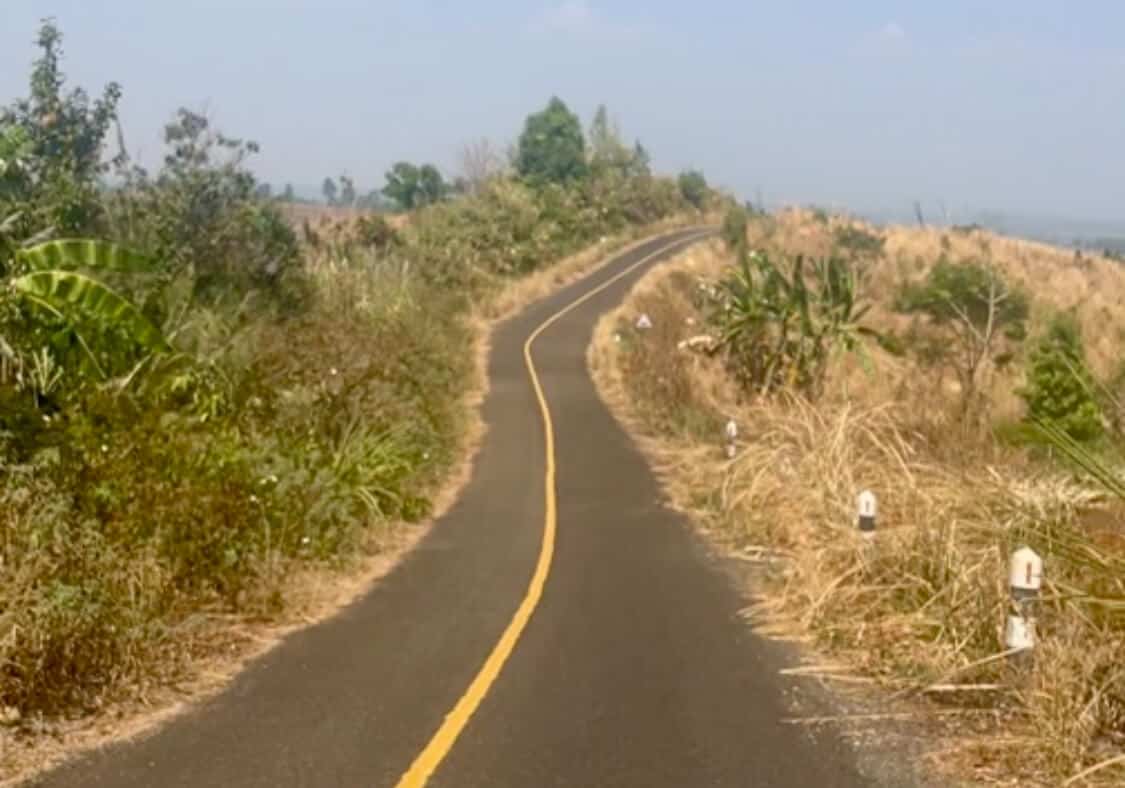
If you’re planning to explore Laos by motorbike, choosing the right route is key.
Some loops are beginner-friendly, with smooth roads and frequent guesthouses, while others are remote, rugged, and best suited for experienced riders.
After motorbiking the Bolaven Plateau Loop ourselves and researching other popular routes, here are our top recommendations.
The Bolaven Plateau Loop – Waterfalls & Coffee Farms
If you’re only going to do one motorbike loop in Laos, this is the one we recommend.
We spent three days riding the Bolaven Plateau (Pakse Loop), and it was hands down the highlight of our time in Laos.
The region is famous for its dramatic waterfalls, sprawling coffee plantations, and cooler mountain climate making for an incredible ride.

The roads here are in relatively good condition, and the route is easy to navigate, making it a great choice for riders of all skill levels.
👉 More details on the Pakse Loop
Distance: About 200–300 km (2–3 days)
Highlights:
- Tad Fane and Tad Yuang waterfalls – some of the most impressive in Laos
- Coffee farms where you can sample some of the country’s best brews
- Laid-back villages with affordable guesthouses
Road Conditions: Mostly good asphalt, though potholes are common in some sections. Beware of gravel on the roads.
👉 Look for accommodation in Pakse for before and after the loop.
The Thakhek Loop – Laos’ Most Famous Motorbike Route

The Thakhek Loop is the best-known motorbike route in Laos, drawing travelers for its epic limestone karst scenery and the incredible Kong Lor Cave.
This 7.5 km-long cave is the highlight of the loop, where you can take a boat through an underground river.
👉 More details on Kong Lor Cave
The ride itself is more varied than the Bolaven Plateau, with sections of smooth highway, rough backroads, and tiny villages where you’ll find cheap homestays.
Distance: About 450 km (3–4 days)
Highlights:
- Kong Lor Cave – one of the most unique cave experiences in Southeast Asia
- Limestone cliffs and jungle landscapes
- Rural villages with friendly homestays
Road Conditions: Mostly paved, but expect some rough patches
Northern Laos Loops – Scenic But Challenging
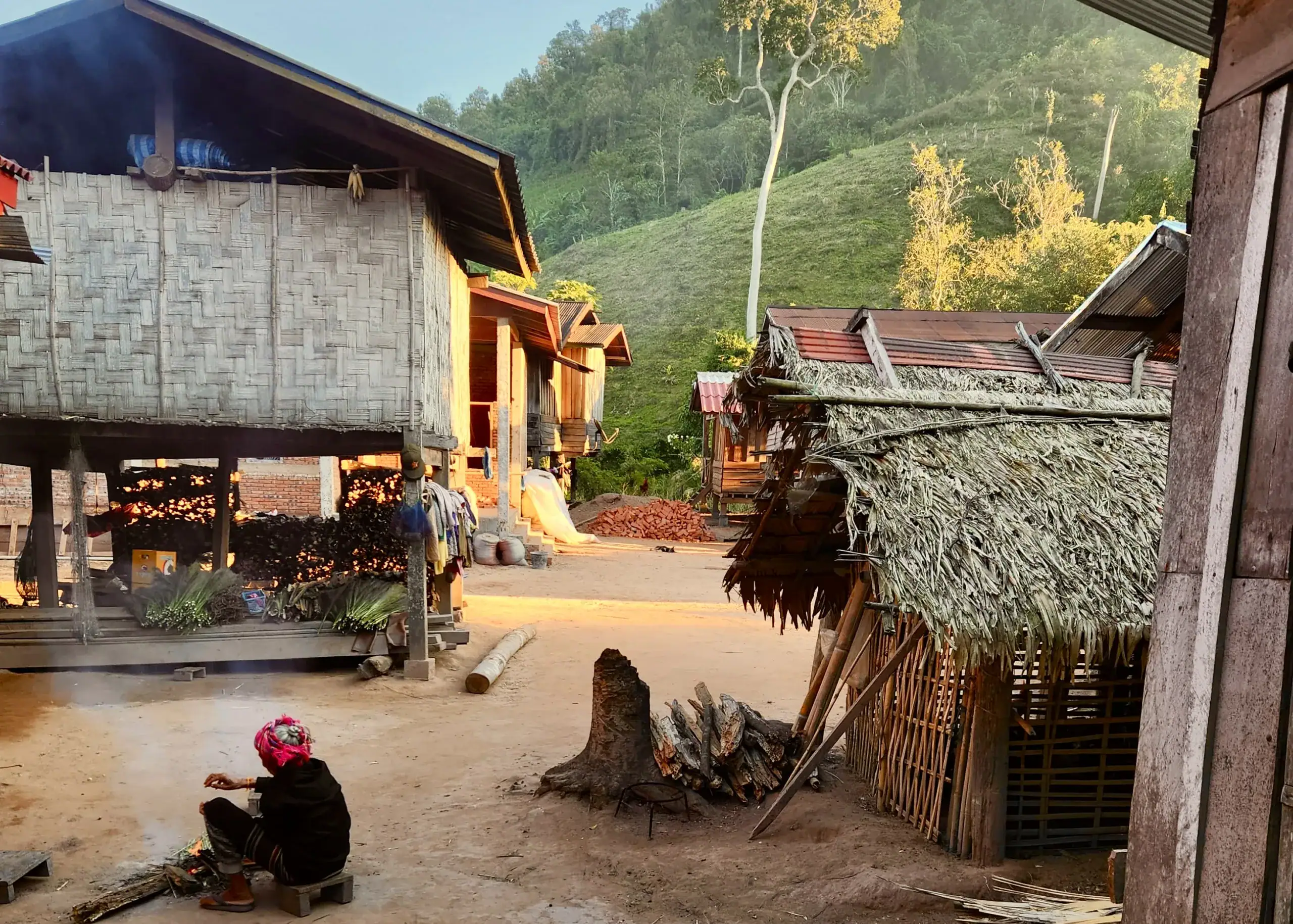
Northern Laos is stunning, but the roads here are no joke.
Unlike the smoother highways in the south, Northern Laos has some of the worst road conditions in the country, with steep mountain passes, landslides, and potholes big enough to flip a motorbike.
🚨 Northern Laos is NOT for beginner riders.
If you’re a skilled rider looking for a real adventure, these loops offer breathtaking scenery and a chance to experience Laos’ most remote regions.
Routes:
- Luang Prabang – Nong Khiaw – Muang Ngoi ( About 200 km)
- Luang Namtha – Muang Sing – Boten ( About 300 km)
- Phongsali Loop ( About 500 km) – Extremely remote but rewarding
Highlights:
- Traditional villages and ethnic minority cultures
- Jaw-dropping mountain views
- Fewer tourists than in southern Laos
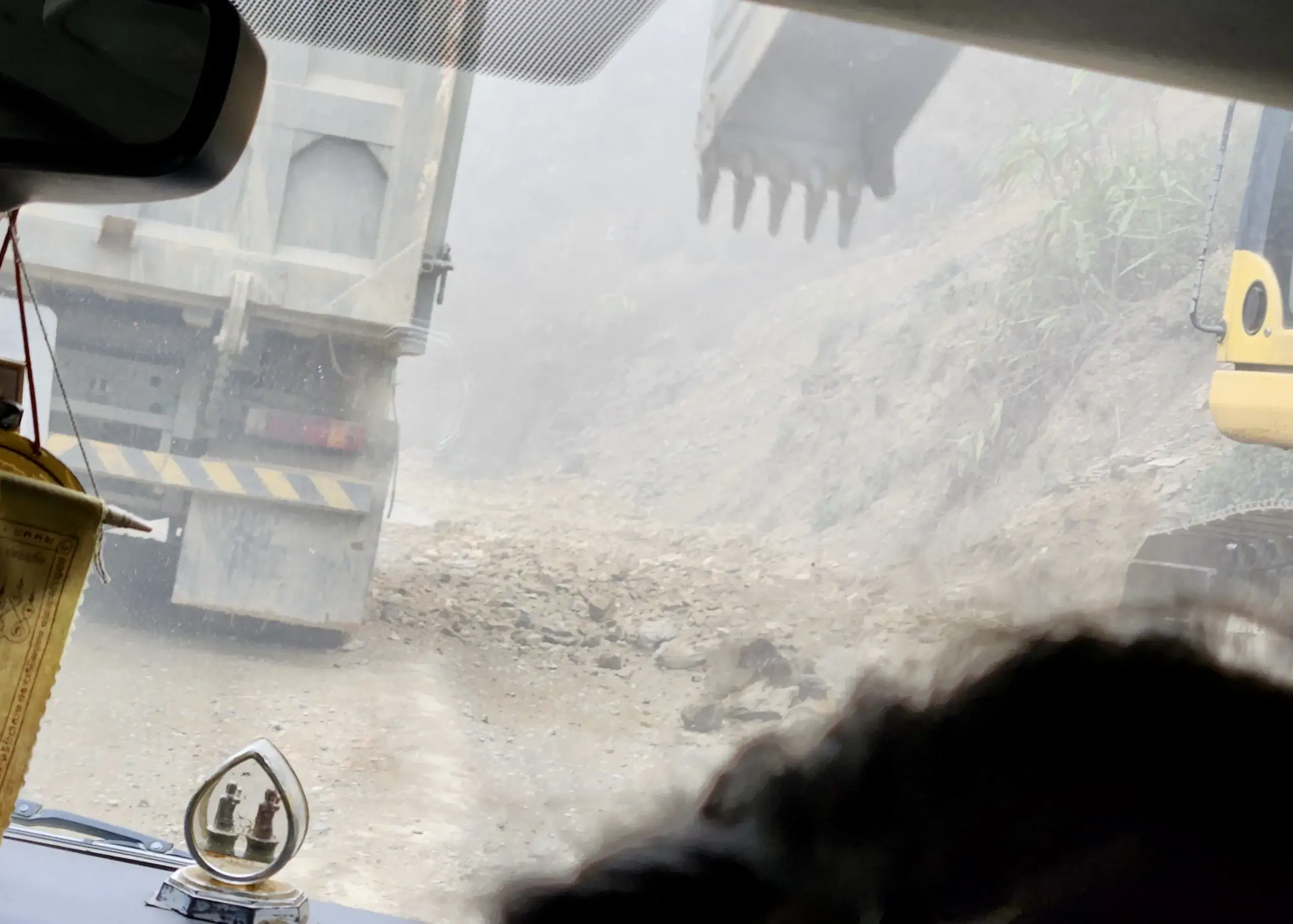
Road Conditions: Expect steep, unpaved roads, landslides, and long stretches with no gas stations. Also watch out for giant trucks driving around mountain passes at full speed.
This was scary for us in a van, so we imagine it wouldn’t be fun on a motorbike either.
We saw multiple backpackers struggling to ride motorbikes around Vang Vieng, going painfully slow, swerving to avoid potholes, and holding up local traffic.
If you’re not an experienced motorbike rider, just take a tuk-tuk anywhere north of Pakse. The south has much better road conditions and a gentler learning curve if you’re new to riding.
Can Foreigners Drive in Laos?
An International Driving Permit (IDP) with a motorcycle endorsement is legally required for foreigners to ride in Laos.
Taking a motorbike class and getting a proper license could literally save your life – or at least prevent some painful injuries by teaching you how to maneuver and fall correctly.
While most rental shops will rent you a bike without checking for an IDP, that doesn’t mean you’re off the hook. Police do occasionally stop riders, and if you don’t have the proper permit, you’ll likely get fined.
How to Rent a Motorbike in Laos
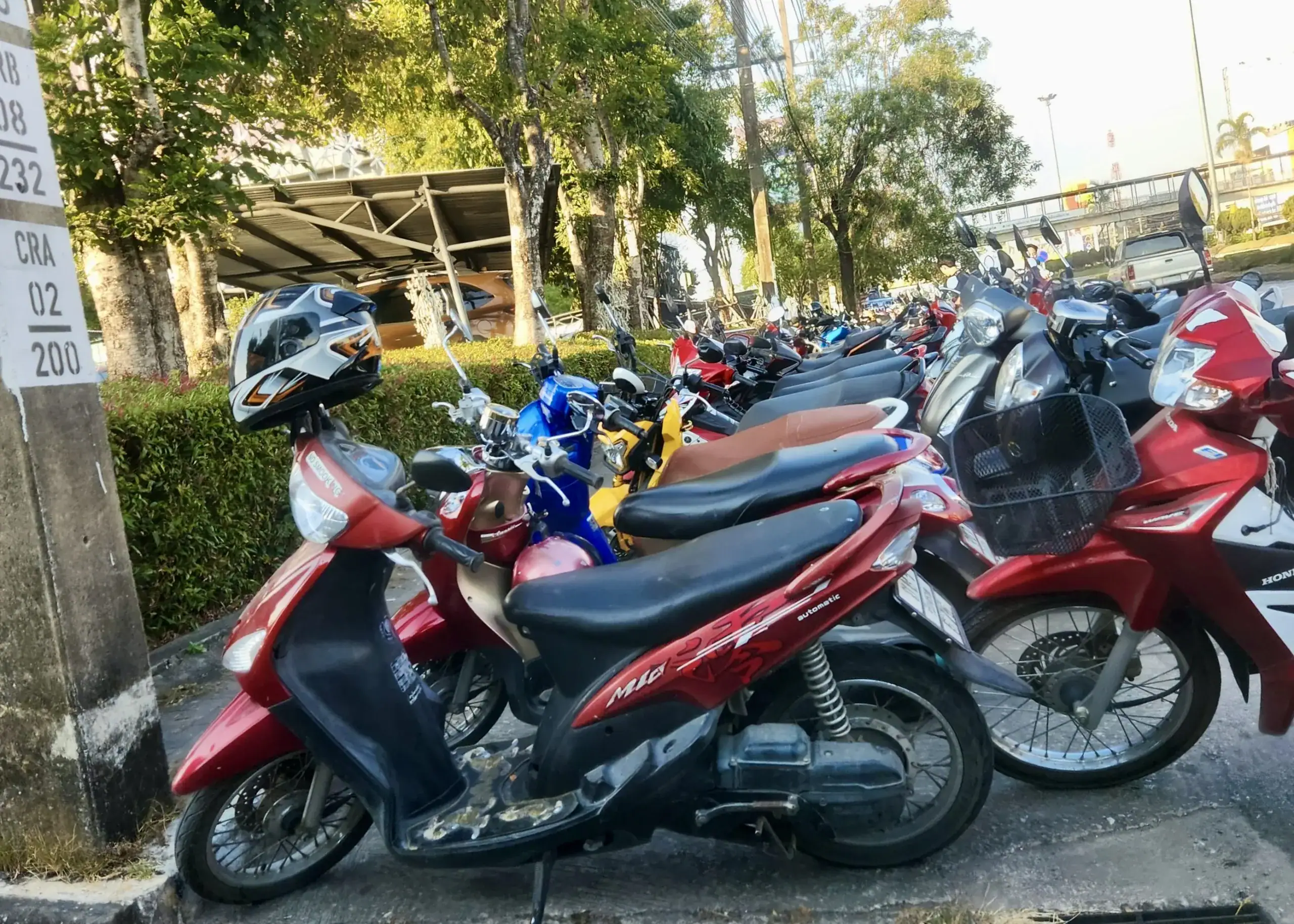
Finding a motorbike to rent in Laos is easy – shops are everywhere, especially in major tourist hubs. Check recent Google Reviews to help you decide who to hire from.
Most rental shops offer both semi-automatic and manual bikes, with prices based on a 24-hour rental period. That means if you rent at 10 AM, you’ll usually have to return the bike by 10 AM the next day.
We preferred the semi-automatic bikes as it felt like we had more control of the bike. We found turning, managing hills, and accelerating to be easier on the semi-automatic than the manual. Most shops will allow you to test both to see which you prefer.
TOP TIP: Most rental shops will ask for a deposit or your passport as collateral. Always try to pay a deposit instead of handing over your passport. If anything happens, it’s better to lose a bit of cash than have your passport held hostage. Some shops charge ridiculously high fees to get it back.
How Much Does It Cost to Rent a Motorbike in Laos?
Motorbike rentals in Laos are fairly cheap, but prices vary depending on the type of bike you choose:
– Semi-Automatic (110cc–125cc): $5–$10 per day
– Manual Bikes (Honda CRF 250, etc.): $15–$30 per day
We paid $10 USD per day to rent a motorbike in Pakse for the Bolaven Loop.
Important Things to Check Before Renting a Motorbike
Before you take off, always inspect the bike. Don’t assume it’s in good shape just because it looks fine – many of these bikes have been through some rough rides.
- Test the brakes, lights, horn, and tires.
- Check the fuel level – some bikes come with an empty tank.
- Take photos of any existing damage before riding.
- Ask about included insurance (though most rentals don’t cover accidents).
😇🙏 SafetyWing offer motorbike cover on some of their plans – but only if you have the correct licence!! We use SafetyWing – we love the option to pay monthly and only have good things to say about their customer service team.
We got a flat tire multiple times, and while we had to cover the repair costs ourselves, it was surprisingly cheap – about $5 USD per fix.
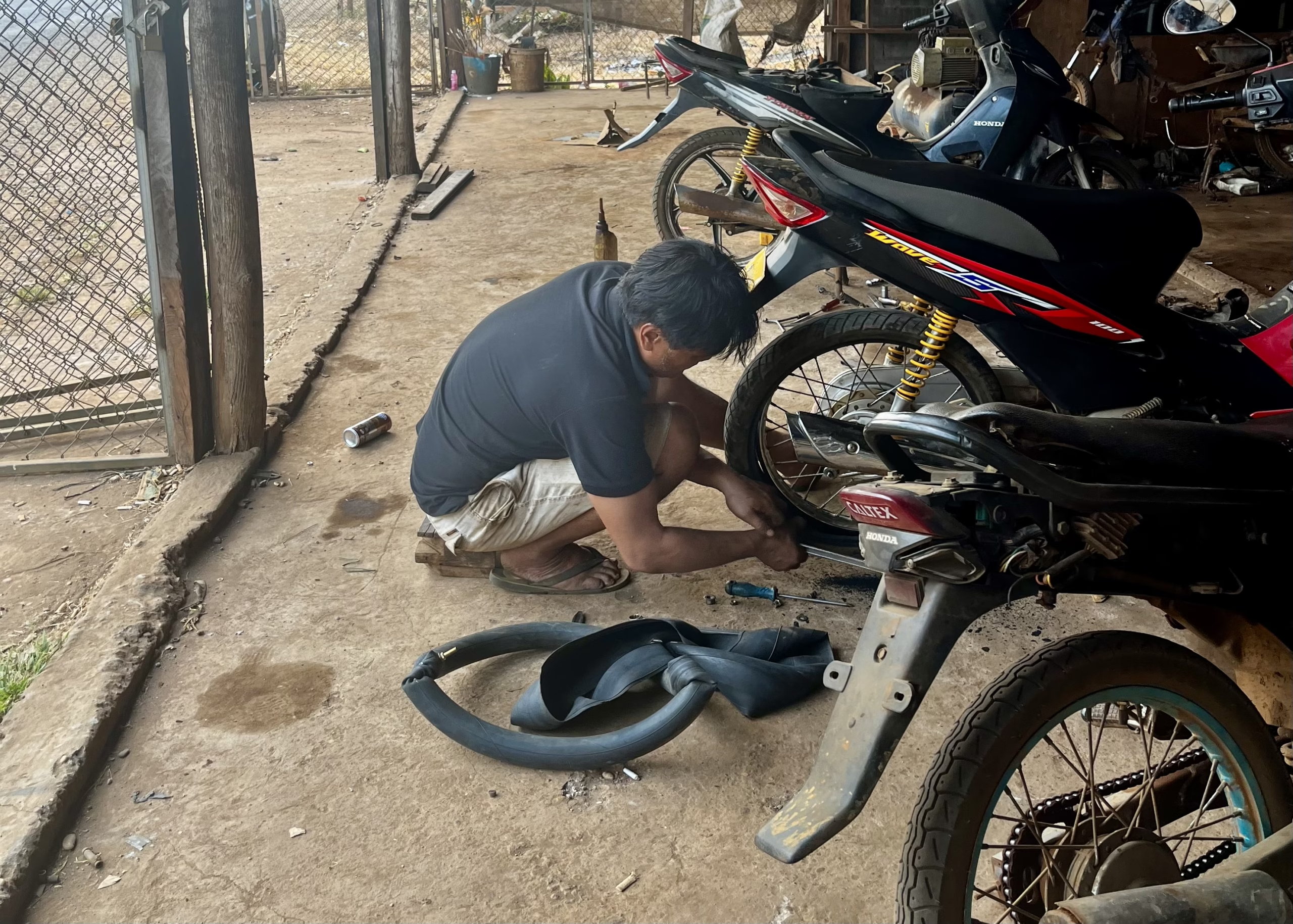
In Laos, small roadside repair shops are everywhere, so if you get a flat, just ride slowly until you find one.
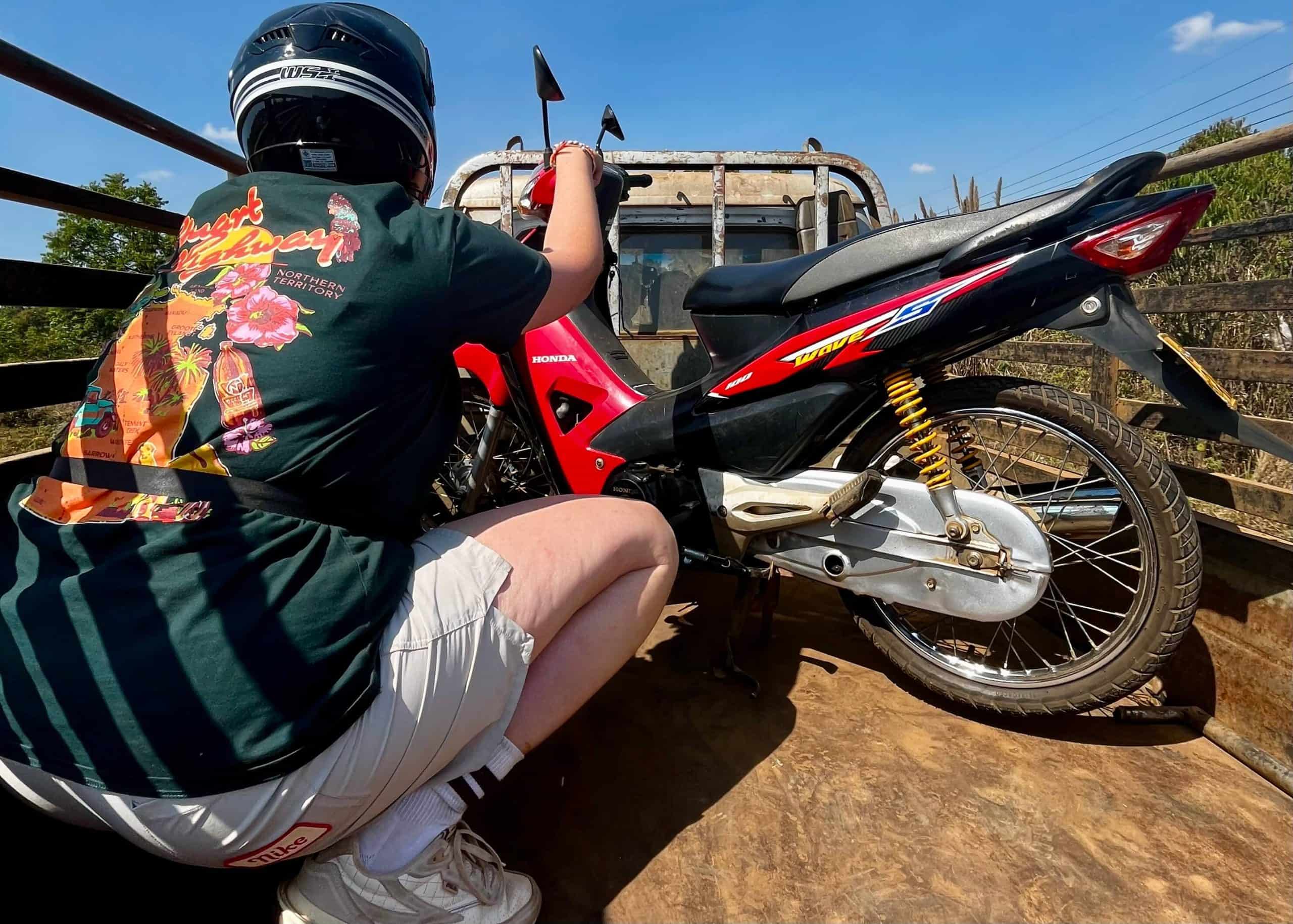
We found locals to be extraordinarily helpful in Laos. Both times we got a flat tire, a local on the side of the road pulled over to help us, and one even gave us a ride in the back of his truck to the nearest repair shop.
Best Cities for Renting a Motorbike in Laos
Where you rent depends on your route. Some cities have better prices, while others have more reliable bikes. Here’s what to expect:
- Pakse – The go-to place for renting a bike for the Bolaven Plateau Loop. We rented from Miss Noy Motorbikes here (10/10 recommend).
- Thakhek – The most popular rental hub for the Thakhek Loop.
- Vientiane – Best for long-term rentals and cross-country trips.
- Luang Prabang – Decent selection but pricier than elsewhere.
Download a your guide with everything you need to know about the Pakse (Bolaven) Loop + a free downloadable Google Map with your route here 👇👇👇
Safety Tips for Motorbiking in Laos
Motorbiking in Laos is an adventure, but like anywhere, it comes with risks.
Common traffic rules and regulations:
- Laos drives on the right side of the road.
- Helmets are mandatory (though often ignored by locals). ALWAYS wear yours.
- Speed limits and road signs can be inconsistent – drive cautiously.
While Laos is generally safe for travelers, the road conditions, unpredictable traffic, and lack of emergency services in rural areas mean you need to be prepared.
Here’s what to know before you set off.
Is Laos Safe for Tourists?
Laos is one of the safest countries in Southeast Asia, with low crime rates and friendly locals. However, there are a few things to be aware of:
Scams and overcharging – Some motorbike rental shops overcharge for damages or repairs. Always take photos of the bike before renting and clarify what’s included.
Remote roads can be risky. Accidents happen, especially on steep or unpaved roads. If you’re heading into rural areas, ride cautiously and avoid speeding.
Petty theft is rare but possible. Tourist hotspots like Luang Prabang and Vang Vieng have occasional pickpocketing or bag snatching, so don’t leave valuables unattended.
Is Laos Safe to Travel Alone?
Yes, Laos is a safe country for solo travelers, but there are a few things to keep in mind – especially if you’re motorbiking through remote areas:
Watch out for reckless drivers and stray animals. Large trucks often take up the entire road, and dogs, chickens, and cows wander onto highways without warning.
Carry enough cash. ATMs are rare outside major towns, and some villages don’t even have places to withdraw money. Keep enough cash on hand for gas, food, and unexpected repairs.
Always have a backup plan. If your bike breaks down in the middle of nowhere, you might not have phone service. At least, you need to be prepared to push your bike to the nearest shop.
Road Conditions & Common Hazards in Laos
- Potholes and unpaved roads – Some roads, especially in northern Laos, are in terrible condition. Expect dirt roads, steep inclines, and sections washed out by landslides.
- Loose gravel – Even paved roads often have gravel on the edges, which makes turning dangerous if you’re not careful.
- Drunk drivers – Locals often drink Beerlao in the evenings, and drunk driving is common, especially at night. Avoid riding after dark if you can.
- Limited gas stations – In remote areas, gas stations are few and far between. It’s a good idea to fill up whenever you see one or carry extra fuel if you’re heading off the main routes.
✅🎒 Be fully prepared for your trip to Laos. Read up on the Do’s and Don’ts we wish we knew beforehand.
Know Before You Go: Essential Gear & Emergency Contacts
Even if you’re renting a motorbike for just a few days, bring the right gear to stay safe:
- Helmet – Not all rental shops provide high-quality helmets. If your helmet is cracked, loose, or missing a visor, ask for a better one or rent from a different shop.
- First-aid kit & flashlight – If you wipe out, you’ll want basic medical supplies until you can find a pharmacy. A flashlight is also useful if you break down at night.
- A mask or something to cover your face – the roads can be dusty.
- Offline maps – Cell service is unreliable in rural Laos. Download Google Maps or Maps.me before your trip so you don’t get lost.
- Emergency contacts – Police: 191 and Medical emergencies: 195
Budgeting for a Laos Motorcycle Trip
Motorbiking in Laos is one of the most affordable ways to explore the country, but costs can vary depending on your travel style.
Whether you’re riding independently on a budget or joining a guided tour, here’s what to expect when planning your expenses.
Daily Costs for Independent Travelers
If you’re renting a bike and traveling independently, here’s a rough breakdown of daily costs:
- Bike Rental: $5–$30 per day (cheaper for semi-automatics, more expensive for manual bikes)
- Fuel: $3–$5 per day (depends on distance and fuel efficiency)
- Accommodation: $5–$15 per night (budget guesthouses, homestays, or hostels)
- Food: $3–$10 per day (local meals are cheap, Western food is pricier)
Total Daily Budget: About $15–$50 per day, depending on how budget-friendly or comfortable you want your trip to be.
💰👉 Here’s how much money you’ll need for backpacking in Laos.
If you stick to local food, stay in budget guesthouses, and rent a semi-automatic bike, you can easily keep costs low.
But if you prefer private rooms, Western meals, or a more powerful bike, expect to spend closer to $40–$50 per day.
Motorcycle Tours in Laos
If you’d rather ride with a guide, there are motorcycle tour operators in Vientiane, Luang Prabang, and Pakse.
These tours typically include a bike rental, accommodation, meals, and a local guide who knows the best routes.
- Cost: $80–$200 per day, depending on the route and type of bike
- Pros: No need to worry about navigation, mechanical issues, or road conditions
- Cons: Less flexibility, and significantly more expensive than renting a bike yourself
For experienced riders, going independent is the more budget-friendly and flexible option. But if you’re unsure about Laos’ roads or want a more structured experience, a tour could be a good choice.
TOP TIP: There are not really any well-rated tours you can book online, but there are many operators where you can book in person. Head to Pakse or Thakhek and have a look along the main street for local agencies if you want to book a tour with a driver.
Responsible Travel & Respecting Local Communities

Laos is home to many ethnic groups and rural communities where tourism is still relatively new. Traveling respectfully makes a difference:
- Ask before taking photos of locals. Many people, especially in remote villages, may not want their picture taken without permission.
- Stay in family-run guesthouses. This not only gives you a more authentic experience but also directly supports local families.
- Eat at local markets. Laos has amazing street food, and dining at markets helps small vendors rather than big chains.
By being a prepared and respectful traveler, you’ll have a much richer experience while also supporting the communities you pass through.
If this sounds like you, we think you’ll like…
🌿 Exploring Northern Laos
🥾 Trekking in Luang Namtha
⛰ Visiting Kong Lor Cave
