

Two Weeks in Vietnam: The Ultimate Guide for First-Timers
Two weeks in Vietnam is the perfect amount of time to experience the country’s incredible contrasts, from the misty mountains of the north to the vibrant chaos of the south.
If you’re dreaming of authentic food, peaceful landscapes, and time to actually enjoy each destination (not just tick off the sights), this 2-week Vietnam itinerary is for you.
We designed this route to balance adventure with culture — think cooking classes in Hoi An, boat rides through Ninh Binh, and laid-back beach days in Phu Quoc — all while keeping costs realistic and travel days manageable.
If it’s your first trip to Vietnam and you prefer slow travel over nightlife, we’ll show you exactly how to spend your two weeks exploring the best of the country at your own pace.
DISCLOSURE: This post may contain affiliate links, which means we may earn a small commission if you book or buy something through them – at no extra cost to you. We only recommend things we’d actually use ourselves. Read more in our Privacy Policy.
The Best Places to Go in Vietnam for First Timers
This two week Vietnam itinerary covers all the major places across the country – allowing first time visitors to get a real taste of all of the best parts of Vietnam.
- Hanoi – read more ➡
- Cat Ba Island – read more ➡
- Ninh Binh – read more ➡
- Phong Nha – read more ➡
- Hoi An – read more ➡
- Ho Chi Minh City – read more ➡
🇻🇳 Not sure whether to start your route in the north or south? This guide compares Hanoi and Ho Chi Minh City to help you make the right call.
Our Detailed 2 Week Vietnam Itinerary
Before we dive into our Vietnam itinerary, there are a few things to note:
- The itinerary is ideal for first-timers who want a mix of iconic sights and a bit of adventure without venturing TOO far off the beaten path.
- We recommend staying at least two nights in most places to avoid travel burnout
- We traveled from north to south because it worked best logistically coming from Thailand, but you can easily reverse the route.
- This itinerary skips the Ha Giang Loop as it just wasn’t the right fit for us on this trip.
Without further ado, here’s what we think is the perfect itinerary for two weeks in Vietnam!
🧭 New to Vietnam? Discover the best destinations for first-time visitors.
Day 1-3: Explore the Charming Streets of Hanoi
Spend a few days getting yourself acquainted with the city that everyone has an opinion about.
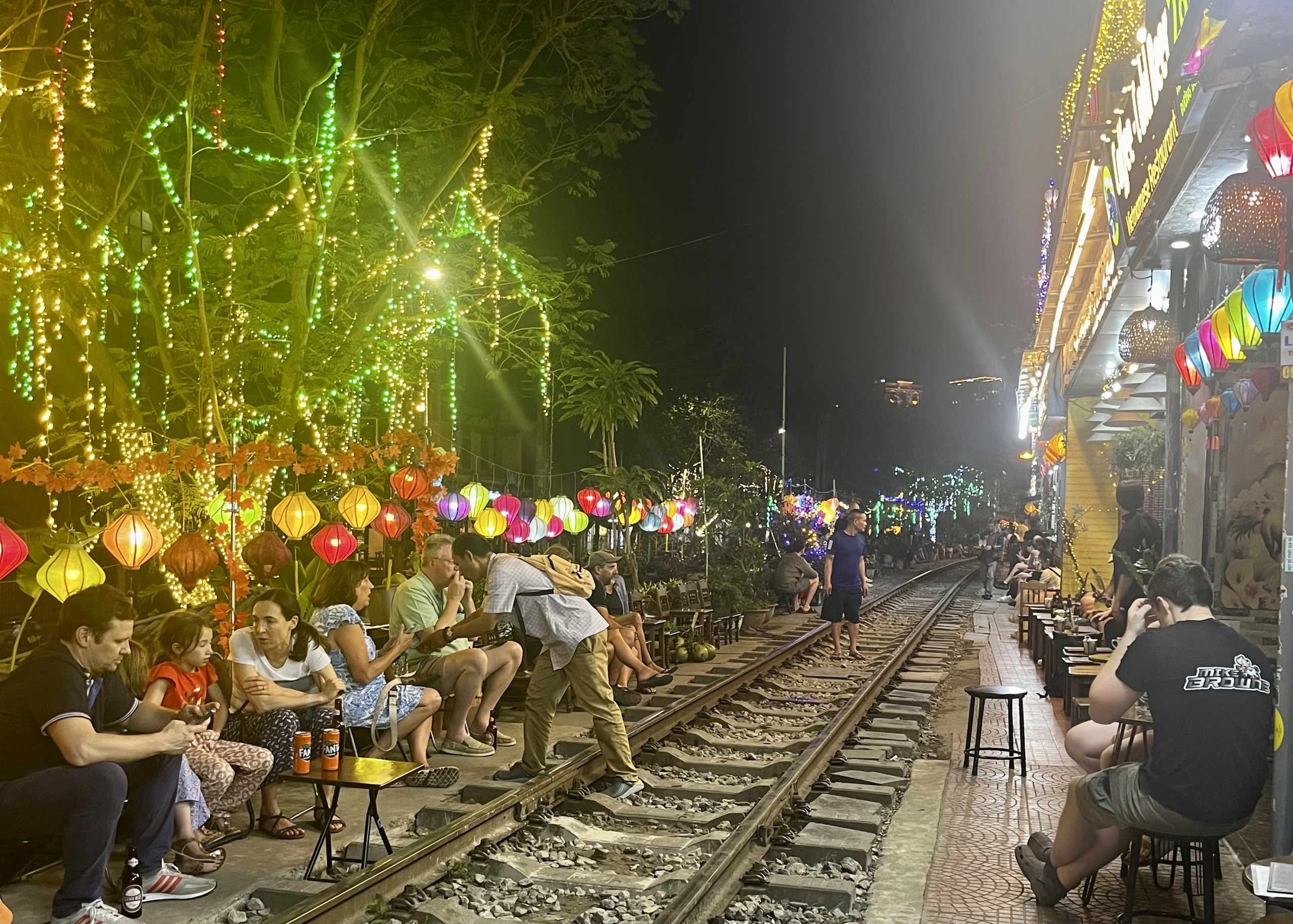
For us, it quickly became a personal favorite during our four month trip. We fell in love with the vibrant chaos of Hanoi, and we’re sure you will too!
Hanoi manages to retain its authentic “lived-in” charm despite being a popular tourist spot. The city is bursting with rich history, incredible food, and a dynamic energy that’s hard to ignore.
Where to Stay: Hanoi City Backpackers Hostel
Where to Eat: Bun Cha Dac Kim
Top Things to Do: Visit Train Street, take a walking tour, & coffee shop hop
Day 3-5: Take a Boat Cruise from Cat Ba Island
Cat Ba Island offers the same stunning landscapes as Ha Long Bay, with fewer tourists and more affordable options. You’ll get the same iconic experience just with a more sustainable and budget-friendly approach.

Cat Ba Vision were our go to for a cruise and they were fantastic. They covered all the logistics, fed us a delicious catered lunch, and they even assisted us with booking onward tickets to Ninh Binh.
You can spend one day exploring the island and another cruising, or choose an overnight cruise to make the most of your two days on the water.
🏞 Want to focus your time in the north? This Northern Vietnam itinerary connects Hanoi, Sapa, Ninh Binh, and Ha Long Bay into an easy-to-follow route.
A Ha Long (or Long Ha) Bay cruise may be the true highlight, but Cat Ba still has its fair share of charming cafes, restaurants, and a few beautiful hikes.
Where to Stay: Cat Ba Green Hotel
Where to Eat: Viet Hai Restaurant for local food & Secret Garden Restaurant for Western food
Top Things to Do: Kayak with glowing plankton, hike in Cat Ba National Park, cruise through iconic Lan Ha (Ha Long) Bay
Day 5-7: Marvel at the Beauty of Ninh Binh
You can expect astounding beauty during your time in Ninh Binh. It is often called “inland Ha Long Bay,” and we can see why.
Stock up on tasty meals in one of Tam Coc’s many restaurants. Afterwards, burn off some energy cycling through rice fields, hiking to scenic viewpoints, and cruising along the dramatic Trang An river.

The region’s natural beauty is simply breathtaking, and we enjoyed taking time to explore the sights while also unwinding in cozy coffee shops.
📌 Looking for a really special experience in Ninh Binh? Book this tour. You’ll get to meet water buffalo up close, learn traditional fishing methods, help plant rice, and join a Vietnamese cooking class.
If you’re heading south, buses usually depart late in the evening, so you’ll have almost a full third day to enjoy the area before you leave.
Where to Stay: Tam Coc Lotus Flower Homestay
Where to Eat: Father Cooking Restaurant
Top Things to Do: Cycle around rice fields, cruise down the Trang An River, & hike up to Mua Cave viewpoint
Day 7-9: Enjoy the Scenery around Phong Nha
Phong Nha can be deceiving. It may appear to be a small town, but the surrounding Phong Nha-Ke Bang National Park is anything but!
We hadn’t planned to stop here initially, but after a fellow traveler’s recommendation, we changed our itinerary—and we’re so glad we did.

An extended stay gives you time to explore the incredible caves and the National Park for two days, with an extra day to unwind at your accommodation, in town, or by the river.
Cruising through the National Park with its breathtaking scenery was a true “pinch-me” moment.
Where to Stay: Little Rock Homestay
Where to Eat: Bamboo Chopsticks Restaurant & Cháo Sáng Toàn Huế
Top Things to Do: Motorbike around the national park + the Phong Nha Botanic Garden, swim in the river & explore the many caves
👇 Read More About Phong Nha Here 👇
Day 9-12: Walk Around Hoi An‘s Ancient Town
Similarly to Hanoi, many people find Hoi An to be overwhelming. It doesn’t have to be though. Take the time to enjoy it at a slower pace, and you’ll discover how wonderful Hoi An is.
Despite its popularity with tourists, the city retains an authentic charm, with locals living and working side by side with visitors.

The Ancient Town is lively and chaotic, but it’s worth exploring to see its historic temples and vibrant lantern displays.
One experience you can’t miss is having custom clothing made – it’s a quintessential part of visiting Hoi An.
Plan to stay at least three days to allow for fittings and to get the best results while giving the tailors ample time.
Where to Stay: Okra Hoian Homestay (Hostel) or Kaia Gallery Hotel (Boutique Stay)
Where to Eat: Nữ Eatery
Top Things to Do: Take a lantern making class, explore the ancient town, & bike to the beach and through the villages around Hoi An.
👇 Read More About Hoi An Here 👇
Day 12-14: Visit the Controversial Ho Chi Minh City
As we made our way south, many people warned us that Ho Chi Minh City was their least favorite stop and advised us to spend as little time there as possible.
We couldn’t disagree more. While it may lack the small-town charm of other destinations, it’s a dynamic city full of things to explore.

We loved discovering its museums, taking river walks, and browsing the lively markets.
This serves as a reminder to always form your own travel opinions – every place resonates differently with different people, and that’s perfectly fine!
Where to Stay: Laca Hostel
Where to Eat: Bep Me In
Top Things to Do: Visit the War Remnants Museum, watch a traditional water puppet performance, & have some drinks at a rooftop bar
👇 Read More About Ho Chi Minh Here 👇
How to Travel Around Vietnam
Conveniently, Vietnam has an extensive transport network around the country making it easy to get from A to B whichever mode you choose.
Taking Buses Around Vietnam
Night buses in Vietnam are a key part of the Vietnam backpacking experience.
They offer access to nearly every destination, particularly along the popular tourist route, making them the most affordable travel option.
We guarantee you’ll come away with a story to tell from at least one of your night bus adventures!!
TOP TIP: Spend the extra few dollars to book VIP buses instead of local ones. VIP buses offer much more space, better amenities, and fewer people sprawled out on the floor.

Train Travel in Vietnam
Train travel in Vietnam can also be a convenient option, depending on your route. Many train stations are situated outside of city centers or in nearby towns, which can add precious hours to your travel days.
The only train we took was from Da Nang to Ho Chi Minh City – a 20-hour (!!) journey. While it was the most convenient option for that leg of the trip, we’re not sure we’d do it again.
Overall, we found bus travel to be more reliable, with regular food stops and more space on the sleeping beds compared to the train.
While the train did provide food, it was served quickly and at random times, so if you were asleep or on the top bunk (like us), you might miss it.
👉 For booking buses, we recommend using 12Go. Their VIP bus services are reliable, comfortable, and affordable.
How Much Two Weeks in Vietnam Will Cost
We spent on average $30 USD per person per day in Vietnam. This includes food, drink, accommodation, transport, big excursions, and expensive medicines for Jess (a story for another time).
💸 For a more detailed breakdown of how much Vietnam costs, read our one month Vietnam itinerary.
What to Pack for Two Weeks in Vietnam
Our most treasured items were loose fitting clothes that kept us cool in the humidity. Classic options include loose t-shirts, light overshirts, flowy pants and long skirts.
Make sure you also pack a scarf to cover your shoulders when visiting religious sites, plus versatile shoes that look good, but are also suitable for climbing viewpoints and trekking.
The Best Time to Visit Vietnam
The ideal time to visit Vietnam largely depends on the region you plan to explore, but overall, March to April and September to November are great choices.
During these months, the weather is generally pleasant across the country, from the cooler northern mountains to the sunny southern beaches.
If, like us, you prefer fewer crowds while still catching comfortable weather, the shoulder seasons in spring and fall are your best bet.
We traveled in April and found the weather hot but not unbearable.

Vietnam Travel FAQs
Is Two Weeks Enough Time in Vietnam?
Two weeks is enough time to see Vietnam’s highlights, including Hanoi, Ha Long Bay, Hoi An, and Ho Chi Minh City. You’ll get a real sense of the country’s culture and scenery, though many travelers extend to three or four weeks for a slower pace.
This itinerary covers the highlights of Vietnam, with a sprinkling of places many people skip. We think two weeks in Vietnam is enough time to get a real feel for the country, but we can guarantee you’ll want to go back!!
Most visas allow stays from 45-90 days so why not take advantage of this if you’re traveling long term? For inspiration, check out our 1-month Vietnam itinerary to see what we’d add with more time.
When is Rainy Season in Vietnam?
Rainy season varies by region: North Vietnam sees the most rain from May–September, Central Vietnam from September–December, and South Vietnam from May–November.
Showers are usually short but intense, so bring a rain jacket and plan for flexible travel days.
Vietnam’s rainy season varies across regions, so planning ahead is key:
Southern Vietnam: May–November, peaking June–August.
Traveling during rainy season is still possible – it just calls for flexibility, a sturdy rain jacket, and extra time at each destination!
Northern Vietnam: May–September, heaviest in July–August.
Central Vietnam: September–December, especially October–November.
Traveling during the rainy season is still possible – it just calls for flexibility, a sturdy rain jacket, and extra time at each destination!
Should I Start my Vietnam Itinerary in Hanoi or Ho Chi Minh?
Both routes work well.
Starting in Hanoi offers immediate culture shock and access to northern highlights like Ha Long Bay and Sapa, while beginning in Ho Chi Minh City provides an easier introduction and smoother northbound journey.
The choice depends on flight deals, weather, and travel style.
We started in Hanoi and loved being thrown into this hectic city – adjusting to the chaos was part of the fun!
This isn’t for everyone though; many travelers told us how overwhelmed they felt starting there. For less of a culture shock, consider starting in Ho Chi Minh.
Many people we met recommended going south to north, saying the landscapes and cultural depth build beautifully that way.
In our opinion, both directions are equally rewarding – your experience depends more on what you want to see and how much time you spend in each place.
How Much Should I Budget for 2 Weeks in Vietnam?
Budget travelers can expect to spend around $30–40 USD per day in Vietnam, including food, accommodation, and transport. Mid-range travelers average $60–90 per day, while luxury stays can exceed $150. Remember to factor in visa and entry costs.
If you travel on a budget like us, you can easily get by with around $30 USD per day. Also remember visa fees vary by country, and don’t forget to budget for transit to and from Vietnam.
Will I Have Time to Do the Ha Giang Loop on a 2 Week Vietnam Itinerary?
The Ha Giang Loop usually takes 3–4 days, which is difficult to fit comfortably into a two-week Vietnam itinerary. It’s best saved for a longer trip unless you cut other destinations or travel quickly.
In our opinion, with only two weeks in Vietnam, we suggest that you skip the loop and perhaps consider it on your next visit.
As low-key travelers who aren’t into parties and regularly try to avoid large group tours, the Ha Giang Loop wasn’t for us.
The scenery looks unbelievable, we just weren’t totally comfortable with the idea and couldn’t find a tour company who could cater to us.
Which Other Countries Should I Visit Close to Vietnam?
If you’re backpacking, Vietnam’s location makes it an excellent starting point for exploring neighboring Southeast Asian countries. Here are a few top options:
🇰🇭 Cambodia: Visit Phnom Penh or Siem Reap to explore Cambodia’s rich history, including the iconic Angkor Wat. The most convenient route is a bus from Ho Chi Minh City to Phnom Penh.
🇱🇦 Laos: Discover Laos’ tranquil landscapes and off-the-beaten-path adventures. The bus from Hanoi to Vientiane is a popular, though lengthy, journey.
🤔 Still deciding between Laos and Vietnam? This comparison breaks down travel style, costs, and highlights to help you choose the right destination for your trip.
🇹🇭 Thailand: Many travelers make their way back to Thailand after visiting Vietnam. Flights are available from major cities like Ho Chi Minh City or Hanoi, or you can travel overland via Cambodia. We flew from Bangkok to Hanoi to start our Vietnam trip.
