

Overnight Sleeper Train in Vietnam: A Guide for First-Timers
Yes — Vietnam’s overnight sleeper trains are worth it if you choose the right berth and go in with realistic expectations.
They’re affordable, surprisingly comfortable in soft sleeper cabins, and a great way to save a night of accommodation. But they’re (mostly) not luxury and delays do happen.
We took the 20-hour Da Nang to Ho Chi Minh City sleeper train (which turned into 24 hours thanks to a middle-of-the-night delay and bus transfer), so this guide is based on first-hand experience, not just booking screenshots.
This guide is for first-time Vietnam travelers deciding whether to take the train, which berth to book, and whether it’s better than flying or taking a sleeper bus.
DISCLOSURE: This post may contain affiliate links, which means we may earn a small commission if you book or buy something through them – at no extra cost to you. We only recommend things we’d actually use ourselves. Read more in our Privacy Policy.
Is the Overnight Sleeper Train Right for You?
We booked the train because it was cost efficient, a super long bus was just…not even a choice for us, and we wanted the experience of traveling by rail in Vietnam.
You should take the train if:
- You want to save on accommodation
- You enjoy slow travel
- You’re traveling 8–18 hours between cities
- You want scenery (Hue–Da Nang especially)
Skip it if:
- You’re short on time
- You’re sensitive to noise
- You expect spotless bathrooms
- You have tight onward plans
🏞 If you’re focusing on the north, this itinerary shows exactly how to connect Hanoi, Sapa, and Ninh Binh using Vietnam’s overnight trains.
How to Book Vietnam Sleeper Train Tickets
Booking your Vietnam overnight train tickets in advance is the best way to secure a good seat – especially during peak travel seasons.
You can either book online before your trip or buy tickets in person at the train station (we don’t recommend this).
Booking Online
Booking online is the easiest and most convenient way to secure a ticket for a sleeper train in Vietnam, especially if you want a specific berth type or a VIP cabin.
- Where to book: Reliable platforms like 12Go (our preference for the best customer service) and Vietnam Railways’ official site allow you to reserve tickets in advance.
- Best for planning ahead: If you’re taking a long, popular route like the Hanoi to Da Nang train or the train from Hanoi to Ho Chi Minh, booking online ensures you get your preferred cabin type.
- VIP cabin options: If you’re looking for a first-class sleeper train Vietnam experience, some private companies offer luxury cabins through online platforms.
🚂 Heading south? This Ho Chi Minh City itinerary shows how to explore the city and fit it seamlessly into your Vietnam train route.
Buying Your Tickets at the Train Station
If you prefer to book in person, you can buy tickets at any major train station in Vietnam. This can be a good option if you’re traveling spontaneously, but it does come with some risks.
- Pros: No service fees, and you can see seat availability in real-time.
- Cons: Trains (especially soft sleepers) can sell out days in advance, and station staff may not always speak English.
- Best for last-minute travel: If you’re flexible and don’t mind taking a hard sleeper or a lower-class seat, you can usually find something – even close to departure time.
🚉 Before planning transit or food stops, make sure you’re heading to the best places — we’ve done the legwork for you with our 7 favorite places in Vietnam.
How Much Do Vietnam Sleeper Trains Cost?
The price of a Vietnam sleeper train ticket depends on the route, cabin type, and whether you’re booking through a private company or Vietnam Railways.
- General price ranges:
- Hard sleeper Vietnam (6-berth cabins) – Budget-friendly but less comfortable (~$20–$40 for longer routes).
- Soft sleeper (4-berth cabins) – More privacy and comfort (~$30–$60).
- First-class sleeper train Vietnam (VIP/private cabins) – The most expensive option, often run by private companies (~$50–$100+).
- Short vs. long routes: A short overnight ride like Hanoi to Lao Cai (for Sapa) will be cheaper than a full-length journey like the train from Hanoi to Ho Chi Minh.
- Hidden Costs: Online booking platforms might add a small service fee, while private luxury trains will always cost more than standard Vietnam Railways tickets.
Regardless of how you book, sleeper trains are a fairly affordable and comfortable way to experience Vietnam by train – especially compared to flights or private transport.
Train Ticket Classes: What Are Your Options?
Vietnam’s sleeper trains come with a range of seating and sleeping options, from no-frills budget choices to more comfortable private cabins.
To choose your berth, click ‘book now’ after searching your route on 12Go.
Vietnam Train Classes at a Glance
Here’s a quick comparison to help you choose the right ticket class for your sleeper train journey.
|
Train Class |
Best For |
Comfort Level |
Layout |
Booking Name |
Our Take |
|---|---|---|---|---|---|
|
Hard Seat |
Ultra-budget travelers |
🚫 |
Open carriage |
Usually book in-person |
Not recommended for overnight travel |
|
Soft Seat |
Short daytime trips |
🙂 |
Open carriage |
2nd Class AC Seat |
Not great for sleeping |
|
Hard Sleeper (6-berth cabin) |
Budget overnight travel |
😬🤔 |
3 bunks per side |
2nd Class Sleeper |
Bottom bunk is worth paying extra for |
|
Soft Sleeper (4-berth cabin) |
Most travelers |
✅ |
2 bunks per side |
1st Class Sleeper |
!! Our top pick !! |
|
VIP Sleeper (2-berth cabin) |
Couples & privacy seekers |
🌟🌟🌟 |
Private cabin |
Cabin 2x |
Max comfort and quiet |
Hard Seat – The Cheapest, Least Comfortable Option
If you’re looking to save as much money as possible, hard seats are the absolute cheapest choice. They are not great for overnight travel.
We thought about doing this just for the plot for about 5 seconds, then agreed it was a hard no.
These are simple, upright wooden or cushioned benches, often crowded and uncomfortable for long journeys. We don’t recommend booking this option unless you really, really can’t afford anything else!
✅ How to Book: Often only available to purchase in-person
Soft Seat – A Slight Upgrade, But Still Not Ideal for Sleeping
Soft seats offer slightly better padding and a bit of recline, making them a more tolerable choice for shorter trips.
However, they’re still not the best (but also not the worst) for overnight rides and are mostly found on daytime trains.
We had seats like this when we traveled from Bangkok to Chiang Mai and it was honestly just fine for the 13-hour train ride.
✅ How to Book: Select 2nd class AC seats on 12Go
😴 Thinking of saving money with an upright seat? Here’s what a 13 hour overnight ride was really like. The good and the uncomfortable.
Hard Sleeper (6-Berth Cabin) – Budget Sleeper with Minimal Comfort
The most affordable sleeper option, these cabins have three bunks per side (upper, middle, and lower). We stayed in this cabin and it was…fine.

Next time around we’ll pay a little more for a smaller berth.
The mattresses are thin, and space is tight, but it gets the job done if you’re on a budget. The lower bunks cost more but have more headroom, while the top bunks are the cheapest but trickier to access.
✅ How to Book: Select 2nd class sleeper on 12Go
TOP TIP: If you’re going to book a 6-Berth, get the bottom bunk. You won’t have to climb up and down a super high bunk to use the bathroom and you’ll actually be able to sit up. Don’t be us 🙂.
Soft Sleeper (4-Berth Cabin) – The Best Value for Most Travelers
This is the class that we will always try to book from now on!
This is the most popular option for overnight travel, offering two bunks per side with softer mattresses and a bit more space.
You’ll be sharing the cabin with three other passengers unless you book all four berths. It’s the best balance of affordability and comfort.
✅ How to Book: Select 1st class sleeper on 12Go
VIP Sleeper (2-Berth Cabin) – The Most Comfortable Train Class in Vietnam
If you want extra comfort, private train companies like Sapaly Express (the luxury Sapa train), Chapa Express, and Victoria Express offer VIP 2-berth cabins.
Heading to Sapa? Read more about how to get there, where to stay, and what to do once you’re there:
⛰ How to spend 3 days in Sapa (including our favorite homestay)
🦋 The coolest, most unique handicraft workshop we’ve ever done
These come with better bedding, more space, and a quieter experience, making them a great option for couples or those who want a bit more privacy.
You’ll need to book this berth as soon as ticket sales open – at least one month in advance – as they sell out very quickly.
✅ How to Book: Select Cabin 2x on 12Go
For most travelers, soft sleepers are the best choice, while VIP cabins are ideal if you’re willing to splurge for extra
Pros and Cons of Taking Overnight Sleeper Trains in Vietnam
Taking a sleeper train in Vietnam is a unique experience – part nostalgic slow travel, part budget-friendly transport, and part test of patience (more on that later).
While it’s a great way to cover long distances without missing a day of exploring, it’s not for everyone. Here’s a breakdown of the pros and cons:
Pros: Why Take a Sleeper Train in Vietnam?
✅ Save money on accommodation – Your train fare includes a bed for the night, which can be cheaper than booking both transport and a hotel.
✅ No airport hassle – Skip the security lines, baggage fees, and long taxi rides to the airport. Just board the train and go.
✅ Scenic views – Some routes (especially around Hue and Da Nang) offer incredible coastal and countryside views you won’t see from a plane or bus.
✅ A classic travel experience – There’s something special about drifting off to the sound of the train, waking up in a new city, and stepping straight into your next adventure.
✅ More comfortable than buses – Unlike Vietnam’s notoriously bumpy overnight buses, sleeper trains give you an actual bed to stretch out in.
🚍 If you’re weighing train vs bus, read this before you book — our full guide to Vietnam’s overnight sleeper buses →
Cons: What to Watch Out For
❌ Sleep quality varies – While you get a bed, it’s not exactly a luxury mattress. The sleeper train in Vietnam rattles, stops frequently, and if you’re unlucky, you might end up with loud cabin-mates.
❌ Trains can be delayed – Expect delays of 30 minutes to several hours, especially on longer routes. If you have a tight schedule, plan accordingly.
❌ Hygiene is hit or miss – While some trains are decently clean, others are a bit grimy, especially the bathrooms by the end of a long journey. Bring hand sanitizer and wet wipes.
❌ Not as fast as flying – If you’re short on time, flights between major cities are much quicker and not always that much more expensive.
❌ Shared cabins mean less privacy – Unless you book a VIP cabin, you’ll be sharing space with strangers. Sometimes that’s fine, but if you get noisy or inconsiderate bunkmates, it can be frustrating.
Overall, sleeper trains are a great option if you enjoy slow travel and want to experience Vietnam beyond just its airports and highways.
But if you’re picky about comfort, hygiene, or sticking to a strict schedule, you might prefer other options.
🤔 If you’re unsure, browse travel times and prices here to see what you’re getting yourself in for.
What to Expect On Board an Overnight Sleeper Train in Vietnam
Inside the Cabin
Cabins on Vietnam’s sleeper trains are compact but functional. Soft sleepers offer the most comfort, while hard sleepers are more budget-friendly but tighter on space.
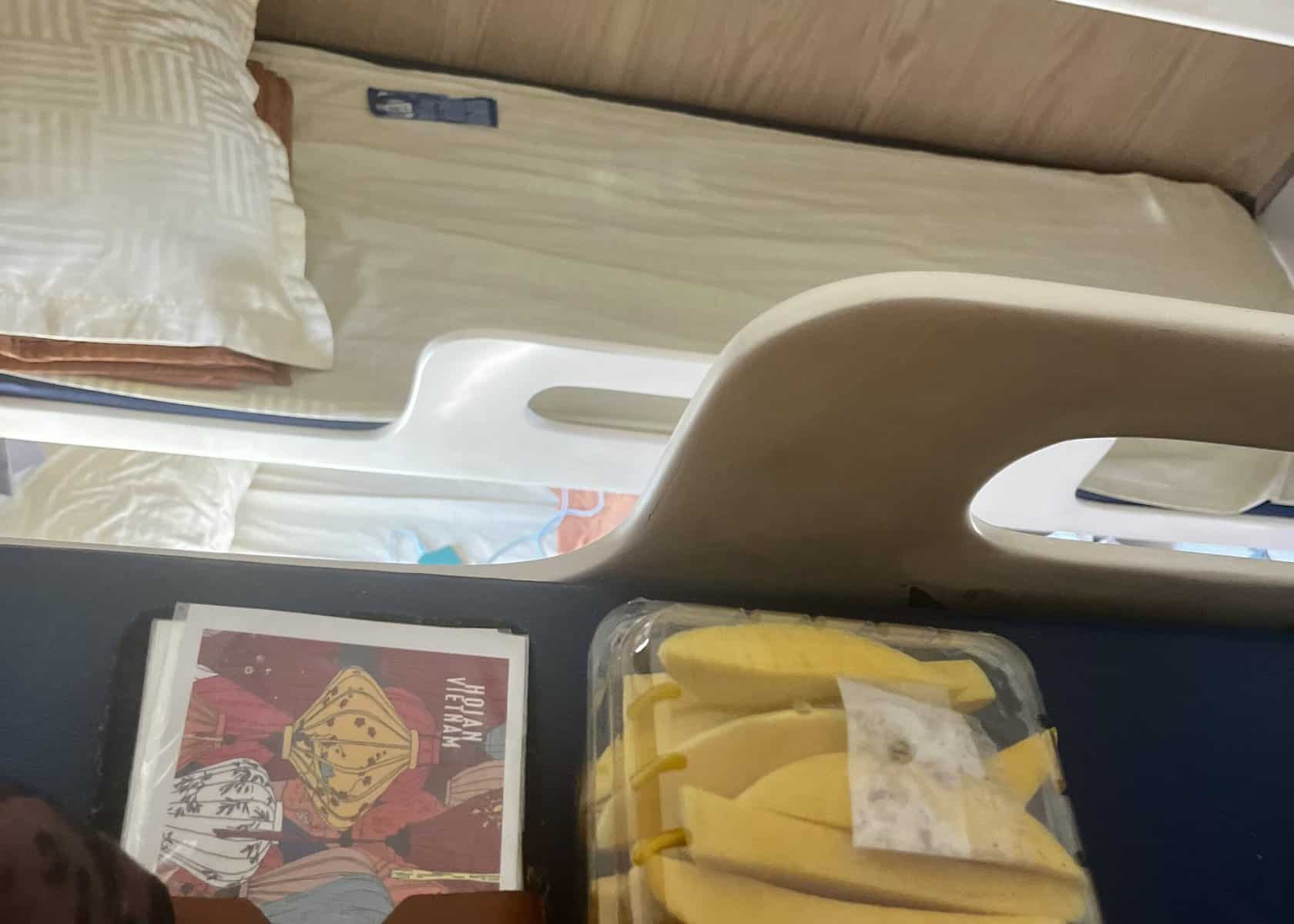
If you’re used to luxury train travel, you might be in for a surprise – but if you’ve ever taken a night train in Southeast Asia, you’ll know what to expect.
Bed Quality and Space
- Soft sleeper (4-berth): The best balance of comfort and cost, with padded bunks and decent space.
- Hard sleeper (6-berth): Cheaper but more cramped, with thinner mattresses.
- VIP cabins (2-berth): More private and comfortable, but pricier.
⁉️ Not sure which cabin to choose? Compare current train classes, layouts, and availability here →
Amenities Provided
- Basic bedding: Thin mattress, pillow, blanket.
- Some cabins have charging outlets, but not all work, so bring a power bank.
- Lights often stay on at night, so an eye mask is a good idea.
Cleanliness
How clean your cabin is depends on which train you take. Private operators like Sapaly or Chapa Express tend to be tidier, while Vietnam Railways’ standard cabins can be hit or miss.
Expect some dust, worn-out carpets, and possibly unwashed bedding – bringing a sleep liner isn’t a bad idea.
Our train was fine, but it’s best to be prepared.
Luggage Storage
There’s enough space for luggage, but it’s not the most secure setup. Keep valuables close and don’t leave important items unattended.

- Large bags go under the lower bunks or in overhead racks for top bunks.
- Small backpacks should stay with you in bed.
- Use a lock if you’re storing a bag away from your bunk.
TOP TIP: Keep a day bag with essentials (passport, phone, wallet, charger, snacks) easily accessible so you don’t have to dig through your luggage mid-ride.
Sleeper Train Toilets
This is one area where managing expectations is key. The toilets start off fine but get progressively worse as the journey goes on.
That being said – they actually weren’t too bad even at the end of our 20-hour journey.
- Western-style and squat toilets are available on most trains.
- Bring your own toilet paper and hand sanitizer – don’t expect them to be stocked.
- Use the toilet early in the journey before things potentially get messy.
Our experience: Our sleeper train had surprisingly decent facilities.
While the floor was a little wet and toilet paper ran out half way through the journey, we really can’t complain. Just be prepared for anything.
Cell Service & Connectivity
Vietnam’s sleeper trains don’t have WiFi, but mobile data works in most areas. If you’re hoping to stay connected, here’s what to know:
- 4G service is generally reliable near cities but can be spotty in rural areas.
- Expect dead zones in tunnels and remote regions.
- Download movies, podcasts, or books beforehand just in case.
Food on Board
If you’re hoping for a gourmet meal on board, you’ll be disappointed. But if you’re fine with simple train food or bringing your own snacks, you’ll be fine.
What’s Available for Purchase
- Instant noodles, snacks, and drinks are sold on the train.
- Some trains offer a hot meal (usually rice with meat and vegetables).
- Vendors hop on at station stops to sell banh mi, boiled eggs, and fruit.
Our Experience with Train Food
We weren’t sure what to expect, so we brought plenty of snacks just in case. On our train from Da Nang to Ho Chi Minh City, a food cart came by every 1-2 hours, starting a few hours after departure.
The woman pushing the cart would knock on the doors of each berth, offering food. We didn’t buy anything from the cart but did pick up some instant noodles for dinner at some point.
A heads-up about the restaurant car: It seemed more like a hangout spot for men smoking than an actual place to eat.
When we walked in and took a seat, we got plenty of unwelcome stares before being told that no food was served there – except for bags of crisps.

We did manage to buy our instant noodles there, but after paying, we were told we’d have to find our own hot water… somewhere in another train car.
Luckily, a friendly local saw us wandering up and down the train with our noodle cups and helped us find it.
Lesson learned: Bring your own instant noodles (there should be a free hot water dispenser on board) or plan to buy dinner from the hot food cart when it comes around.
The Scenery
Some train routes in Vietnam pass through stunning landscapes, making daytime travel a great choice if you want to see more than just the inside of your cabin.
Before it got dark, we hung out in the hallway in front of the big windows for awhile just to stretch our legs and change up the scenery.
Best Routes for Scenic Views
- Hanoi to Lao Cai – Mountain scenery as you head north.
- Hue to Da Nang – The famous Hai Van Pass offers breathtaking coastal views.
- Nha Trang to Quy Nhon – A lesser-known but beautiful stretch along the coast.
If you’re traveling during the day, grab a window seat for the best experience.
An Alternative Scenic Vietnam Adventure
🛵 Alternatively, the Hai Van pass is super popular to experience by motorbike. There are tons of tours you can book with an easy-rider for a decent price. This one has great reviews.
🏍 You cruise along the coast, stopping at lagoons, waterfalls, beaches, and mountain passes. The ride costs about $65 USD on average, and is a great shorter (and safer!) alternative to the Ha Giang Loop.
Getting Off at Your Destination
Vietnam’s train stations range from organized to absolute chaos, so it helps to be prepared.
Preparing for Your Stop
- Conductors usually give a heads-up before major stops, but set an alarm just in case and track your location on your phone.
- Trains don’t stop for long, so have your bags packed and ready to jump off the train when it gets to the station.
Transport Options at Major Destinations
- Hanoi & Ho Chi Minh City: Grab, taxis, and buses are easy to find.
- Lao Cai (for Sapa): Shared minibuses and private transfers are the main options.
- Hue & Da Nang: Taxis and motorbike taxis are common.
- Quy Nhon & Ninh Binh: Fewer options – pre-arranging transport is best. Reach out to your accommodation if you need help booking.
If you’re arriving late at night, know your plan in advance to avoid getting stranded.
More Tips for Taking a Sleeper Train in Vietnam
Book a Full Cabin for Privacy
If you’re traveling with a small group or just want extra space, booking an entire cabin is the way to go.
Most Vietnam overnight trains have four-berth soft sleeper cabins or six-berth hard sleeper Vietnam options.
For the most privacy and comfort, book all the beds in a four-berth cabin. If you’re traveling solo, you might be able to pay for all four spots, but it’s not the most budget-friendly choice.
For an even more comfortable experience, some private train companies offer first class sleeper train Vietnam cabins with upgraded bedding, better service, and fewer passengers per cabin.

Eat Dinner Before You Go on the Train
Train food can be hit or miss, and restaurant cars aren’t always the most inviting spaces (think: smoke-filled and mostly occupied by local men).
Like we said: food carts come by regularly, but the selection is limited, and you might not find anything you actually want to eat.
Save yourself the hassle and eat before boarding your sleeper train in Vietnam.
If you don’t have time for a full meal, at least pack some snacks or instant noodles – just make sure you ask where to find hot water on board.
Use a Day Pack
We already mentioned it, but it’s worth repeating – keep your valuables in a small day pack and have it within arm’s reach at all times.
While theft isn’t a huge issue on Vietnam overnight trains, it’s still smart to keep your passport, phone, and money on you instead of in your main luggage.
If you’re not a light sleeper, you might even want to clip your bag to your bed or use it as a pillow.
Booking in Advance
Vietnam by train is a popular way to travel, especially on well-known routes like the Hanoi to Da Nang train or the train from Hanoi to Ho Chi Minh.
If you want a soft sleeper berth (or a full cabin), it’s best to book at least a few days in advance – longer during peak travel times.
You can buy tickets at the station, but for convenience, booking online is the best option.
🏮 Stopping in central Vietnam? This Hoi An itinerary covers what to do, where to stay, and how to plan your visit from the nearby Da Nang train station.
Our Experience With Vietnam Sleeper Trains
If you’ve read this far, you already know that Vietnam’s sleeper trains aren’t the fastest or fanciest way to travel, but they’re efficient, affordable, and – if you set your expectations right – a fun experience.
The key to enjoying a Vietnam overnight train? Go in with realistic expectations.
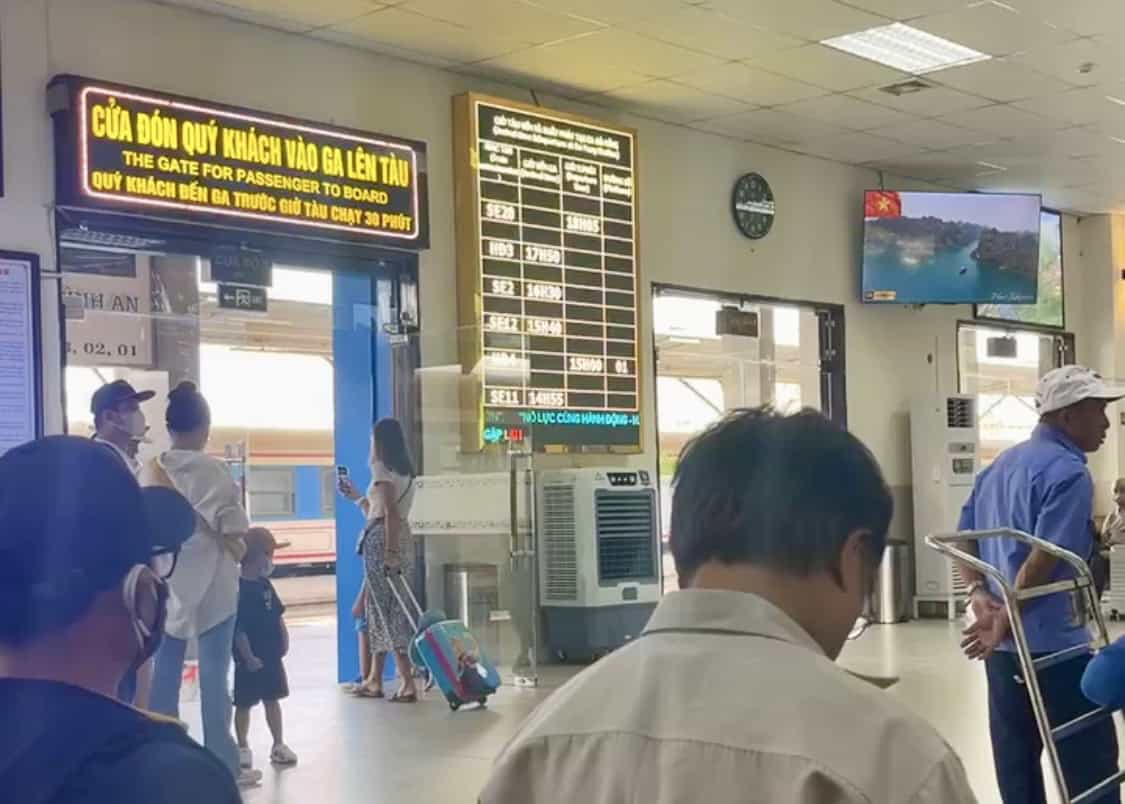
It won’t be spotless, the ride won’t always be smooth, and you might not get the best night’s sleep. But that’s all part of the adventure.
The Train from Da Nang to Ho Chi Minh City
Our journey on the train from Da Nang to Ho Chi Minh City started off without a hitch.
Boarding was quick – only about 15 minutes after the scheduled departure – and our sleeper berth had clean sheets, decent lighting, and enough space to stretch out (kind of). We settled in, expecting a standard 20-hour ride.
That expectation changed around 2 a.m. when we realized the train had been stopped for over an hour.
With no announcements and no idea what was happening, we just took advantage of the stillness to get some solid sleep.
An hour later, though, the train crew knocked on our door, motioning for us to grab our bags and get off.
In moments like these, you just have to go with the flow and trust that you won’t be left stranded in rural Vietnam in the middle of the night (right???).
A Middle of the Night Stop
A bus was waiting outside, and we assumed it would take us the rest of the way to Ho Chi Minh City.
Instead, after another hour, we were shuffled off the bus and onto a new train – one that was noticeably less comfortable.
The sheets didn’t seem freshly cleaned, and the smell of cigarette smoke lingered in the cabin.
There wasn’t much to do except make the best of it, so we wrapped our scarves around our pillows and tried to get some sleep.
By the time we finally arrived, the journey had stretched to a full 24 hours. We were never so relieved to sprawl out on a real bed.
What We Learned About Overnight Train Travel in Vietnam
We still made it safely. Just four hours later than expected. Our night on the train taught us a few things, though:
- Plans can change mid journey
- Announcements are not always in English
- Delays of a few hours are normal
- AC can be inconsistent
- Bedding quality varies
Was the delay and train change annoying? Yeah, definitely. Was it a disaster? Not at all.
If you go in expecting perfection, you might be frustrated. If you go in expecting a long, slightly unpredictable travel day, you will probably be fine.
Most overnight trains in Vietnam run smoothly. But flexibility and pre-managing your expectations makes the experience much more enjoyable.
No matter what, taking the train in Vietnam is still an iconic experience!
🚌 Thinking of visiting Laos as well? We compare transit experiences between both Vietnam and Laos here.
What Should You Bring on a Vietnam Sleeper Train?
Packing the right essentials can make a big difference when traveling Vietnam by train, especially on long overnight journeys.
While the trains provide basic amenities, they aren’t always the most well-stocked or comfortable. Here’s what to bring to make your trip smoother:
- Cash – Useful for buying snacks or drinks on board since card payments aren’t accepted.
- Ear plugs and eye mask – Essential for blocking out noise and light, especially if your cabin mates stay up late.
- Jacket – The AC can get surprisingly cold, so having an extra layer helps.
- Scarf/Shawl – Use a scarf as an extra layer, or as a “pillow case” to make the ride a bit more comfortable.
- Water bottle – Staying hydrated is key, and while hot water is usually available, bringing your own is always a good idea.
- Snacks & easy food items – If you’re not keen on train food, having your own snacks is a lifesaver.
- Portable charger – Not all cabins have outlets, so a portable charger is handy.
- Toilet paper – Sleeper train toilets aren’t always stocked, so having a small roll is smart.
- Body wipes and hand sanitizer – Good for freshening up, especially on longer journeys.
- Travel sheets – If you’re particular about cleanliness, a lightweight sheet or sleep sack can make the hard sleeper Vietnam berths feel cozier.
- Entertainment – Books, podcasts, or downloaded movies will help pass the time, especially if cell service is spotty.
Popular Vietnam Sleeper Train Routes (And Which Ones Are Actually Worth It)
Hanoi to Lao Cai Train (For Sapa)
Best for: Backpackers heading to Sapa who want to save a hotel night and wake up near the mountains.
This is one of the most famous overnight train routes in Vietnam. The journey takes about 8 hours and arrives early in the morning in Lao Cai, the closest train station to Sapa.
From there, you’ll need to take a 1 hour minibus or private transfer up into Sapa itself.
Luxury operators like Sapaly Express, Chapa Express, and Victoria Express run upgraded cabins on this route, while Vietnam Railways offers more basic sleeper berths.
Is it worth doing overnight? Yes. This is one of the most practical sleeper routes in all of Vietnam.
Skip it if: You are a very light sleeper and prefer a faster but bumpier overnight bus.
Planning your stay in Hanoi? We’ve shared everything about our trip you need to know:
⭐️ How to spend 3-days in Hanoi (food and culture itinerary)
🏨 The best areas to stay in Hanoi (+ the best places to stay)
🍲 The must-try foods in Hanoi and where to find them
Hanoi (or Ninh Binh) to Hue Train
Best for: Breaking up the long journey down the coast without flying.
The Hanoi to Hue train takes around 13 to 14 hours, which makes it a manageable overnight route if you book a sleeper berth.
You can also depart from Ninh Binh if you want to avoid Hanoi’s busy train station. That option is often easier and less chaotic, but you will have to take a bus or separate train to Ninh Binh first.
Hue is a great mid point stop before continuing south to Da Nang or Hoi An.
Is it worth doing overnight? Yes, especially if you want to avoid flying and are traveling at a slower pace.
Skip it if: You are short on time and need the fastest option.
If Ninh Binh is on your route, don’t miss our guides to the Tam Coc bike loop, Trang An vs Tam Coc, and the best things to do in the area →
🏞 Our favorite things to do in Ninh Binh (+ a few extras)
🚲 Self-guided bike route through the rice paddies of Tam Coc
🌾 A guide staying in Trang An or Tam Coc based on your vibe
Ho Chi Minh City to Da Nang Train
Best for: Travelers moving between southern and central Vietnam who want scenery along the way.
This journey takes about 17 to 18 hours. We did this route in reverse, heading from Da Nang to Ho Chi Minh City.
The stretch near Da Nang is especially scenic, with coastal views and green hills. If you’re awake during that portion, grab a window spot.
Once you arrive in Da Nang, it’s a short bus or taxi ride to Hoi An.
Is it worth doing overnight?
Yes, if you want to save a night of accommodation and are not in a rush.
Skip it if: You are comparing it to a cheap one hour flight and value speed over experience.
👉 You can book the Ho Chi Minh City – Da Nang train trip experience online here.
Hanoi to Ho Chi Minh City (Full Length Route)
Best for: Slow travelers and train lovers who genuinely want the full rail experience.
This is the famous Reunification Express route. It takes over 30 hours and covers more than 1,700 kilometers.
It is iconic. It is nostalgic. It is also very long.
TBH we don’t know why you’d do this unless you were flying in and out of one end of Vietnam OR you realllllyyyy love train travel and this is a bucket list experience.
Is it worth doing overnight? In our opinion, only if you are intentionally choosing slow travel. Otherwise, a flight makes much more sense.
For most travelers, breaking this journey into smaller train segments is a better experience.
Nha Trang to Quy Nhon Train
Best for: Coastal scenery without crowds.
This 6 to 7 hour route is not quite long enough to require a true overnight train, but booking a sleeper berth can still make it more comfortable.
Nha Trang is lively and busy. Quy Nhon is quieter and more relaxed, making this a nice transition if you are heading north.
Is it worth doing overnight? Not really. This one works better as a daytime scenic ride.
If You’re Choosing Based on Scenery
- Most scenic coastal stretch: Hue to Da Nang
- Classic overnight route: Hanoi to Lao Cai
- Long but iconic: Hanoi to Ho Chi Minh City
If you are picking a sleeper train purely for the experience, choose a mid range route between 10 and 18 hours.
That is where trains in Vietnam balance efficiency with convenience.
🔃 Here’s an extensive list of ALL VIETNAM TRAVEL ROUTES available online.
Frequently Asked Questions About Vietnam Sleeper Trains
Are Overnight Sleeper Trains in Vietnam on Time?
Vietnam’s overnight trains aren’t known for their punctuality. Short delays of 30 minutes are common, and longer delays aren’t unheard of.
While the train might not leave exactly on time, it won’t wait for you if you’re late – so plan accordingly.
Here’s how to avoid stress when it comes to timing:
Arrive early. Get to the station at least 30–45 minutes before departure to find your platform and avoid last-minute rushing.
Be flexible with onward plans. Don’t schedule tight connections right after a train ride – give yourself a buffer in case of delays.
Know your arrival plan. If you’re arriving late at night, arrange a Grab, taxi, or hotel pickup in advance. You don’t want to be stranded at the station.
Are Vietnam Sleeper Trains Clean?
It depends on the train and your expectations.
The private company-operated cabins are generally cleaner, but even the standard Vietnam sleeper train berths are fine if you don’t mind a bit of wear and tear.
Sleeper train toilets tend to be the least pleasant part of the experience – bring your own toilet paper and hand sanitizer.

What Is It Like Sleeping on a Sleeper Train in Vietnam?
If you’re in a first class sleeper train Vietnam cabin, expect a relatively comfortable night with some occasional bumps and noise.
In standard overnight trains in Vietnam, the ride can be rougher, and noise from other passengers (or blaring train announcements) might wake you up.
Bring earplugs and an eye mask to improve your chances of getting a decent night’s sleep.
Are Vietnam Sleeper Trains Safe?
For the most part, yes. Vietnam overnight trains are generally safe, but it’s still smart to take basic precautions as with any travel.
Keep your valuables close, and if you’re in a shared cabin, be mindful of your belongings.
Some travelers use small locks for their luggage or tuck their bags under the lower bunks for added security.
Is It Worth Taking the Overnight Train in Vietnam?
For most backpackers and budget travelers, yes, especially on routes between 10–18 hours.
It saves a night’s accommodation and offers more comfort than buses.
But for very long routes (Hanoi to Ho Chi Minh), flights may be better value.
Alternatives to Overnight Sleeper Trains in Vietnam
Buses
Buses in Vietnam are often cheaper than trains and cover more routes, but they’re also less comfortable.
Vietnam by train gives you more room to move around, while buses – including sleeper buses – can feel cramped.
If you don’t mind rough roads and tight spaces, long-haul buses can be a budget-friendly alternative.
TOP TIP: If you do book a sleeper bus, make sure it’s a VIP bus so you don’t end up snuggling with a stranger for 9 hours.
Flights
Flying makes sense for long distances, especially if you’re short on time. The train from Hanoi to Ho Chi Minh takes over 30 hours, while a flight is just two hours.
Domestic flights in Vietnam are relatively affordable, but keep in mind that airports are usually far from city centers, adding extra time and cost.
You’ll likely have to pay extra to check any baggage over 7kg as well.
Private Cars or Taxis
For ultimate flexibility and comfort, you can book a private car, but it’s by far the most expensive option. This can be a good choice for short routes or if you’re traveling with a group and can split the cost.
Otherwise, Vietnam overnight trains offer a far more affordable way to cover long distances.
Sleeper Train vs Sleeper Bus vs Flight: What’s Actually Better?
If you’re still deciding whether the overnight train in Vietnam is actually the right move for your trip, you’re probably weighing it against the other main options: a sleeper bus, a domestic flight, or even a private car.
Here’s how we compared the options on our trip and when we’d choose each one.
|
Best For |
Pros |
Cons |
Our Take |
|
|---|---|---|---|---|
|
🚆 Sleeper Train |
10–18 hour routes where you want space and don’t mind slow travel |
|
Slower than flying, occasional delays, cleanliness can vary |
We’d choose the sleeper train for mid-range journeys like Hanoi to Hue or Da Nang to Ho Chi Minh |
|
🚌 Sleeper Bus |
Budget travelers and routes under 10 hours |
|
Less privacy, tighter sleeping pods, rougher ride |
VIP sleeper buses can be very comfortable, but not for SUPER long journeys |
|
✈️ Flight |
Long distances like Hanoi to Ho Chi Minh City |
|
Airport transfers, baggage fees, and missing out on a classic Vietnam travel experience |
For routes over 20 hours by train, we’d almost always compare flight prices before booking rail |
|
🚖 Taxi/Private Transfer |
Short to mid-range routes where you want flexibility and door-to-door convenience |
|
Significantly more expensive than trains or buses |
Ideal if you are splitting the cost between 3-4 people for a reasonable distance |
Our Rule of Thumb
- Under 8 hours? Bus or daytime train.
- 10–18 hours? Sleeper train wins.
- 20+ hours? Compare with flights.
So… Should You Book the Overnight Sleeper Train in Vietnam?
Here’s our honest take:
If you’re traveling between cities that are 8 to 18 hours apart, the overnight sleeper train in Vietnam is a smart, efficient option.
It saves a hotel night, gives you more space than a bus, and turns transit into part of the experience.
If your route is under 8 hours, a daytime train or VIP bus often makes more sense.
If it’s 20+ hours, compare prices with flights before committing. Sometimes the train wins. Sometimes it does not.
Vietnam by train is not about speed. It’s about balance. Comfort, cost, and experience all matter, and once you choose the right route and berth, it can be a genuinely enjoyable way to move through the country.
If you do decide to book:
- Choose a soft sleeper when possible
- Book early for popular routes
- Build flexibility into your arrival plans
- Go in with realistic expectations
That mindset makes all the difference.
Vietnam Trip Planning
Not sure how to structure your route yet?
👉 Start with our Two Weeks in Vietnam Itinerary
👉 Or go slower with our One Month in Vietnam Guide
🇻🇳 Still deciding where to begin? Our Hanoi vs Ho Chi Minh City guide breaks down which starting point fits your travel style.
🌄🏞 Debating between Ninh Binh and Phong Nha? We compare both destinations here.
Once you’ve mapped your route, you can check sleeper availability and compare classes here.
