

Bangkok to Chiang Mai Travel Guide — How to Get There by Train, Bus & Plane
Traveling from Bangkok to Chiang Mai is one of the most popular routes in Thailand — and for good reason.
Whether you want to fly, take the scenic train, or hop on a night bus, there’s no shortage of ways to get between these two cities.
We’ve taken plenty of long-distance trains and buses across Thailand, including this route, and learned a few things the hard way (like which seats to avoid and why booking last minute is never a good idea).
In this Bangkok to Chiang Mai travel guide, we’ll compare getting from Bangkok to Chiang Mai via trains vs buses, share what to expect on board, and help you figure out the best way to get from Bangkok to Chiang Mai based on your travel style and budget.
🌺 We cover this route (and many others) in our 10 Days in Thailand itinerary — perfect if you’re planning a short trip.
DISCLOSURE: This post may contain affiliate links, which means we may earn a small commission if you book or buy something through them – at no extra cost to you. We only recommend things we’d actually use ourselves. Read more in our Privacy Policy.
Overview: Bangkok to Chiang Mai Distance, Duration & Costs
The journey from Bangkok to Chiang Mai covers around 700 km (430 miles) through lush countryside and mountains — a classic route that almost every traveler in Thailand takes at least once.
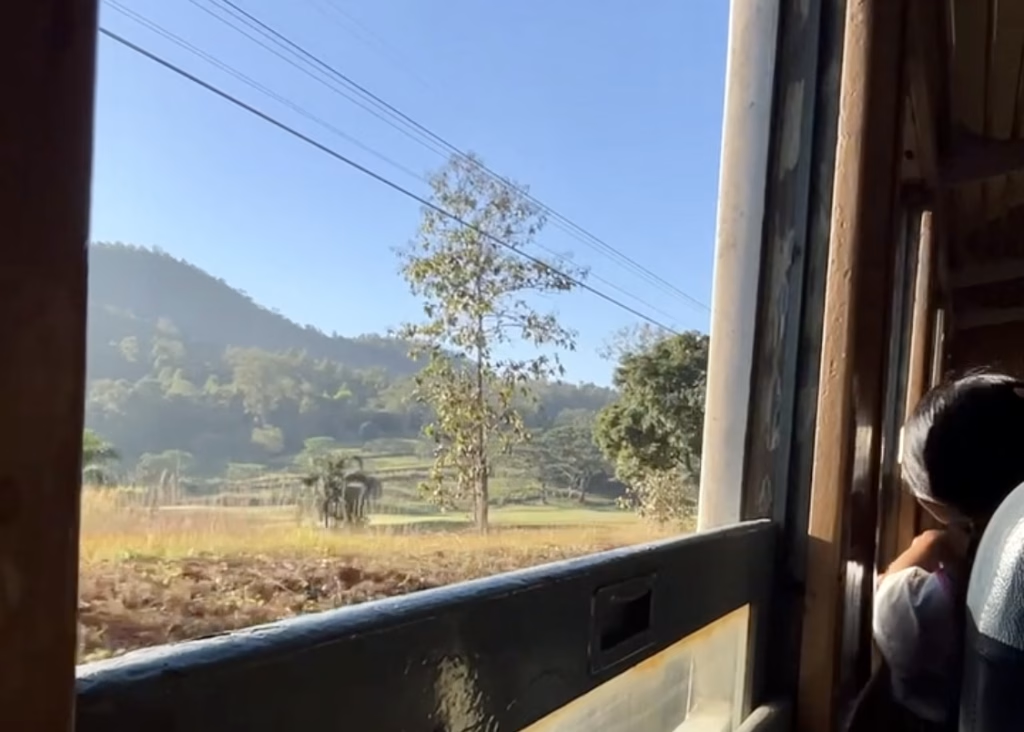
We’ve taken both long-distance trains and buses in Thailand, including this route, and honestly? None of them were as bad as we expected.
The overnight train in particular is one of our favorite ways to travel — comfy enough to sleep, scenic enough to enjoy, and a great way to save on a night’s hotel.
TOP TIP: While flying might seem faster, the overnight sleeper train from Bangkok to Chiang Mai or night bus can actually save you time (and money) since you’ll travel while you sleep and skip a night’s accommodation.
|
Transport |
Duration |
Cost (USD) |
Comfort |
Experience |
|---|---|---|---|---|
|
Train |
10-14 hrs |
$9–$52 |
High |
Scenic, local, relaxed |
|
Bus |
9-12 hrs |
$19–$33 |
Medium |
Direct, budget-friendly |
|
Plane |
1.5 hrs |
$45–$150** |
High |
Fastest |
**Note**: Prices vary depending on season, class, and how early you book. Budget airlines typically include only 7kg of carry-on baggage, so keep that in mind if you’re traveling with a larger backpack or suitcase.
🧳 If you’re deciding how this fits into your wider route, check out our 3 Week Thailand Itinerary to see how to link Chiang Mai, Bangkok, and beyond.
Option 1: Bangkok to Chiang Mai by Train
Why Take the Train from Bangkok to Chiang Mai
Taking the train from Bangkok to Chiang Mai is one of those classic Southeast Asia travel experiences — equal parts scenic, practical, and nostalgic.
It’s not the fastest way to get there, but it’s easily one of the most memorable.
The route takes you through a stretch of countryside that few travelers ever see. We boarded after dark, then woke up to sunrise spilling over rice terraces and misty hills.

Watching the scenery shift from the flat plains of central Thailand to the rolling mountains of the north is worth the slow pace alone.
Beyond the views, the Bangkok to Chiang Mai trains offer a relaxed, local experience. Unlike some VIP sleeper buses (looking at you, Vietnam), this isn’t just for tourists — plenty of locals take the train, too.
It feels like a small glimpse into everyday travel life in Thailand.
🇻🇳 If you’re traveling onward to Vietnam, don’t miss our Vietnam overnight sleeper train guide — it’s a totally different experience but just as memorable.
And then there’s the value. Even a first-class sleeper — with your own private cabin — costs around $50 USD, which covers both a 10-plus-hour journey and your night’s accommodation.
Drop down to a second-class berth and the savings get even better.
You can check Bangkok to Chiang Mai train prices and schedules easily on 12Go Asia. It’s the easiest way to see which train fits your budget and timing before committing.
Types of Trains from Bangkok to Chiang Mai: 1st, 2nd & 3rd Class
Thailand’s overnight trains come in several comfort levels, and the Bangkok to Chiang Mai by rail route offers all of them.
Here’s what to expect from each class and our personal take after a couple long rides up north.
1st Class (Private Cabins for 1–2 People)
These are the most comfortable and private option — a small cabin with air conditioning, a door that locks, and two bunk beds.
You’ll need to book through the official Thai Railway website up to 90 days in advance, and they sell out almost immediately.
Unless you’re lucky, snagging one is rare. Try it if you want, but good luck!
2nd Class Sleeper (Air-Con; Upper/Lower Berth) – OUR RECOMMENDATION
This is the sweet spot for most travelers. You get a comfortable bed, AC, and curtains for privacy.
We tried to book this on our first overnight sleeper train from Bangkok to Chiang Mai, but it was sold out over a week in advance (we were traveling in mid-January — peak high season).
If you know your dates, book at least a week ahead to secure a sleeper berth.
2nd Class Fan Seats Only
If you miss out on a sleeper, the fan-only cars are still perfectly fine. We’ve ridden overnight in these seats and survived just fine — a neck pillow, eye mask, and some good headphones help.
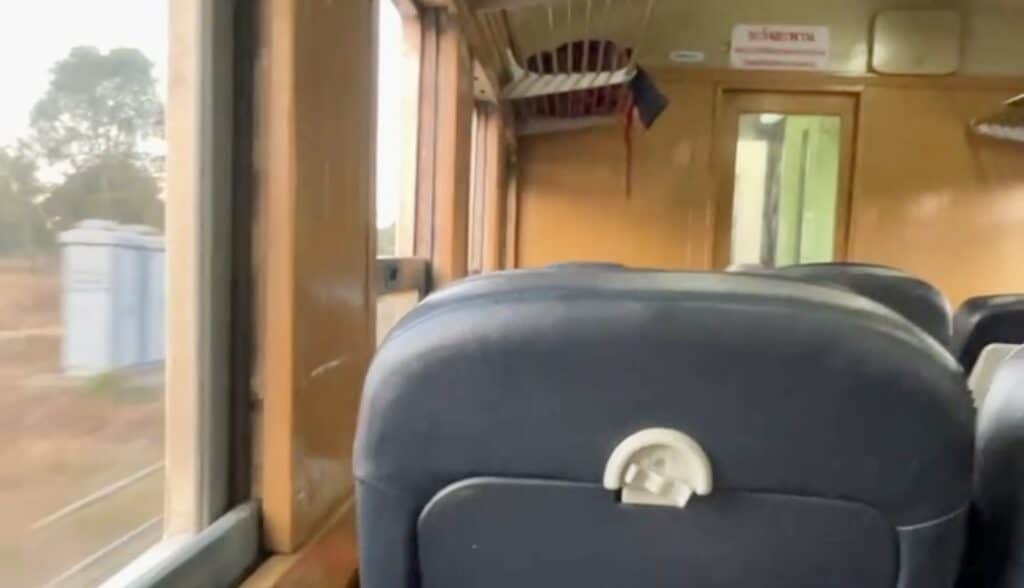
TOP TIP: Don’t book seats at the very front of the car. We thought we were clever avoiding anyone reclining into us, but those seats have less legroom than the rest. (When even Julia at 5’2″ says it’s tight, that says something.)
We worried about being too hot without AC, but we were actually freezing once the night air set in. Bring a fleece or scarf — it can get surprisingly chilly until the morning sun warms things up.
3rd Class (Basic Seat — NOT Recommended for Long Journeys)
Unless every other option is gone, skip this one. Maybe skip it still if it’s your only choice. While it’s a cheap way to get from Bangkok to Chiang Mai, it’s not worth it.
These are upright bench-style seats with no recline or divider, and you’ll be sitting like that for 13 hours. They’re the cheapest, but trust us — it’s not worth the savings for an overnight trip.
You can easily compare 1st, 2nd, and 3rd class Bangkok to Chiang Mai train options before booking. It shows real-time seat availability and lets you pick your preferred class without needing to translate the Thai Railway site.
How to Book Your Train Ticket from Bangkok to Chiang Mai
There are three main ways to book a Bangkok to Chiang Mai train: online via 12Go Asia, directly through the Thai Railway website, or in person at a station.
Booking Online
We almost always book through 12Go Asia because it’s the most straightforward option — you can easily compare train types, prices, and classes all in one place (no translating or guessing involved).
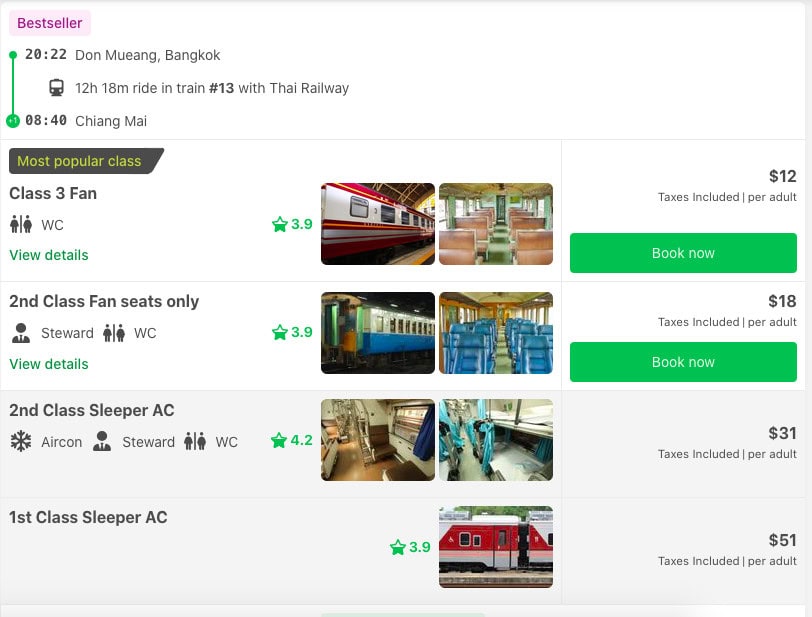
Plus, their English-speaking customer support is quick to help if anything goes wrong.
The Thai Railway website is another option, but honestly, we found it confusing. You’ll need to create an account and navigate a clunky booking system that doesn’t always show up-to-date availability.
Unless you’re confident using it, 12Go saves a lot of hassle.
Booking at the Station
If you’re already near Krung Thep Aphiwat or Don Mueang, you can book in person — but we wouldn’t go out of your way just to do it.
The lines can be long, and by the time you get there, the 2nd class sleeper you want might already be gone.
When to Book
- 2nd Class Seat (No Bed): Book 2–3 days ahead and you’ll usually be fine.
- 2nd Class Sleeper: Book at least 1 week in advance, especially during high season (December–February).
- 1st Class Sleeper: Try to book as early as possible — ideally 90 days in advance on the Thai Railway website. Don’t be disappointed if you can’t book.
Note: Your confirmation might say you need to print your train ticket. While some people manage with a mobile version, we prefer to play it safe and print it.
Most accommodations can do this for you, or you can visit a print shop, the train station, or even a 12Go Asia office (usually near the station).
To keep things simple, book your Bangkok to Chiang Mai train tickets here on 12Go Asia — it’s the easiest way to secure your preferred class, avoid language barriers, and skip the station queues.
🇹🇭 If you’re planning your Thailand route and love local food, make time for a Bangkok food tour — we wrote about our experience here, and it’s easily one of the best nights we had in the city.
Timetable & Duration for trains from Bangkok to Chiang Mai
The Bangkok to Chiang Mai train journey takes around 10 to 14 hours, depending on the service you choose.
Most travelers opt for one of the overnight sleeper trains, which typically depart between 7:00 p.m. and 10:00 p.m.
Trains leave from both Krung Thep Aphiwat Central Station (Bangkok’s new main terminal) and Don Mueang Station near the old airport.
You can book from either, but make sure to double-check your departure point — both stations serve the same train, just at different times.
TOP TIP: Aphiwat Central is usually the easiest to reach if you’re staying in central Bangkok. We once booked from Don Mueang by mistake, and the detour to get there made the trip way longer than it needed to be.
Best Trains for Comfort and Schedule
If you’re planning to take an overnight sleeper train from Bangkok to Chiang Mai, two of the most popular options are:
- Train #9 – The newest and most modern train, with comfortable berths and ideal timing (departing around 6:40 p.m., arriving just after sunrise).
- Train #13 – Another good option if you prefer a slightly later departure and don’t mind arriving a few hours later in the morning. We took this one.
Day trains are also available — for example, Train #7 departs around 9:00 a.m. and Train #109 around 2:15 p.m. — but unless you’re heading somewhere beyond Chiang Mai or love long scenic rides in full daylight, the overnight journey usually makes the most sense.
Check current Bangkok to Chiang Mai train timetables and availability before your trip — they list all trains (including #9 and #13) with real-time prices and departure points.
What It’s Like On Board the train from Bangkok to Chiang Mai
We’ve taken both the sleeper and seat only cars on the Bangkok to Chiang Mai train, and overall, the experience has been surprisingly comfortable — even in the fan-only cars.
Cleanliness, Food & Comfort
We took Train #13, which is one of the older models, but it was still very clean and well-kept. The seats were comfortable, and even in a fan-only carriage, the temperature stayed pleasant for most of the trip.
There’s a dining car on board that serves simple meals, snacks, and drinks. We usually play it safe with instant noodles and snacks from 7-Eleven (we take any excuse to buy new snacks).

You can also buy soft drinks and water, though alcohol isn’t sold or allowed on the train.
In terms of comfort, it’s better than most overnight buses. The train does sway a bit, and if you’re a light sleeper, earplugs or noise-canceling headphones help.
Bring a neck pillow and an eye mask too if you book a seat — they make a big difference.
TOP TIP: A huge perk of the train is that you can move around freely. Walk to the dining car, stretch your legs, or use the toilet whenever you want — no waiting for scheduled rest stops like on a bus.
🇹🇭 If it’s your first time in Thailand, this is everything you need to know before your trip – from etiquette to safety to the best places to go.
Sleeper Setup and Privacy
If you book a 2nd class sleeper, your seats start as two facing chairs.
Once the train’s on its way (and after picking up a few more passengers outside Bangkok), attendants come around to convert the seats into beds and make them up with clean sheets.

On Train #13, there were privacy curtains for each bunk — enough to make your little space feel cozy.
We can’t vouch for every train, but generally, 2nd class AC sleepers offer the best mix of comfort and privacy.
Toilets and Facilities
Each carriage has its own toilet and small sink area. They’re pretty clean at the start, though by morning the floor is usually damp from the sprayer and sink.
It’s not ideal, but it’s manageable — especially compared to some bus stops we’ve seen.
Bring your own tissues or wipes just in case. Attendants do check and restock, but with long routes like this, supplies can run out fast.
TOP TIP: You can also live-track your train’s location during the trip on the Thai Railways website — service is surprisingly good for much of the journey.
We always check out a few photos of the different trains before we book on 12Go so we know what to expect.
Arrival at Chiang Mai Railway Station
By the time you roll into Chiang Mai Railway Station, you’ll probably be a mix of sleepy and excited — that “we actually made it!” feeling.
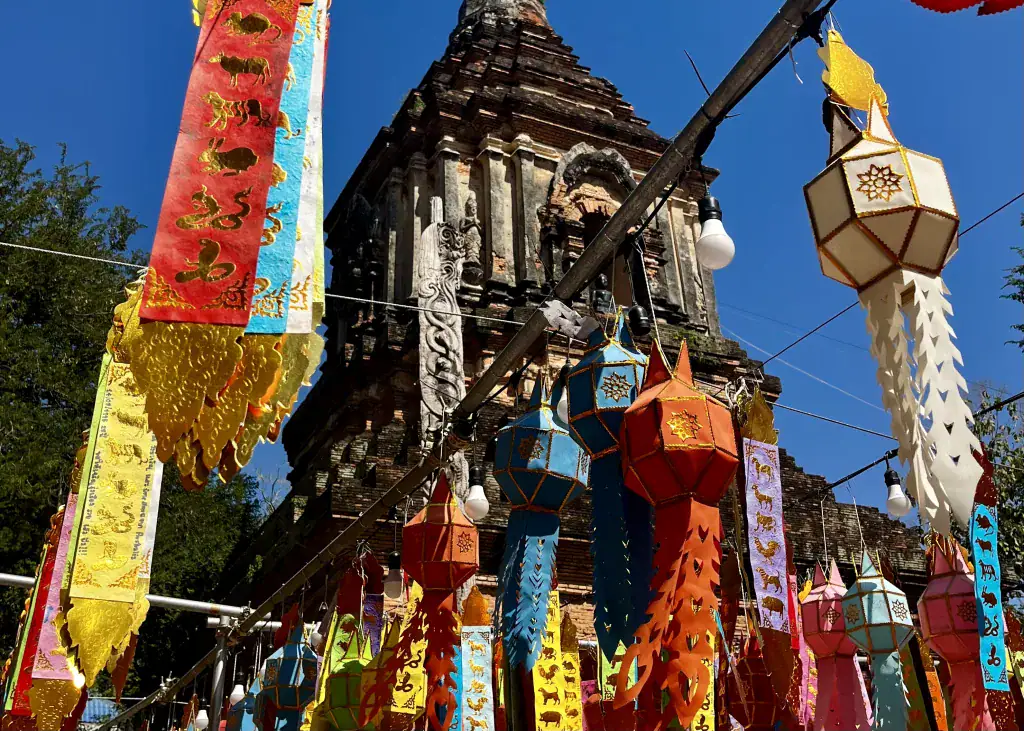
The journey up north is one of Thailand’s most popular travel legs, and for good reason: the views, the experience, and the satisfaction of waking up to mountain air instead of Bangkok traffic.
PSA: On Thai trains, you don’t need to stress about missing your stop. Every station is announced, and there are attendants in each car who make sure passengers get off where they need to.
For this route, Chiang Mai is the last stop, so even if you’re half-asleep, you won’t accidentally miss it.
Getting to the Old City
The station is about 3 km (10–15 minutes) from the Old City, where most guesthouses and hostels are located. You’ll see plenty of songthaews (red shared trucks) and tuk-tuks waiting outside.
You can also call a Grab (it’s widely available in Chiang Mai) but it’ll likely be more expensive than a songthaew.
A songthaew ride to the Old City costs around 40–60 THB per person, depending on your negotiation skills and how many passengers are going the same way. We paid 50 TBH each.
The journey into Old Town Chiang Mai was our first-ever songthaew ride in Thailand, which felt like a fun rite of passage — though we did learn one important lesson: secure your stuff.
Jess had her water bottle (a nice filtered one, of course) fly out the back somewhere between the station and the old city. RIP bottle.
You can check the latest Bangkok to Chiang Mai train timetables or book your tickets in advance here — they’ll show exact departure times, train types, and seat options so you can avoid any last-minute scrambles like we had.
Option 2: Bangkok to Chiang Mai by Bus
Taking the bus from Bangkok to Chiang Mai is a solid alternative to the train — direct, comfortable, and usually just as long but a little faster overnight.
While Thailand doesn’t have true sleeper buses like Vietnam (where you can lay down), the VIP and First Class services are comfortable enough for the 9–11 hour ride.
You can compare all Bangkok to Chiang Mai buses and see seat photos and reviews here on 12Go Asia.
🚍 If you want to see how Thailand’s buses compare, check out our guide to Vietnam’s overnight sleeper buses — it’s a whole other adventure.
Why Take the Bus from Bangkok to Chiang Mai
If you’re not overly attached to the nostalgia of train travel, the bus can make a lot of sense. It’s slightly faster, direct, and rarely delayed.
We’ve also found that buses in Thailand tend to be very punctual, which isn’t something we can say about every train we’ve taken.
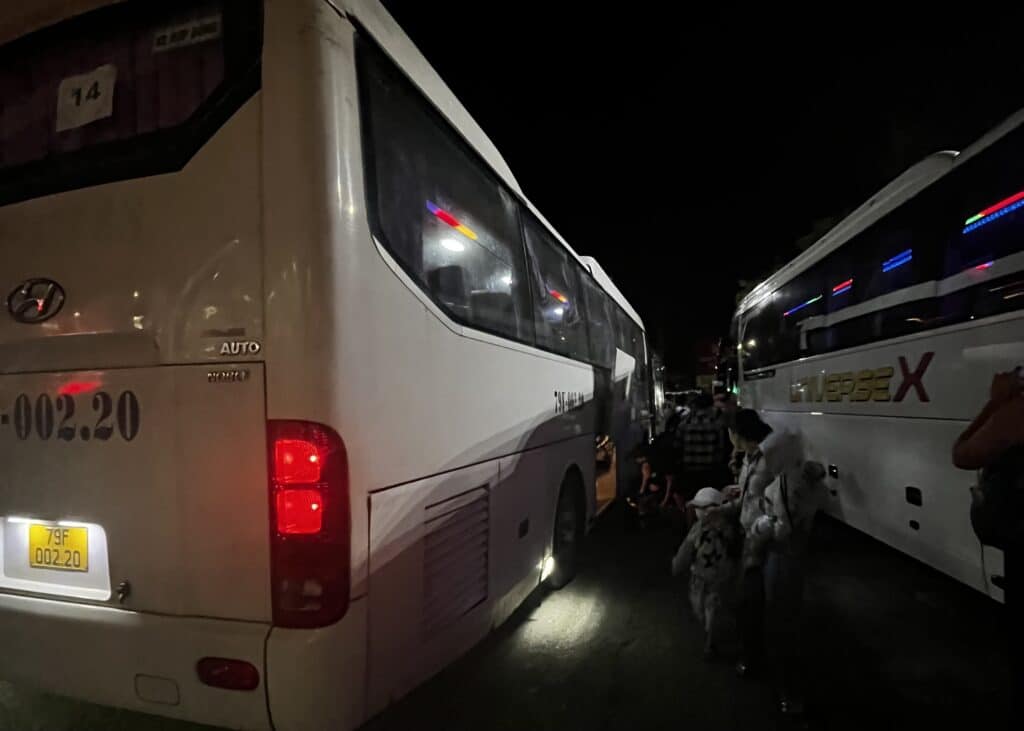
On both of our overnight bus rides (Bangkok–Chiang Mai and Koh Tao–Bangkok), we arrived either exactly on time or a bit early.
The only real tradeoff? You can’t move around as freely as you can on a train. But if you can sleep sitting up and appreciate a more direct route, this is a great choice.
Types of Buses from Bangkok to Chiang Mai
There’s no consistent “VIP” or “Super VIP” standard in Thailand — these labels vary by company. That’s why it’s worth checking reviews and seat photos on 12Go before booking.
Train services are state-run and fairly standardized, but buses are private, meaning comfort can vary a lot. From our experience, the best companies for this route are:
- Sombat Tour (VIP buses only)
- Nakhonchai Air (First Class only)
These two consistently offer the most comfortable seats, clean buses, and reliable service. The premium options cost about $10 USD more (around $34 vs. $24), but it’s worth every cent.
You can also book the standard bus option (the $24 USD one), but the seats are harder, have less leg room, are more narrow, and recline less. That’s a no from us.
Julia is a terrible sleeper on public transit and even she managed to sleep through the night on the VIP bus — that’s saying something.
At this point in our 30s, we’re happy to pay a little more for a better night’s sleep if the journey is longer than two or three hours.
Book your VIP or First Class bus to Chiang Mai in advance so you can pick the exact company and seat layout you want.
How to Book Your Bus Ticket from Bangkok to Chiang Mai
You can buy tickets either online (through 12Go Asia) or in person at the terminal — but honestly, we can’t recommend booking online enough.
This route is one of the most popular in Thailand, and night buses sell out fast, especially on weekends or around holidays.
Unlike the train, where you might still snag a lower class seat if the sleepers are gone, buses have a fixed number of seats — and when they’re full, that’s it.
The Bangkok to Chiang Mai bus also isn’t any cheaper than the train, just slightly faster, so you might as well pick a good one.
And like we mentioned above, it’s much more of a risk to book a bus sight-unseen because of the variation in service and amenities.
It’s pretty sadistic to put yourself in an uncomfortable seat that doesn’t recline with no leg room for 11 hours when you very easily could have avoided it by booking a better bus.
We always book through 12Go Asia because you can filter by departure time, seat type, and company to make sure you’re getting one of the good ones. It takes the guesswork (and potential regret) out of the process.
Departure Points & Duration for the Bus from Bangkok to Chiang Mai
Most buses to Chiang Mai depart from the Bangkok Bus Terminal (Chatuchak/Mo Chit). Both are central and easy to reach via public transport.
The journey usually takes 9–11 hours, depending on traffic. Avoid daytime buses — you’ll lose a full day and the vehicles used for those routes tend to be older and less comfortable.
Overnight buses are the way to go.

If you’re connecting from elsewhere in Thailand the same day (say, arriving from the islands or south), the bus is a safer bet since you can choose a later departure time and not stress about missing it.
Unlike trains, you generally don’t need to print your ticket. Just show your e-ticket from your phone when boarding.
That said, we usually double-check at the counter just in case — better safe than rushing to print at the last minute.
Check the latest Bangkok to Chiang Mai bus timetables and reserve your seat early. Overnight routes sell out fast.
What to Expect Onboard the Bus from Bangkok to Chiang Mai
Comfort levels depend a lot on the company and class, but on our VIP buses we’ve always had spacious seats, pillows, blankets, and even snack boxes waiting for us when we boarded. Water is usually included, too.
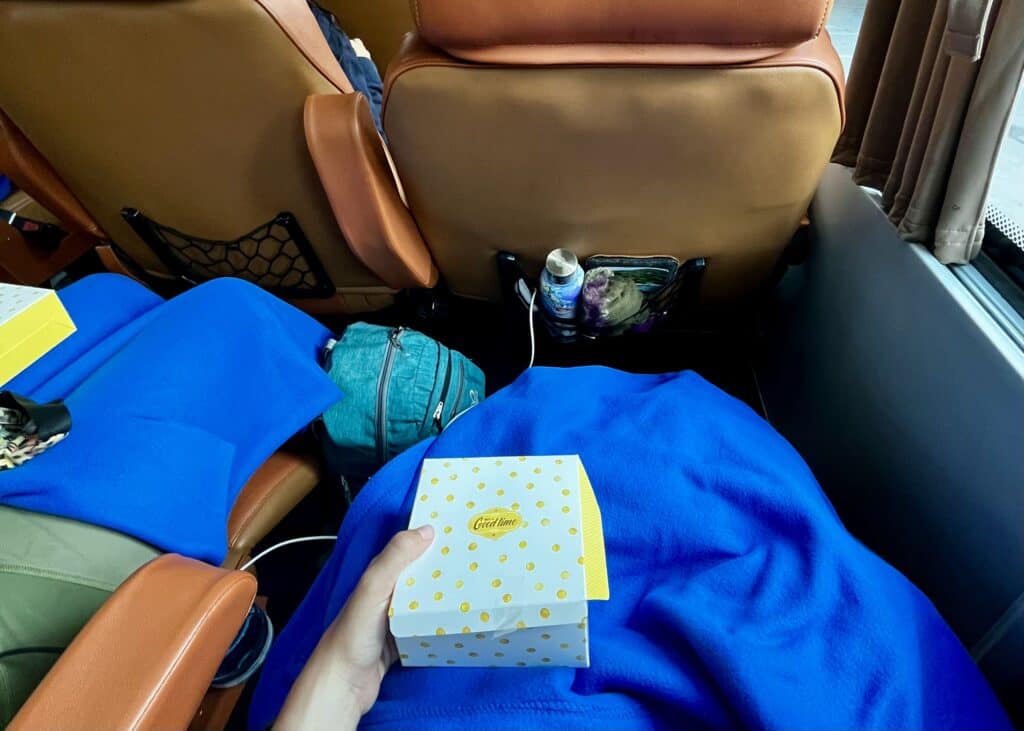
A few things to know before you go:
- Toilets: Even if a bus claims to have one onboard, that doesn’t always mean it’s usable. In our experience, most long-distance buses stop every 3–4 hours for bathroom and rest breaks.
Note: Even on journeys that left long past dinner time, at least one of those breaks has been a food break as well. This confused us at first, but then we realized the driver is probably on night shift — they need to fuel themselves to get us to our destination safely too!
- Movement: Unlike the train, it’s not really possible to get up and walk around while the bus is moving. But considering it’s an overnight trip, you’ll hopefully be sleeping — and since they make periodic stops, you’ll still get a chance to stretch your legs.
- AC: The air conditioning can get freezing cold, so definitely bring a layer.
- Noise: Some buses are big on honking — way less than Vietnam, but still enough to occasionally jolt you awake.
Overall, our long-distance bus rides in Thailand have been much better than expected (especially after a month of transiting around Laos). Always comfortable, affordable, and usually right on time.
You can compare the latest Bangkok to Chiang Mai VIP bus options and check seat photos here before booking — it’ll help you pick the best setup for your travel style.
Arrival at Chiang Mai Arcade Bus Terminal
Most buses arrive at Chiang Mai Arcade Bus Terminal, which is about 10 minutes from the Old City by songthaew, taxi, or Grab.

The arrival experience is similar to the train — maybe a bit less atmospheric, but buses tend to get in earlier, so you’ll probably reach town around sunrise.
We see that as a mild disadvantage (who wants to check in at 6 a.m.?), but it’s definitely not a dealbreaker.
🗺 Want to get a bit off the beaten path after your stay in Chiang Mai? Check out our guides to Chiang Dao (cave temples, hot springs, & amazing coffee) and Chiang Rai (local culture, night markets, and hot pot).
Option 3: Bangkok to Chiang Mai by Plane
Quick Overview & Airlines to Fly from Bangkok to Chiang Mai
The only time we’ve flown in Thailand was entering or leaving the country, so we can’t personally speak to domestic flights — but here’s what we found during our research when planning our route and weighing our options.
Flying is the fastest way to get from Bangkok to Chiang Mai — the flight time is only about 1–1.5 hours, and even with arriving early for check-in, it’s still the quickest overall option.
There are multiple daily flights from both Don Mueang (DMK) and Suvarnabhumi (BKK) airports, so you’ll have plenty of departure times to choose from.
Tips for Budget & Comfort When Flying from Bangkok to Chiang Mai
There are a couple types of airlines you can fly within Thailand:
- Budget airlines: AirAsia, Nok Air, Thai Lion Air
- Full-service airlines: Bangkok Airways, Thai Smile
Flights can look super cheap — sometimes only about $10 more than a 2nd class sleeper train — but that’s only if you’re traveling very light.
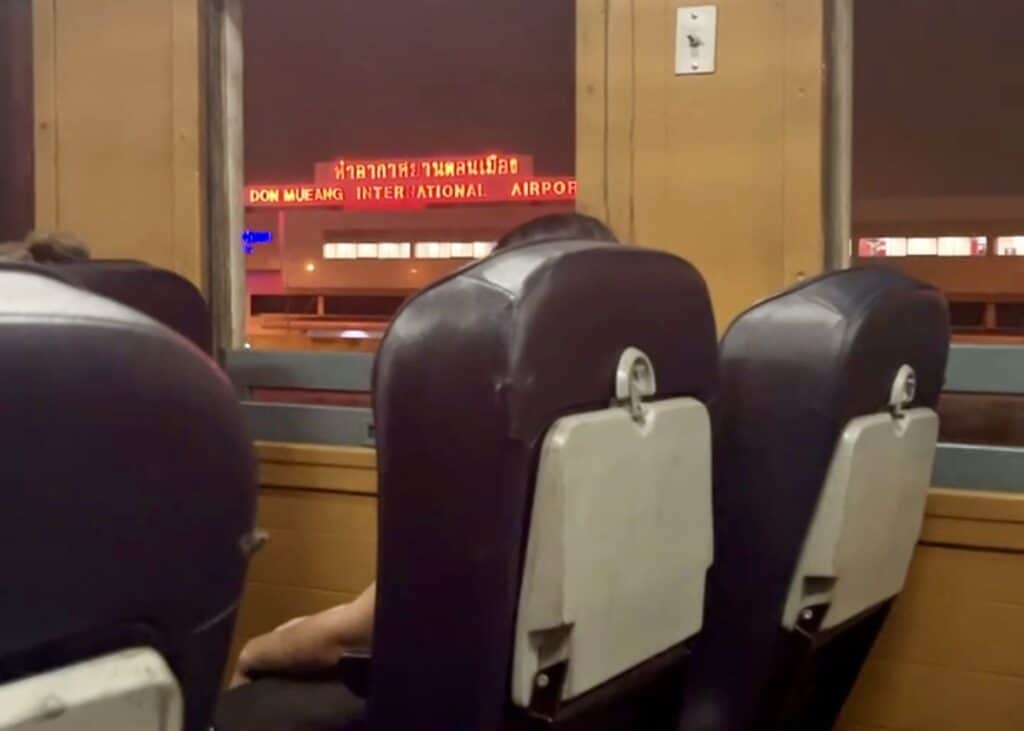
We’ve made this mistake before with AirAsia, flying in Indonesia and to Malaysia, where we didn’t double-check the baggage allowance the first time and ended up needing to pay for an extra 7kg each.
That cost about $25 USD per person, which quickly made the “cheap flight” not so cheap anymore.
Airlines like Bangkok Airways and Thai Smile usually include checked baggage in the ticket price, so it’s worth comparing the final cost of a budget flight versus a full-service one.
🛕 Make the most of your time in Chiang Mai with our guide on what to do & where to eat.
Our Take: Why We Usually Skip Flying
One major thing to consider is the environmental tradeoff.
Flying has a much larger carbon footprint than taking land transportation, so we try to avoid it whenever possible — partly to minimize our environmental impact (and budget), but also because we genuinely prefer the train or bus.
It just feels like a better use of time (maybe true, maybe not, but that’s how it feels).
Flights are fine for short trips or when you’re really pressed for time, but that’s not really the case between Bangkok and Chiang Mai.
The best train and bus options are overnight, meaning you can sleep through the journey and wake up ready to explore — way better than spending half your day in airports.
So unless you really can’t sleep on moving transport or have another solid reason for skipping the overnight route, we’d skip the plane and book the train or bus instead.
Bangkok to Chiang Mai Train vs Bus: Which is Better?
Trying to decide between the train and the bus from Bangkok to Chiang Mai? Both are solid options, but each comes with its own trade-offs.
Here’s a quick, honest breakdown of what to expect — from comfort and cost to timing and overall experience.
Comfort & Experience
Train:
- Much better for sleeping — especially if you book a 2nd class sleeper.
- You can move around freely, stretch your legs, and grab food or drinks from the dining car.
- Beds are reasonably comfy, and attendants set them up for you after dark.
- It’s a classic Thai travel experience.
Bus:
- Seats recline and are very comfortable on VIP or First Class services, but you can’t move around much except during rest stops.
- You’ll usually get blankets, pillows, water, and sometimes snack boxes.
- You’ll have to wait for a rest break to use the toilet
Cost & Convenience
- Prices are roughly the same for a 2nd class sleeper train and a VIP bus — usually around $25–35 USD.
- Trains are slightly cheaper if you book a 2nd class seat only (no bed).
- Train: Book in advance for sleeper cars — they sell out fast, especially during peak season.
- Bus: Easier to book last-minute and more departures daily.
Timing & Booking Tips
Train:
- Takes 10–14 hours depending on the service.
- Overnight trains are the best use of time — you sleep while you travel.
- Slightly less reliable for punctuality (arrivals can be 30–60 minutes late).
Bus:
- Slightly faster at 9–12 hours, especially overnight.
- Fewer delays, but daytime buses are slower (and less comfortable) — skip those.
- Great for last-minute plans or when train sleepers are sold out.
Compare real-time options and photos for both on 12Go Asia, which makes it easy to spot the VIP buses and newer trains.
Scenic Routes
If you’re after views, the train wins hands-down.
The stretch between Phitsanulok and Chiang Mai — especially at sunrise — is beautiful, with misty hills, rice fields, and glimpses of rural Thailand you just don’t get on the highway.

🇱🇦 If you’re heading north after Chiang Mai, see how to cross the Thailand–Laos border from Chiang Rai (Thailand) to Huay Xai (Laos).
The Best Way to Get from Bangkok to Chiang Mai
- Take the train if you want a classic Thailand experience and a comfortable overnight journey you’ll always remember.
- Take the bus if you’re traveling last-minute or couldn’t snag a sleeper berth — VIP buses are genuinely comfy and reliable.
For us (and all budget backpackers), the train takes the top spot (as long as you book a sleeper). It’s more iconic, more scenic, and honestly, waking up as you roll into Chiang Mai just hits different.
But if all the sleepers are gone? The VIP bus is a perfectly solid backup.
👉 Our advice: Check both train and bus options — you’ll see live availability, seat photos, and reviews to help you pick the best one.
FAQ: Bangkok to Chiang Mai Travel Tips
Is it safe to travel overnight from Bangkok to Chiang Mai?
Yes — both the train and bus routes are generally very safe.
We always keep our small backpacks at our feet and our purse (with passports, phones, etc.) either on our lap or tucked beside us with the strap looped around an arm while sleeping.
Thailand isn’t known for theft, but it’s a good habit to keep your valuables close — just in case.
Can I bring food on board the train from Bangkok to Chiang Mai?
Absolutely. We always stock up on snacks before long rides.
Even if we don’t eat them all, we’d rather have extra than be hungry or stuck paying high prices at a rest stop.
Plus, snacks never really go to waste — they’ll get eaten eventually.
What’s the most scenic route from Bangkok to Chiang Mai?
The train is the most scenic route from Bangkok to Chiang Mai, hands down.
If you want the iconic, scenic Thailand experience, take the train from Bangkok to Chiang Mai — especially for those early morning views as you roll into the north.
Should I book travel from Bangkok to Chiang Mai in advance?
Yes, you should book in advance for trains from Bangkok to Chiang Mai — especially if you want a sleeper berth.
Buses usually have more same-day availability, but unless you’ve decided to leave Bangkok that day, it’s still worth booking ahead to get the route and time you want.
🧧 For more Thailand travel tips, check out our Bangkok guide and Chinatown food recommendations.
🥭 Want to try your hand at Thai cooking when you get to Chiang Mai? We joined Grandma’s Home Cooking School in Chiang Mai — small group, local recipes, and the sweetest teachers. Full review here.
🌏 If you’re planning your full route through Southeast Asia, our Southeast Asia travel guide covers how to connect Thailand with neighboring countries.
🎒 If you don’t know what to pack for Thailand, this is everything that was in our bags for 3.5 months across Southeast Asia.
