

Is Chiang Rai Worth Visiting? Our Honest Experience
Is Chiang Rai is worth visiting on your Thailand itinerary?
After spending three nights exploring its surreal temples, dancing at the night market, and snacking our way through city cafes, we can confidently say yes – it’s more than just a quick day trip from Chiang Mai.
This northern Thai city offers a quieter, more offbeat vibe than Chiang Mai, with iconic cultural landmarks like the White Temple and Blue Temple, alongside plenty of natural escapes.
In this guide, we’ll cover everything you need to plan your trip to Chiang Rai – how long to stay, the top things to do, where to eat (yes, including hot pot at the night market), and tips to make the most of your visit.
DISCLOSURE: This post may contain affiliate links, which means we may earn a small commission if you book or buy something through them – at no extra cost to you. We only recommend things we’d actually use ourselves. Read more in our Privacy Policy.
Is Chiang Rai Worth Visiting?
Short answer: Yes. Long answer: Yes, especially if you love unique temples, stunning nature, and fewer crowds.

Chiang Rai is perfect for travelers who enjoy culture, nature, and a more relaxed vibe.
If you’re the type who gets excited about quirky architecture, scenic hikes, and cheap-but-delicious street food, this city will be right up your alley.
Plus, it’s an excellent spot for budget travelers – your money stretches further here compared to Thailand’s bigger tourist hubs.
🤔 Still figuring out where to travel in Thailand? Our first-timers guide to Thailand breaks down the best places to visit, what each destination is known for, and how to plan your route.
How Does Chiang Rai Compare to Chiang Mai?
Think of Chiang Mai as the cool, artsy cousin who’s always got something going on – markets, festivals, and a never-ending supply of smoothie bowls.
Chiang Rai, on the other hand, is the laid-back sibling who prefers quiet mornings, fewer tourists, and a bit more mystery.
Both have their charm, but Chiang Rai offers a slower pace and a more off-the-beaten-path feel.
Who Will Prefer Chiang Rai Over Chiang Mai?
- Temple Enthusiasts – If you thought temples were all the same, Chiang Rai will prove you wrong. The White Temple (Wat Rong Khun) looks like something out of a dream, the Blue Temple is a neon-hued masterpiece, and the Black House is just… delightfully weird.
- Nature Seekers – Mountains, waterfalls, hot springs – Chiang Rai’s got it all. You can go hiking in the surrounding hills, soak in a natural hot spring, or chase waterfalls without battling tour groups.
- People Who Hate Crowds – If Chiang Mai’s bustling night bazaars and tourist-heavy old town feel overwhelming, Chiang Rai is a breath of fresh air. It’s much quieter, especially if you venture beyond the main city. The Chiang Rai Saturday market was one of our very favorite nights in all of Southeast Asia!
- Budget Travelers – Everything from accommodation to food is slightly cheaper in Chiang Rai. If you’re looking to stretch your baht, this is a great place to do it.
✨ Heading from Bangkok to Chiang Mai? See how we picked our train and how to book your journey here. ✨
Why You Might Want to Visit Both
If you have the time, the best plan is to visit both cities and get the full northern Thailand experience.
Chiang Mai is fantastic for digital nomads, café lovers, and those who want a mix of history and modern comforts.

Chiang Rai, meanwhile, feels more untouched and raw – perfect for those who want to dig a little deeper into northern Thailand’s culture and landscapes.
Plus, the bus between them is cheap and easy, so why not?
⭐ Not sure whether to visit Chiang Mai or Chiang Rai? Our guide compares the highlights and vibe of each to help you decide.
When is the Best Time to Visit Chiang Rai?
The best time to visit Chiang Rai is from November to February, when the weather is cooler and mostly dry – perfect for exploring temples and waterfalls without sweating buckets.
We visited in mid-January and the weather was mostly nice for us – not tooooo hot and only a little bit of afternoon rain.
March to May is the hottest time of year, and Chiang Rai can get smoky due to crop burning, which isn’t great if you have breathing issues.
June to October is the rainy season. It’s humid, and you’ll likely get daily downpours, but the landscapes are lush, and there are fewer tourists. If you don’t mind the rain, it can be a peaceful time to visit.
TOP TIP: It’s best to avoid Northern Thailand and Laos during this period – especially if you have any breathing issues. The smoke also hides some of the best views and makes riding a motorbike unpleasant.
How Long to Spend in Chiang Rai
The right amount of time in Chiang Rai depends on how much you want to see, how fast you like to travel, and how much time you plan to spend gazing at temples in awe.
TOP TIP: Don’t bother coming to Chiang Rai if you can only come for a day trip, but not stay at least one night. The wats are best visited early in the morning and the night markets are amazing – two things you’ll miss by just coming for a day.
- If you’re short on time (1 day + 1 night): You can hit the highlights in a packed day – start with the White Temple, swing by the Blue Temple, and squeeze in a stop at the Black House. If you’re fast (or just very determined), you might even have time for a quick waterfall or hot spring visit. Expect a long day, but it’s doable.
👉 One day in Chiang Rai fits perfectly in our 10-day Thailand itinerary. 👈
- If you have 2-3 days: This is the sweet spot – we spent 3 days in Chiang Rai. You’ll have time to enjoy the main attractions without rushing, explore a few lesser-known temples, and maybe fit in a hike or a hot spring visit. This also gives you a chance to actually enjoy Chiang Rai’s laid-back vibe instead of just sprinting from one sight to the next.
👉 Have a little longer? Check out how to spend 3 weeks in Thailand. 👈
- If you want to slow down (4+ days): Chiang Rai is a great place to unwind while still having plenty to do. Spend a few extra days hiking in the mountains, soaking in hot springs, visiting remote temples, or just enjoying cheap, delicious food at the night bazaar.
What to See & Do in Chiang Rai
Temples and Cultural Sites
Chiang Rai might not have the sheer number of temples that Chiang Mai does, but it definitely has some of the most unique.
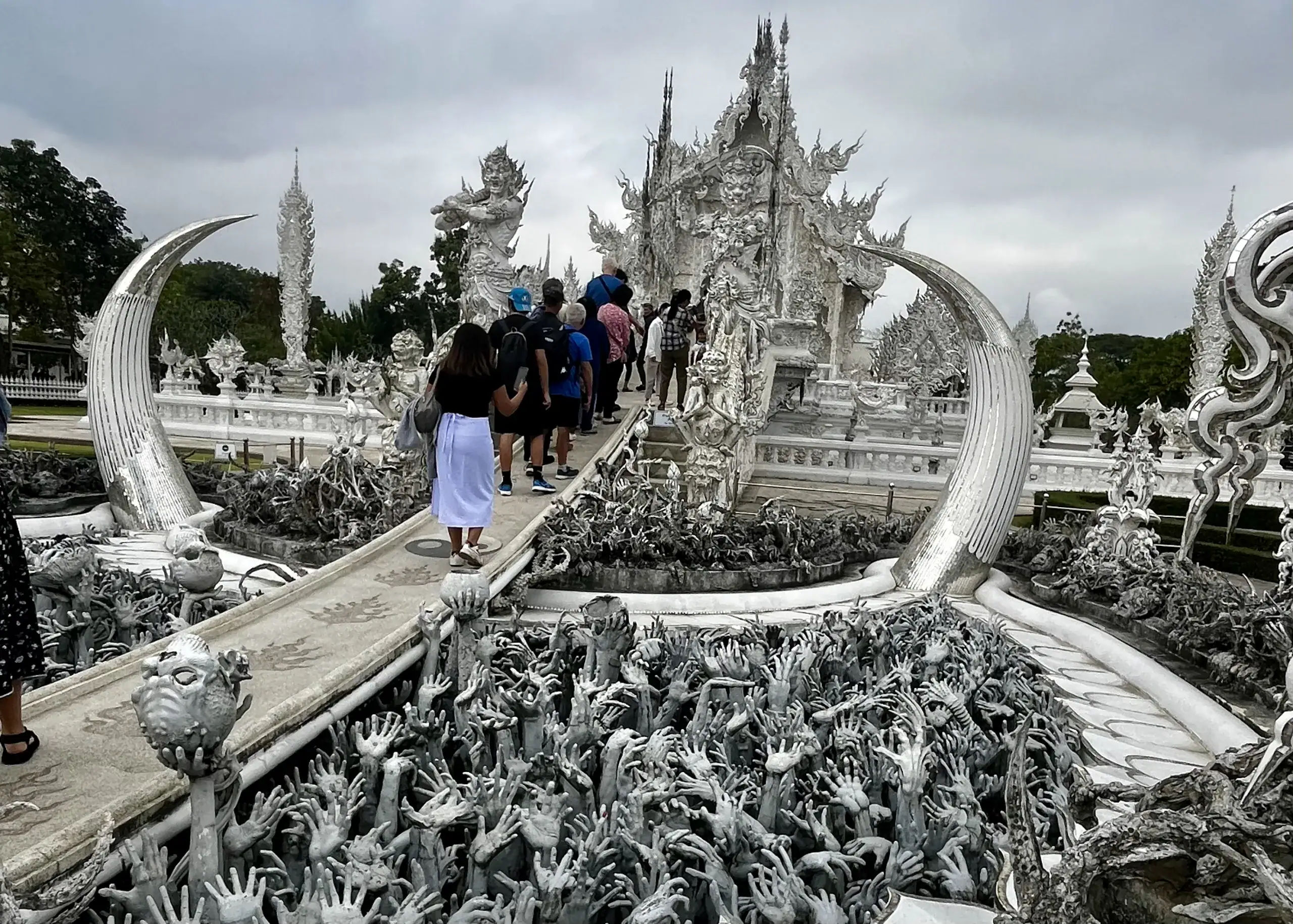
Even if you think you’ve seen enough temples to last a lifetime, these ones will surprise you.
- The White Temple (Wat Rong Khun) – This isn’t your typical ancient Thai temple – it’s a bright white, modern architectural masterpiece designed by artist Chalermchai Kositpipat. Think of it as part temple, part art installation, and part fever dream. The details are wild (yes, those are hands reaching out from the ground), and it’s easily Chiang Rai’s most famous sight.
- The Blue Temple (Wat Rong Suea Ten) – A stunning deep-blue temple with gold accents and an interior that looks like it was painted by a celestial artist. It’s beautiful, peaceful, and far less crowded than the White Temple, making it a great place to soak in the atmosphere.
- The Black House (Baan Dam Museum) – If the White Temple represents heaven, then the Black House represents… well, something else. This collection of black buildings showcases an eerie mix of art, animal bones, and strange wooden sculptures. It’s equal parts fascinating and unsettling, but totally worth a visit.
- Other lesser-known temples:
- Wat Huay Pla Kang – This one features a massive white Guan Yin statue (often mistaken for a giant Buddha) that you can actually go inside. The view from the top is pretty great too.
- Wat Phra Kaew – Home to the original Emerald Buddha (before it was moved to Bangkok), this temple is one of the most historically significant in Chiang Rai.
- Wat Rong Seur Ten (Tiger Temple) – No actual tigers, but plenty of cool architecture and vibrant blue hues similar to the Blue Temple.
Outdoor Adventures
Chiang Rai isn’t just about temples – there’s plenty of nature to explore if you’re up for an adventure.
- Hiking in Chiang Rai – The surrounding mountains are full of beautiful trails, whether you’re looking for an easy nature walk or a more challenging trek. Some popular options include hikes around Doi Tung, Doi Mae Salong, and the Huai Kaew Waterfall trail. If you’re feeling ambitious, you can even trek to remote hill tribe villages.
- Chiang Rai Hot Springs – If you love the idea of soaking in warm, mineral-rich water while surrounded by nature, Chiang Rai has several hot springs worth visiting. Some are more developed (with pools you can sit in), while others are more rustic, like Pong Phra Bat Hot Spring, where you can dip your feet in a natural stream. Bonus: some hot springs have spots where you can boil eggs, because why not?
- Other Natural Attractions:
- Khun Korn Waterfall – One of the most impressive waterfalls in northern Thailand, with a short but scenic hike to reach it.
- Singha Park – A large nature park with tea plantations, bike trails, and a giant golden lion statue for some reason.
- Tham Luang Cave – Made famous by the 2018 rescue of a trapped soccer team, this cave is now a fascinating site to visit, with a small museum dedicated to the incredible rescue operation.
Exploring Chiang Rai City
Beyond the temples and nature spots, Chiang Rai’s city center has plenty to offer.
It may not be as bustling as Chiang Mai, but it has its own laid-back charm, with cool cafés, night markets, and quirky attractions worth checking out.

- Chiang Rai Night Bazaar – If you love cheap and delicious street food, this is the place to be. Try local specialties like khao soi (northern-style curry noodles) and sai ua (spicy northern sausage), then browse the stalls for handmade crafts, clothing, and souvenirs. There’s often live music, and it’s a great place to just soak in the atmosphere.
- Saturday Walking Street – A larger and even livelier version of the night bazaar, but only on Saturday evenings. The entire street fills up with food vendors, handicrafts, and performers. It’s a must-visit if your timing lines up.
- The Golden Clock Tower – Designed by the same artist behind the White Temple, this ornate golden clock tower sits in the middle of a roundabout, which sounds unexciting until you see it light up with a dramatic music-and-light show every evening at 7, 8, and 9 PM. It’s one of those weirdly charming things that make Chiang Rai special.
- Oub Kham Museum – If you’re into history, this small but fascinating museum is packed with artifacts from the Lanna Kingdom and the hill tribes of northern Thailand. It’s a great place to get a deeper understanding of the region’s culture.
- Tea and Coffee Culture – Northern Thailand has some of the best tea and coffee in the country, and Chiang Rai is no exception. There are plenty of cozy cafés serving locally grown brews, whether you prefer a strong Thai iced coffee or a delicate oolong tea. Some top spots include Chivit Thamma Da Coffee House, Kyoto Shi Cafe, and Akha Ama Coffee.
Chiang Rai Itinerary Suggestions
Whether you’re just passing through or planning to soak in everything the city has to offer, here’s how to make the most of your time in Chiang Rai.
One-Day Chiang Rai Itinerary (For the Rushed Traveler)
If you only have one day, get ready for a fast-paced temple-hopping adventure.
- Morning: Start early with a visit to the White Temple (Wat Rong Khun) before the tour buses arrive. After marveling at its intricate details (and probably questioning some of the modern pop culture references hidden in the murals), head to the Blue Temple (Wat Rong Suea Ten) for a very different experience.
- Lunch: Grab a bowl of khao soi at a local restaurant – this northern Thai specialty is a must-try. วาสนาฝ้ายล้านนา&เจ้านางสตูดิโอ (copy and paste into google maps) makes a great bowl!
- Afternoon: Visit the Black House (Baan Dam Museum) for a deep dive into Chiang Rai’s darker, artsy side. If you have extra time, swing by Wat Huay Pla Kang, the giant white Buddha/Guan Yin statue with great city views.
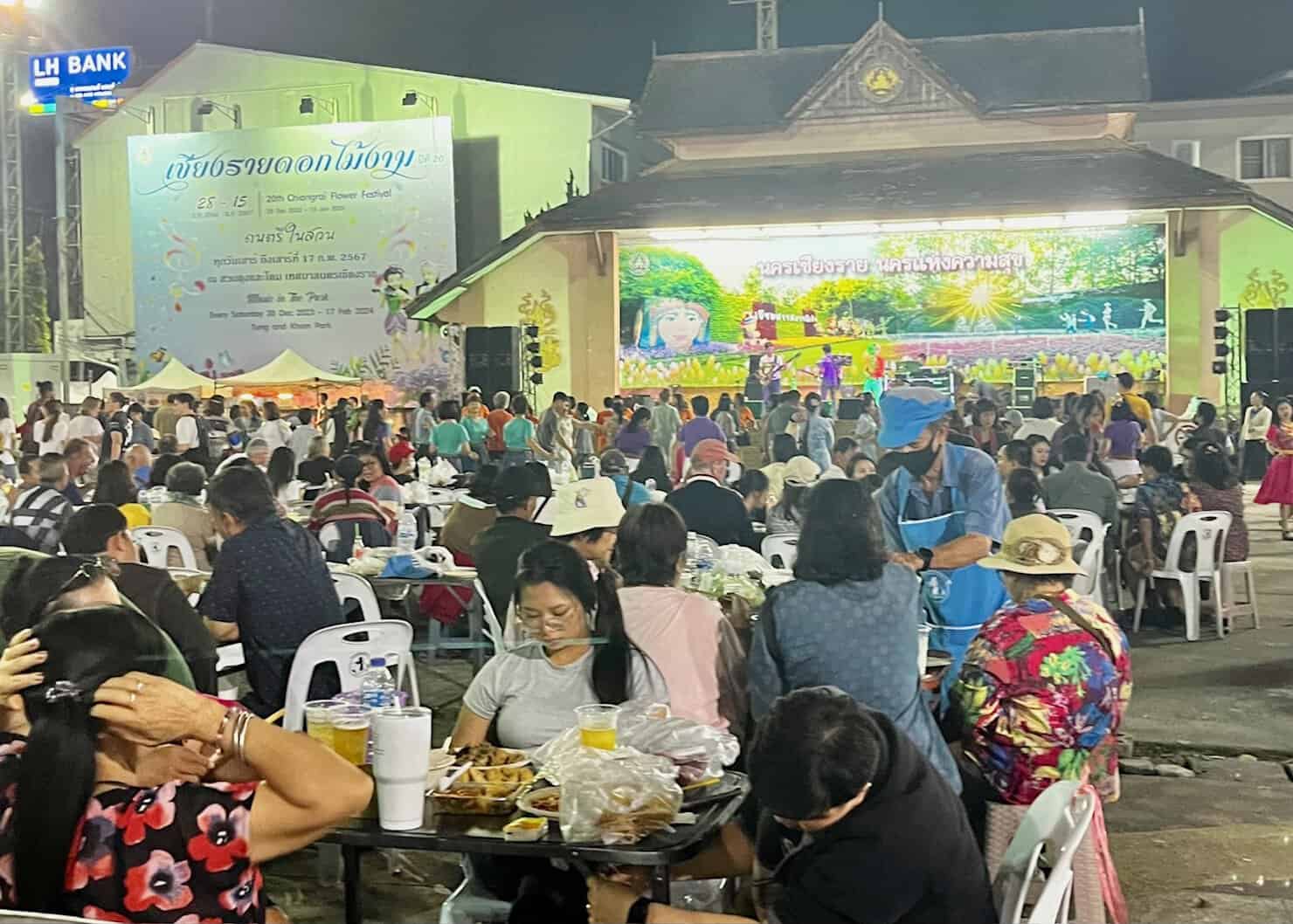
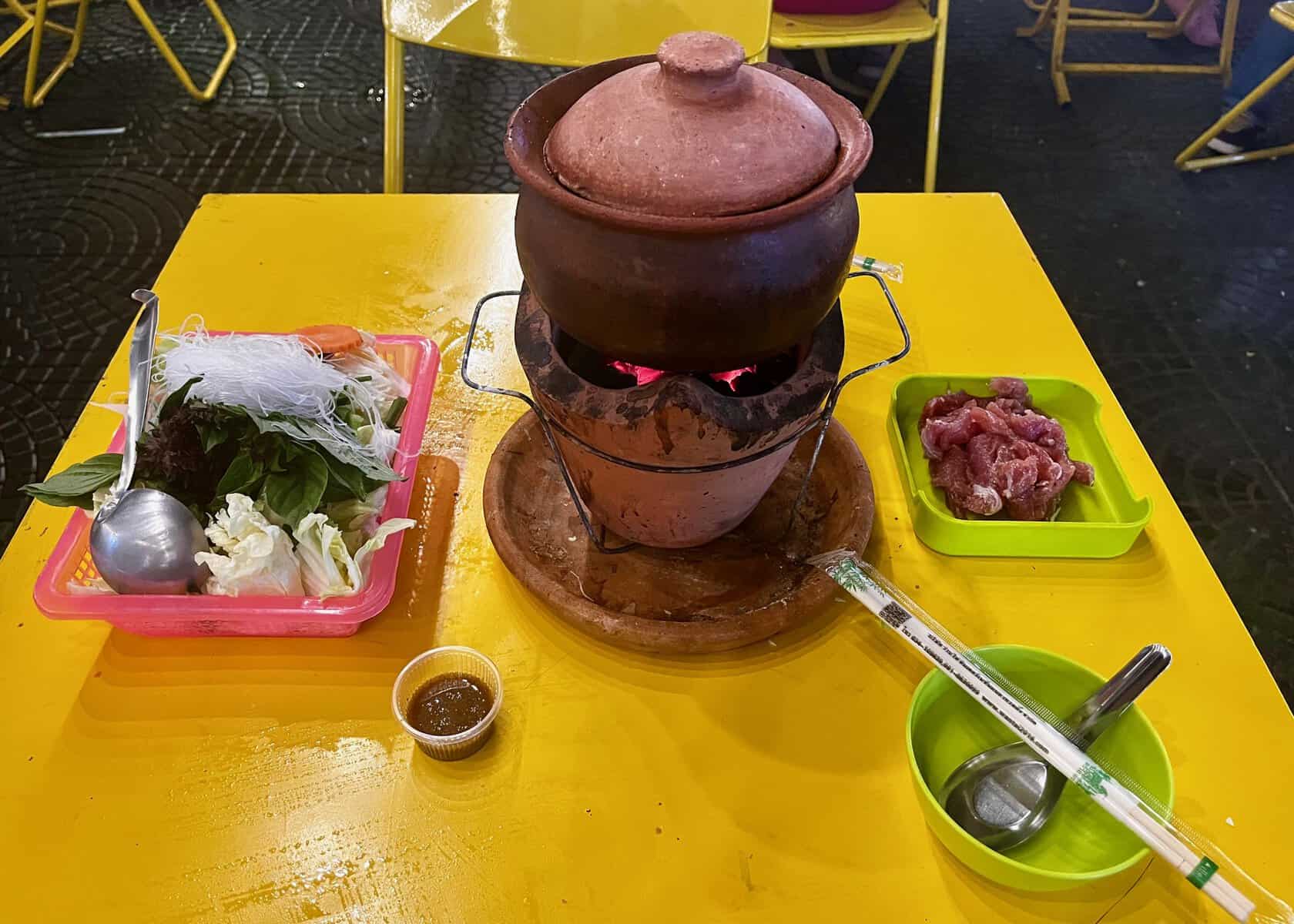
- Evening: Catch the Golden Clock Tower light show (it happens at 7, 8, and 9 PM) and then head to the Chiang Rai Night Bazaar for cheap eats, souvenirs, and live music. We tried the hot pot here – sooooo good.
If you just want to spend a day in Chiang Rai, we think it’s worth booking a tour so you don’t have to worry about bus times and figuring out where to go. You can also rent a motorbike for the day for about $5 USD.
Two- to Three-Day Chiang Rai Itinerary (For a More Relaxed Trip)
With a couple of days, you can go beyond the main sights and actually enjoy the slower pace of Chiang Rai.
Day 1: City Highlights & Cultural Spots
- Morning: Start at the White Temple, then visit the Blue Temple while it’s still quiet.
- Lunch: Enjoy a relaxed meal at Chivit Thamma Da Coffee House, a riverside spot with great food and drinks.
- Afternoon: Head to the Black House, then visit a lesser-known temple like Wat Huay Pla Kang or Wat Phra Kaew (where the original Emerald Buddha was discovered).
- Have a snack and matcha at Kyoto Shi Cafe – the cream buns are 10/10.
- Evening: Explore the Night Bazaar or, if it’s a Saturday, stroll through the Walking Street Market. Make sure you join in the dance line – or at least stick around to watch!
Day 2: Outdoor Adventures & Local Experiences
- Morning: Take a short hike to Khun Korn Waterfall or visit Pong Phra Bat Hot Springs for a soak.
- Lunch: Enjoy some northern Thai food at a local market or café. We loved our meals at วาสนาฝ้ายล้านนา&เจ้านางสตูดิโอ (copy and paste into google maps).
- Afternoon: Visit Singha Park for tea plantations, scenic views, and a relaxed atmosphere. If you’re into history, check out Oub Kham Museum instead.
- Evening: Catch the Clock Tower light show (if you missed it on Day 1) and wind down at a tea or coffee house like Akha Ama or Melt in Your Mouth.
Day 3 (For Those Who Want to Explore More)
- Take a day trip to Doi Tung for mountain views, flower gardens, and hill tribe culture.
- Or, if you’re heading to Laos next, travel to Chiang Khong and check out the Mekong River before crossing into Huay Xai.
- If you’re more into relaxing, spend the day hopping between hot springs and cute cafés.
With three days, you’ll get a perfect mix of Chiang Rai’s cultural, natural, and laid-back sides. But if you’re short on time, even one full day here is enough to convince you that Chiang Rai is well worth the visit!
If you’re planning to visit Chiang Mai as well, don’t miss the cooking class we loved at Grandma’s Home Cooking School — it was one of our favorite days in Thailand. Read about it here.
Where to Stay in Chiang Rai
Chiang Rai isn’t a huge city, but where you stay can still make a difference in how you experience it.
Whether you want to be right in the action, tucked away in a quiet riverside retreat, or somewhere in between, there are plenty of options for every budget.
Best Areas to Stay in Chiang Rai
- City Center – If you like being close to markets, restaurants, and public transport, this is the best spot. It’s walkable, lively (but not too chaotic), and ideal for first-time visitors.
- Riverside – For a more peaceful stay with scenic views, look for hotels along the Kok River. It’s still close enough to the city, but with a more relaxed vibe – great if you want to enjoy nature without being completely isolated.
- Countryside & Mountain Resorts – If you have your own transport and want a true escape, there are some beautiful boutique stays outside the city, surrounded by tea plantations, rolling hills, and fresh mountain air.
TOP TIP: You can rent a motorbike when you arrive in the city to get yourself out into the countryside.
📶📞 Be set up and ready to explore before you leave home with an eSIM from Airalo. Use code JULIA1616 for $3 OFF your first eSIM purchase
Budget, Mid-Range, and Luxury Stays
Chiang Rai is generally affordable, so even mid-range hotels can feel pretty upscale for the price.
There are solid budget guesthouses and hostels for backpackers, plenty of comfortable boutique hotels for mid-range travelers, and some truly luxurious resorts if you’re in the mood to splurge.
Budget Stay: Baan Mai Kradan Hostel – OUR PICK

Baan Mai Kradan is one of the most beautiful hostels we’ve ever stayed at. The indoor-outdoor common area is gorgeous, the dorm beds are comfortable, the bathrooms clean, and the free breakfast is delicious.
⭐⭐⭐⭐⭐ If you are staying in a hostel in Chiang Rai, we fully recommend a stay here.
Mid-Range Stay – Sleepy House Chiang Rai
The perfect mid-range hotel in the center of Chiang Rai. A stay at Sleepy House Chiang Rai means private rooms and bathrooms in a clean, quiet hotel.
The staff are incredibly helpful and there are tons of animals around the property!
Luxury Stay- MORA Boutique Hotel
A luxury hotel set right in the center of Chiang Rai, MORA Boutique Hotel is only steps from the night market and the clock tower.
The property is absolutely beautiful and hosts a swimming pool (for those hot afternoons) and a free breakfast.
If you’re looking for a place to splurge, this is it. You get so much value for your money in Chiang Rai!
Countryside Stay – Huean Himbo
If you have your own transport and want to stay out of the city, Huean Himbo is a great option! Book a stay right on the rice fields and wake up to mountain views – only 15 km from the center of Chiang Rai!
How to Get Around Chiang Rai
Chiang Rai is a pretty relaxed city to get around, and you won’t need too many transport options unless you’re heading out to the countryside. Here’s how to get around:
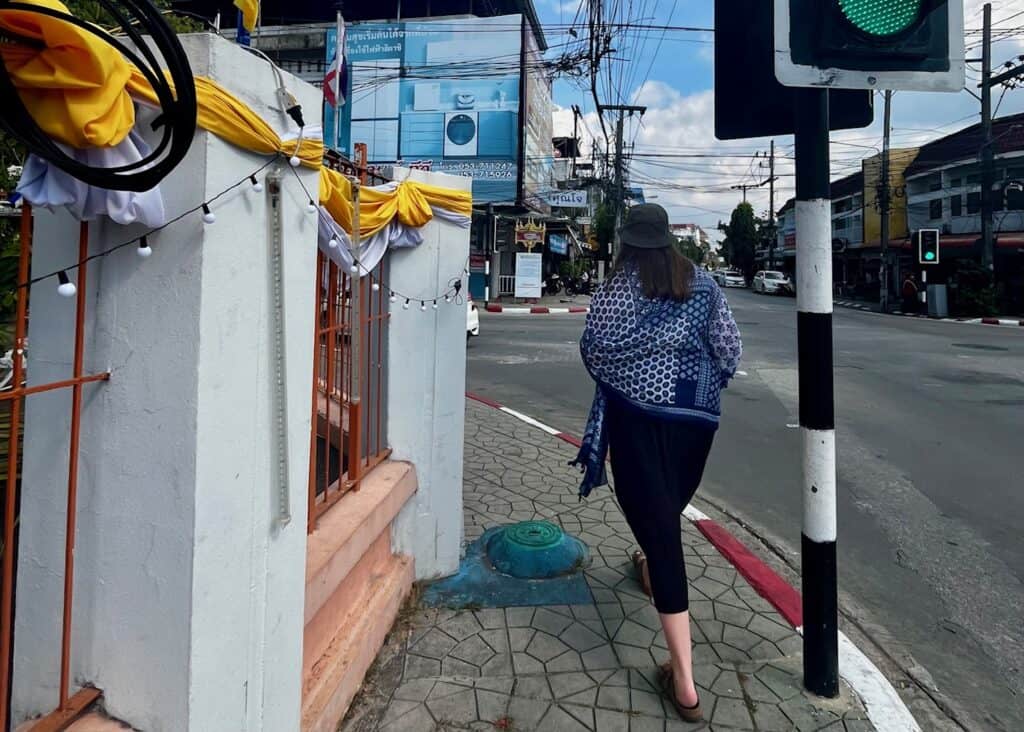
Walking – If you’re mostly sticking to the city center, walking is the easiest way to get around. The streets are fairly quiet, and most attractions like the clock tower and night bazaar are within walking distance of each other.
Tuktuks – Tuktuks are a fun (but sometimes overpriced) way to get around short distances. Always agree on the price before hopping in.
Bicycles & Motorbikes – Some guesthouses rent out bicycles, which is a great way to explore at a slow pace. If you’re comfortable on a motorbike, renting one can be the best way to get to places like the White Temple or the Black House without relying on tours.
Taxis & Ride Apps – Metered taxis aren’t really a thing in Chiang Rai, but you can use Grab (the Southeast Asian version of Uber) to get a set-price ride. It’s usually cheaper than a tuktuk for longer distances.
If you’re heading further out to places like the Blue Temple or the White Temple, taking a public bus, motorbike or a Grab is usually the most convenient option.
Transportation: How to Get to and From Chiang Rai
Chiang Rai might feel a little out of the way, but getting in and out is easier than you’d think. Whether you’re heading to Chiang Mai, Bangkok, or straight into Laos, here’s what you need to know.
Bus from Chiang Rai to Chiang Mai
The bus between Chiang Rai and Chiang Mai is one of the most common routes for travelers, and thankfully, it’s a pretty straightforward journey.
The ride takes about 3 to 4 hours, depending on traffic, and buses run frequently throughout the day.
If you want a comfortable experience, go for the Green Bus company, which offers different classes ranging from basic seats to VIP options with extra legroom and slightly more functional air conditioning.
Bus from Chiang Rai to Bangkok
Brace yourself – this is a long one. The journey from Chiang Rai to Bangkok by bus takes 11 to 13 hours, which means you’ll either need a lot of patience or a good supply of downloaded Netflix episodes.
Most people opt for an overnight bus, which isn’t a terrible idea since it saves on a night of accommodation. Buses are usually comfortable enough, with reclining seats and blankets, but don’t expect luxury.
If you’re the kind of person who can’t sleep sitting up, you might want to consider flying instead – flights from Chiang Rai to Bangkok are affordable, and the flight time is just over an hour.
Traveling to Bangkok? Here’s everything you need to know:
Alternatively, you can take a night train between Bangkok and Chiang Mai, then a bus between Chiang Mai and Chiang Rai.
Whichever route you choose, make sure to BOOK EARLY. We made the mistake of booking our train last minute and ended up with no AC and sitting up all night.
Bus from Chiang Rai to Huay Xai (Laos Border)
If you’re heading into Laos, Huay Xai is your first stop across the border.
The bus ride from Chiang Rai to the border town of Chiang Khong takes around 2 hours, and from there, it’s a short tuk-tuk ride to the actual border crossing.

Once you’re stamped into Laos, you’ll find yourself in Huay Xai, which is mostly known as the starting point for the slow boat to Luang Prabang.
📌 This sound like you? Find the best areas to stay in Luang Prabang + things to do when you get there.
The boat ride takes two days, with an overnight stop in Pakbeng, and while it’s not the fastest way to travel, it’s definitely one of the most scenic.
Just be prepared for wooden benches, limited food options, and a boatload of other backpackers who all had the same idea.
⭐ Read everything you need to know about the Thailand-Laos border crossing here!
Where to Go After Chiang Rai
So, you’ve soaked in the temples, hiked to waterfalls, and eaten your weight in khao soi. What’s next?
Chiang Rai is well-connected to some amazing destinations, whether you’re sticking around northern Thailand or venturing into Laos.
Chiang Mai
The most obvious next stop. Chiang Mai has a bit of everything – historical temples, lively markets, digital nomad cafés, and an endless supply of cooking classes.
It’s also bigger and busier than Chiang Rai, but with plenty of chill corners if you know where to look.
If you liked Chiang Rai’s vibe but want more variety in food, nightlife, and activities, Chiang Mai is the natural next step.
Pai
If Chiang Rai felt too much like a city for you, Pai might be your dream destination. This little town is all about mountain views, waterfalls, hot springs, and a whole lot of backpackers in elephant pants.
The journey from Chiang Mai to Pai involves a famously winding road with 762 curves, so if you’re prone to motion sickness, stock up on Dramamine (or just embrace your fate).
Pai is best for people who love laid-back vibes, motorbike adventures, and watching the sunset from a rickety bamboo bridge.
It’s easy to lose track of time here, which is either a great or dangerous thing depending on your travel plans.
Laos (Huay Xai & the Slow Boat to Luang Prabang)
If you’re heading into Laos, Huay Xai is your entry point, but most travelers don’t stick around.

Instead, they hop on the famous slow boat to Luang Prabang, which is exactly what it sounds like – slow, but beautiful.
🏆 Stay here in Huay Xai: Over the Moon Hostel 🏆
The boat drifts down the Mekong River for two days, stopping overnight in the tiny town of Pakbeng, where the electricity is spotty, but the beer is cheap.
By the time you arrive in Luang Prabang, you’ll either be totally at peace or very ready for a normal chair again. Either way, it’s a memorable experience and a great way to ease into Laos.
Other Northern Thailand Destinations
If you’re looking for more off-the-beaten-path spots in northern Thailand, consider:
- Chiang Dao – A small town close to the Chinese border, Chiang Dao is full of amazing cave wats, stunning mountains, and cute coffee shops.

- Mae Salong – A former Chinese settlement known for tea plantations, misty mountain views, and Yunnan-style food. It’s quiet, beautiful, and feels completely different from the rest of Thailand.
- Nan – A peaceful, underrated province with rolling hills, charming temples, and almost no crowds. Great for travelers who want something even more remote than Chiang Rai.
- Phayao – A small lakeside town with a relaxed atmosphere and great local food. It’s a nice detour if you’re in no rush to get to Chiang Mai.
Wherever you go next, Chiang Rai makes for an excellent starting point – whether you’re diving deeper into Thailand or hopping across the border into Laos for a slow boat adventure.
Final Thoughts on Visiting Chiang Rai
Chiang Rai might not have the same level of hype as Chiang Mai, but that’s exactly what makes it special.
It’s a place where you can marvel at temples that look like something out of a fantasy novel, soak in hot springs in the middle of nowhere (while boiling eggs?!), and hike to waterfalls without bumping into a hundred other tourists.

If you’re into unique architecture, quirky cultural experiences, and nature, you’ll love Chiang Rai.
It’s perfect for travelers who prefer slower-paced destinations, appreciate a good bowl of khao soi, and don’t mind getting a little off the usual backpacker trail.
So, is Chiang Rai worth visiting? If you like cool temples, beautiful landscapes, and a break from the tourist crowds – absolutely.
🤔 Still undecided? Here’s a further comparison of Chiang Mai and Chiang Rai.
💎 Want to venture off-the-beaten path? Discover Chiang Dao – Thailand’s hidden gem.
