
Bangkok Food Tour: Our Honest Review of Chinatown’s Best Street Eats
Bangkok hits you with every sense at once — sizzling woks echo through narrow alleys, the air smells of grilled pork and garlic, and neon signs light up faces hunched over steaming bowls of noodles.
After three trips to the city and what adds up to nearly a full month here, we thought we knew the street food scene pretty well.
We’d eaten pad thai on plastic stools, followed the longest lines, and navigated night markets on instinct alone. But joining a Bangkok food tour completely changed how we saw it all.
For the first time, we learned what was really behind the dishes we’d been devouring — from the history of the rice noodles in our bowls to the stories of the families running century-old food stalls.
If there’s one neighborhood that captures Bangkok’s chaos and flavor best, it’s Chinatown. Yaowarat Road at night is a maze of sizzling woks, red lanterns, and crowds chasing the best street food in the world.
It’s also the perfect place to join a tour led by a guide who really knows the backstreets and hidden gems.
Even after countless nights exploring Bangkok’s backstreets solo, this tour showed us sides of Thai food we’d never noticed — and proved it’s absolutely worth joining, even if you’ve already eaten your way around the city.
DISCLOSURE: This post may contain affiliate links, which means we may earn a small commission if you book or buy something through them – at no extra cost to you. We only recommend things we’d actually use ourselves. Read more in our Privacy Policy.
Quick Info: Our Recommended Bangkok Food Tour
We’ve taken a lot of food tours around Asia, but this Bangkok street food tour instantly stood out.
It’s run by trusted local vendors, keeps the group size small, and offers a huge variety of tastings that go way beyond the usual pad thai or night market staples.
Every stop felt authentic. It’s a mix of family-run spots, cultural stories, and incredible food, and by the end, we both agreed it’s one of the best-value food tours we’ve ever done.
👉 Join the same Bangkok food tour we took here. There is free cancellation up to 24 hours in advance in case your plans change. 👈
The Logistics of the Street Food Tour We Did
- Duration: Around 3 hours (though it flies by)
- Price: About $50 USD per person (~1,800–2,000 THB) — amazing value for the amount of food and insight you get
- Group size: Maximum 7 people, so it never feels crowded
- What’s included: 8 stops, multiple dishes at several of them, and drinks at four locations (yes, including beer AND Thai tea)
Why We Booked This Tour Through Tripadvisor
We’ll admit it — for years, we kind of wrote off Tripadvisor. It felt clunky, dated. Like something our parents used to plan trips in 2010.
But lately, they’ve quietly overhauled their whole platform, and it’s honestly so good now.
The new app is smoother, easier to navigate, and makes it simple to check reviews and book smaller tours like this one without digging through five different websites.
They’ve even been rolling out discounts for new users and testing some smart new features that actually make booking travel feel modern again.

So yes, as millennials who once swore Tripadvisor off — we’ve started using it again. And that’s exactly how we found (and booked) this Bangkok food tour.
👉 See for yourself why we’re back to trusting Tripadvisor for our tours 👈
Why Take a Bangkok Food Tour (Even If You’ve Eaten Street Food Here Before)
It’s easy to wonder if you really need a guide when Bangkok’s street food is everywhere.
You can eat well on your own — the city’s overflowing with markets, food stalls, and even Michelin Guide picks (find them here). But many of the best places still cater mostly to locals.

We’ve spent months eating our way through Thailand, and even for us, ordering at some stalls can be tricky.
If you don’t speak Thai or aren’t comfortable pointing at random dishes, you’ll likely miss out on some of the most delicious local food in the city.
That’s where a Bangkok food tour really shines. Joining one means you can:
- Explore Bangkok backstreets with a local tour guide who actually knows where to go.
- Eat at family-run stalls that have been serving Thai dishes for generations.
- Skip the guesswork — your guide orders the best dishes on the menu (especially helpful at places like dim sum restaurants).
- Avoid the tourist traps that look good online but aren’t worth your time.
- Learn the stories behind the food and how Thai-Chinese culture has shaped the city’s street food scene.
Even after eating at over fifty different spots across the city, this experience taught us more about local Thai food than any solo meal ever could.
Whether it’s your first trip or your fifth, joining one of the city’s best food tours in Bangkok is the easiest way to connect with the real flavors of Thailand.
From savory dumplings to late-night sweets, here’s how the tour unfolded stop by stop.
🍜 Ready to dive into Bangkok’s street food scene? You can check availability and see current tour options here — it’s the easiest way to experience Bangkok’s food culture like a local.
Our Bangkok Street Food Tour Experience
After reading rave reviews about Bangkok food tours over and over, we finally booked one ourselves. It ended up being one of the best nights we’ve had in the city!
Meeting Point + First Impressions
The booking confirmation included everything we could possibly need. The tour started at MRT Wat Mangkon, inside Exit 3.
TOP TIP: the Google Maps pin for Exit 3 is slightly off. Just keep an eye out when you get close, but don’t follow the pin exactly.
Our tour guide, Uma, was waiting just inside with a bright red Magical Tours sign.
She was instantly friendly, striking up conversation about Bangkok’s metro system and local life as we waited for the group to assemble.
She immediately told us how many others we were waiting for and how long she’d hold the start time for latecomers.
If you’ve ever been first to arrive on a group tour, you know it can feel a little awkward at first, but Uma’s warmth set the tone right away.
Once everyone arrived, she gave a clear rundown of what to expect — where we’d be heading first, how many stops were included, and what kind of food and experiences we’d be trying along the way.
She also mentioned that our tour happened to coincide with Bangkok’s annual Chinese Vegetarian Festival, a month-long celebration when many Chinatown restaurants switch to vegetarian menus as a symbolic “cleanse.”
One of the usual stops was participating, and Uma gave us the option to replace it or visit anyway and sample the vegetarian dishes. We chose to go and were glad we did.
🍲 Want a stress-free start like ours? Join the same Bangkok food tour we took — small group, clear directions, and a local guide who handles every detail so you can just show up hungry.
Tasting Our Way Through Chinatown
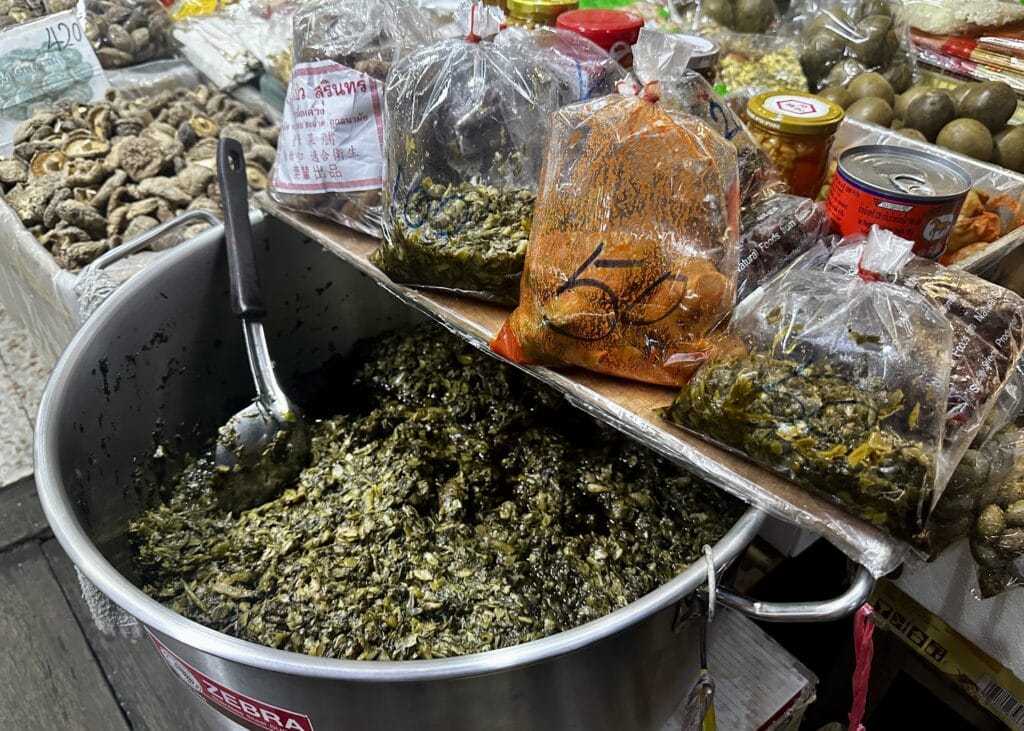
From the metro, we stepped straight into a narrow market alley alive with sizzling woks, clattering pans, and the smell of fried garlic and chives drifting through the air.
Uma led us past stalls piled high with vegetables, dried seafood, and offerings for Chinese celebrations, pausing often to point out local ingredients and explain how they were used.
Even in those first few minutes weaving through the market, we could tell this tour was going to be good.
First Stops: Dumplings and Dim Sum
Our first stop was Jok One Table, a tiny family-run shop that’s been serving shrimp dumplings for generations and even earned a Michelin Guide mention in 2021.
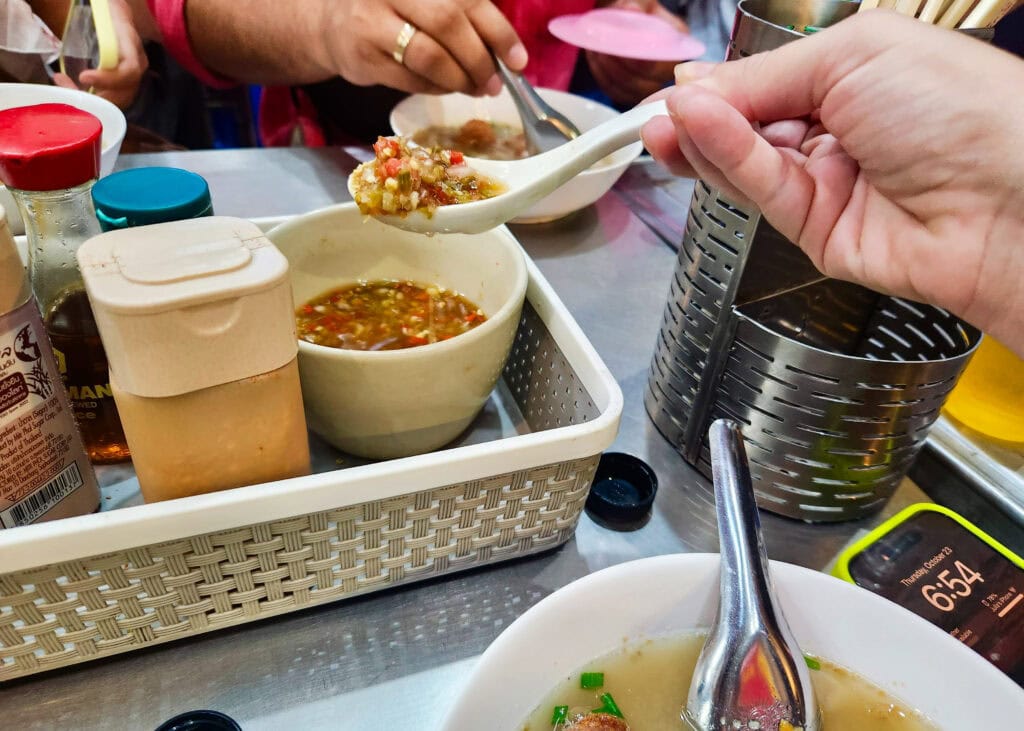
There’s literally one table inside (hence the name), and the dumplings arrive fast, piping hot, and perfectly chewy. You can drown them in sour fish sauce or load them with dried garlic (Julia’s favorite).
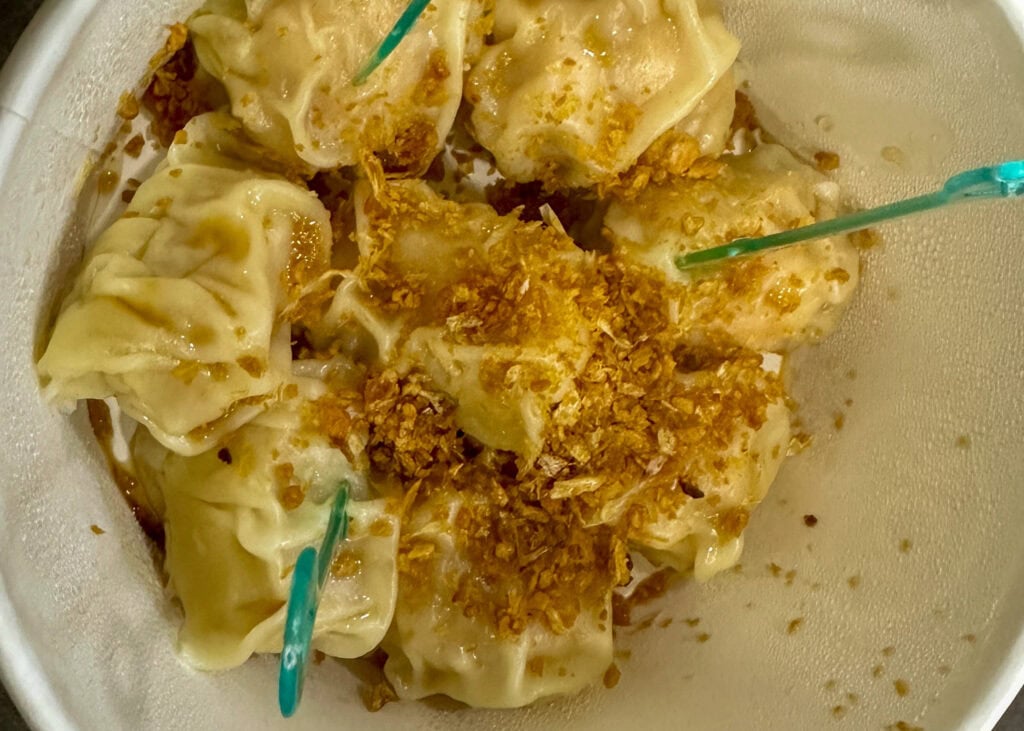
Jess doesn’t even really like shrimp but still called them one of the best dishes of the entire tour.
Next, Uma led us to a dim sum restaurant tucked behind Yaowarat Road.
We were ushered into a quiet back room and served steaming pots of jasmine tea while Uma demonstrated the traditional Chinese way of drinking tea with all your senses — touch, smell, and taste.
Then came the food: crispy pork, Hong Kong–style dumplings, chive pastries (SO GOOD) and bao buns filled with everything from sweet custard to barbecue pork.
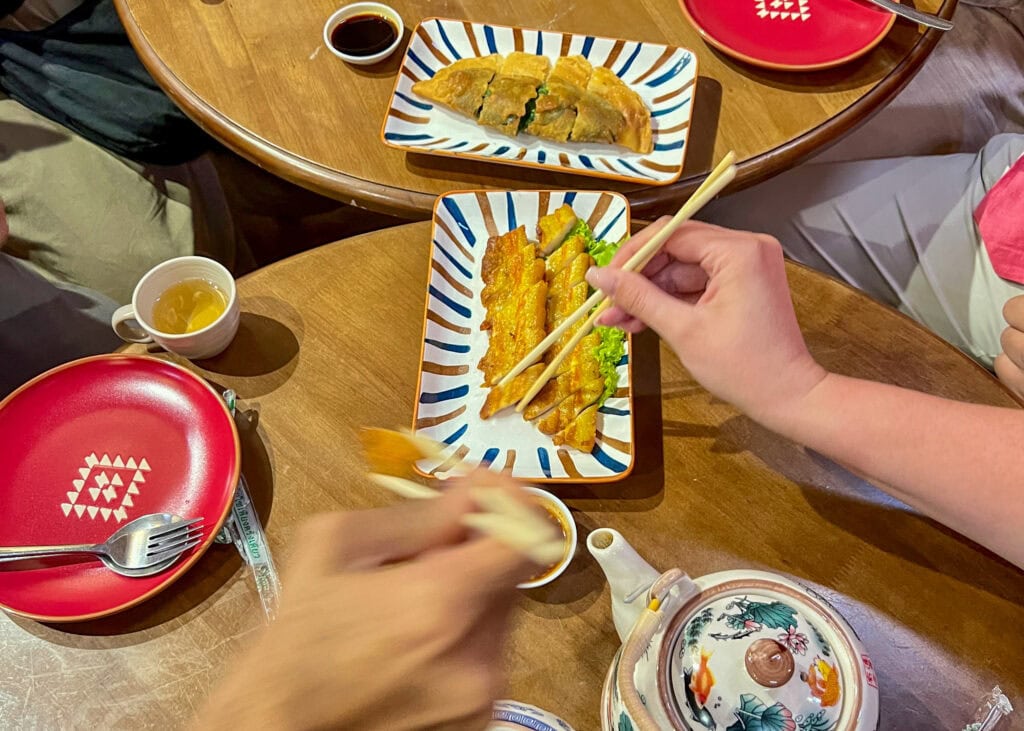
Every bite was bursting with flavor, and by the second stop, we were already whispering about how much value the tour offered. To order all that food on our own would have cost at least the price of the entire tour.
Deep in the Backstreets of Bangkok
As the night went on, we wandered deeper into Chinatown’s maze of side streets. Uma pointed out small shrines and century-old shopfronts between bites, helping us notice details we would’ve otherwise missed.
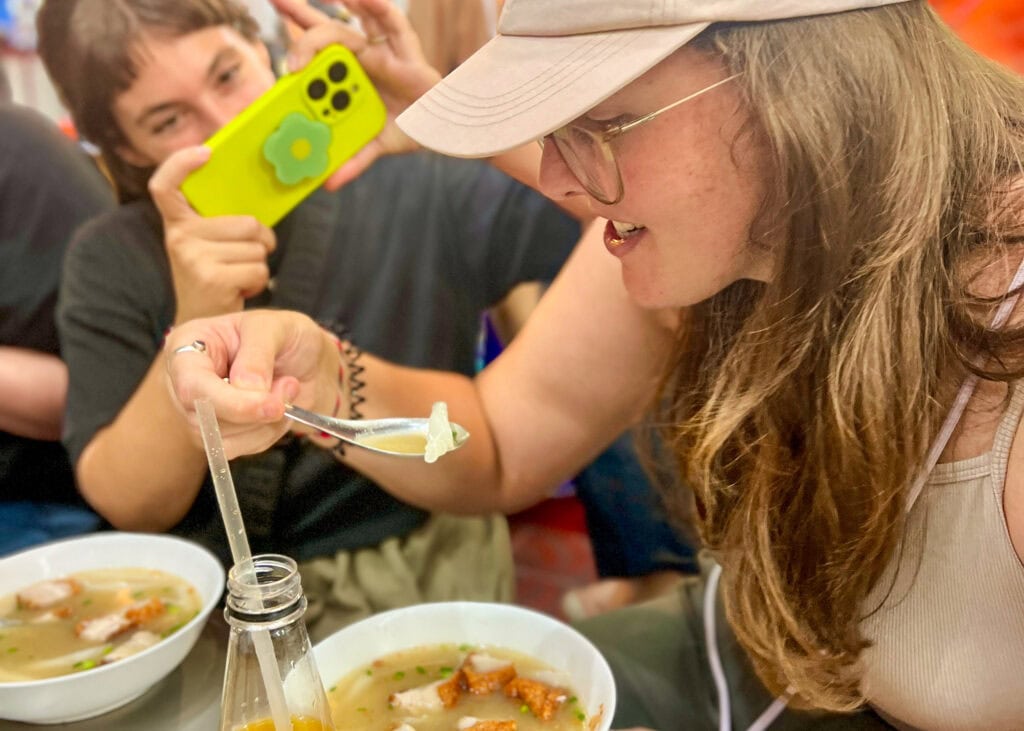
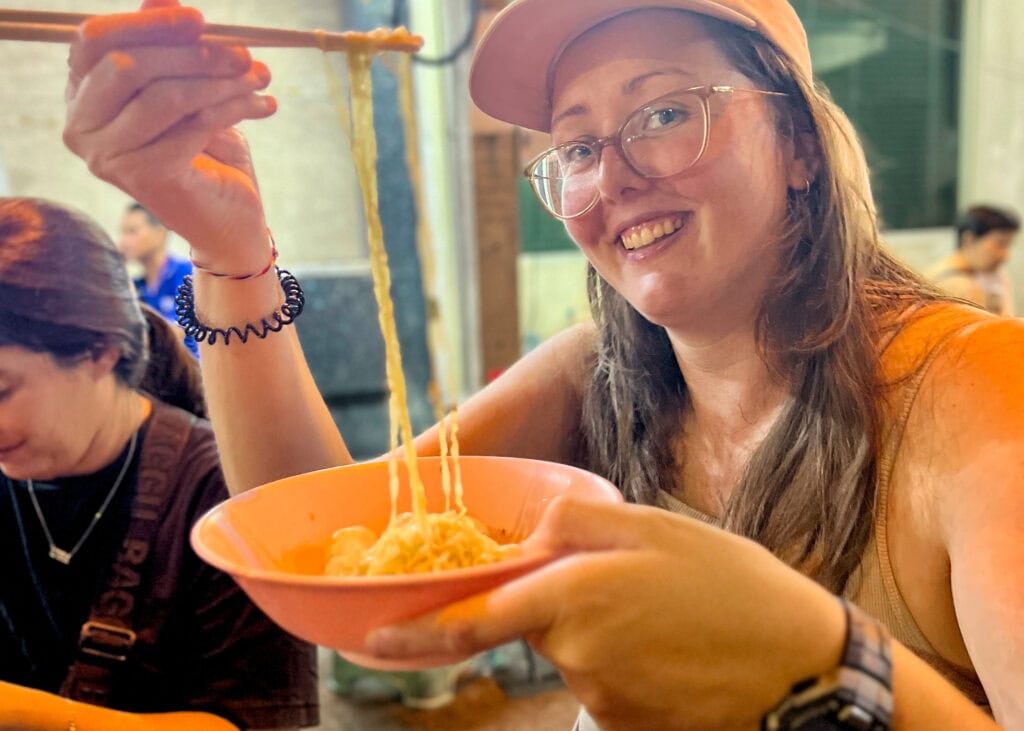
We stopped at Nai Ek Roll Noodle, famous for its peppery pork noodle soup.

The broth was so rich and flavorful it might have ruined us for every other noodle soup in Thailand (tbd because we’ll have to keep trying more, ya know?).
TOP TIP: The traditional way to eat this soup is with everything in it: tongue, intestines, liver, etc. We are adventurous eaters, but innards are not for us. You can just say you want the crispy pork here!
It was one of those quiet moments where everyone at the table just stopped talking to appreciate what they were eating.
Sweet Treats to End Our Food Tour
The final few stops showcased what makes Bangkok’s street food scene so special:
- Fried donuts dipped in gooey pandan custard
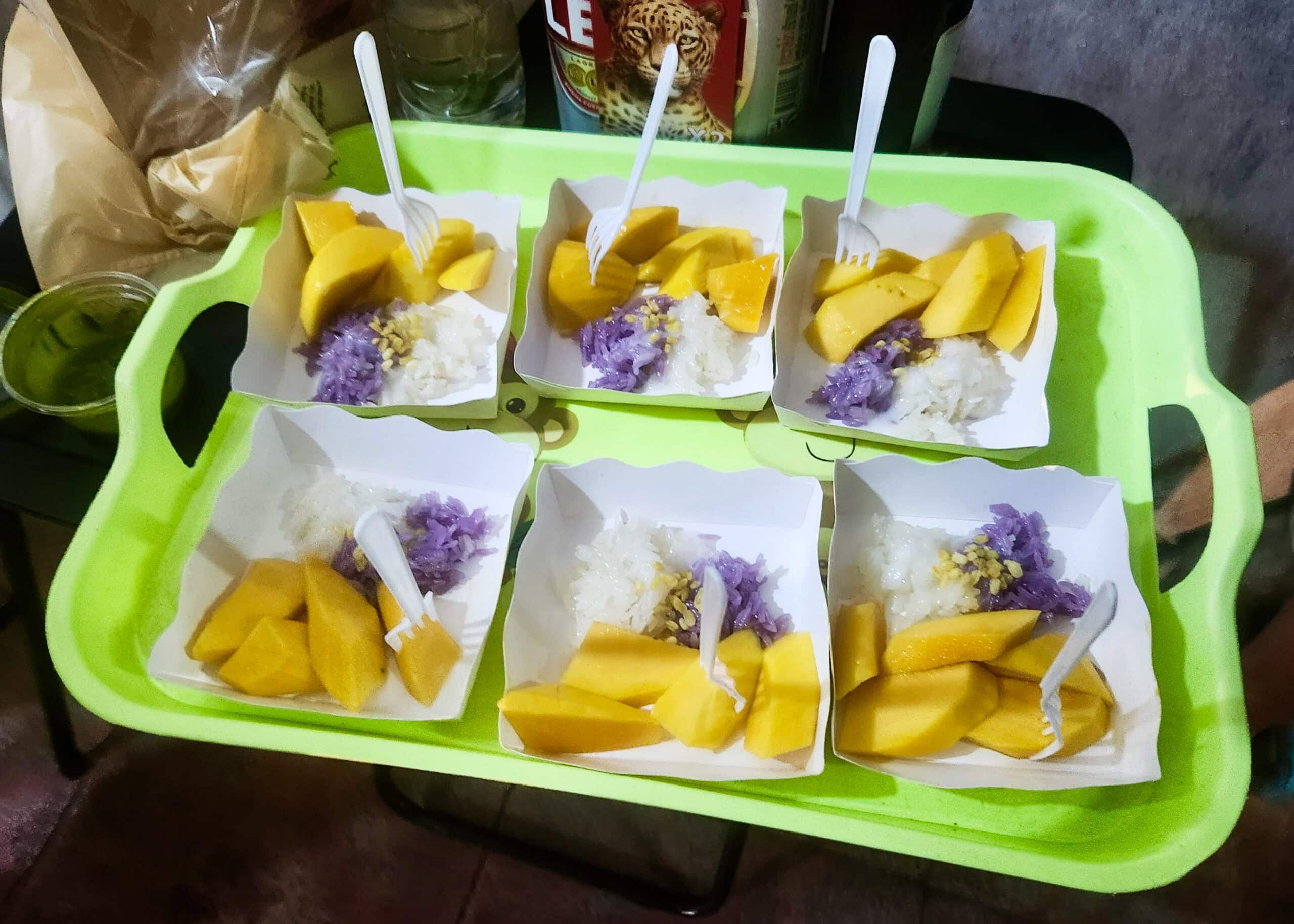
- Mini mango sticky rice served with perfectly ripe fruit (classic but a fav)
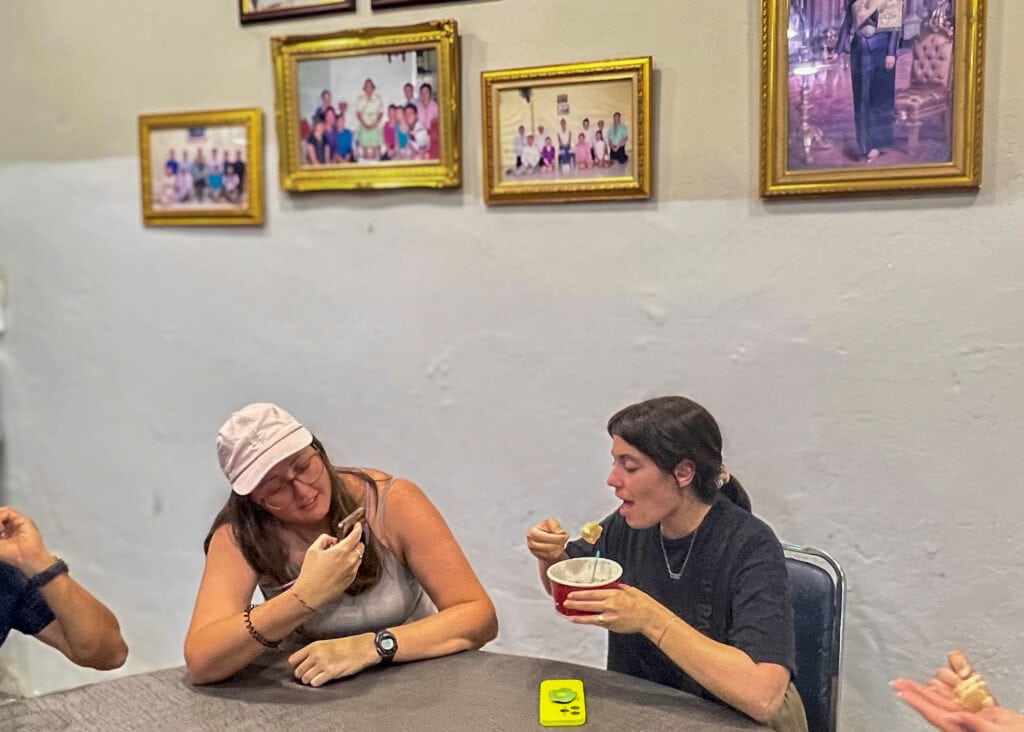
- Thai milk tea from the original ChaTra Mue shop
- Coconut, pandan, and taro pancakes from a nameless hawker stand run by an older couple who’ve been perfecting their recipe for decades

What stood out most was how every vendor specialized in just one thing and did it exceptionally well.
Watching them work while Uma shared their stories turned what could’ve been a simple food crawl into a deeper look at local life.
🥭 If you want the same intimate, local experience we had, this is the tour we’d book again in a heartbeat.
What We Learned on Our Tour
By the time we’d tried our fifth dish, we realized this tour wasn’t just about eating — it was about understanding why food in Bangkok tastes the way it does.
Uma’s stories and observations helped connect what we were eating to the people and cultures behind it.
The People Behind Bangkok’s Food Scene
Uma explained that many of the workers who keep Bangkok’s restaurants, street food stalls, and hotels running come from neighboring Cambodia, Laos, and Myanmar.
Like in many countries, local people often avoid the hardest labor jobs, leaving them to migrants who become the backbone of the city’s hospitality and food industries.
Their influence shows up everywhere: in how food is seasoned, how markets are organized, and even how ingredients are sourced and sold.
How Chinatown Became Bangkok’s Culinary Heart
We also learned how Bangkok’s Chinatown became such a dense, flavorful maze of culture and cuisine.
Centuries ago, Chinese immigrants were pushed into this riverside district and built a tight-knit community that has remained ever since.
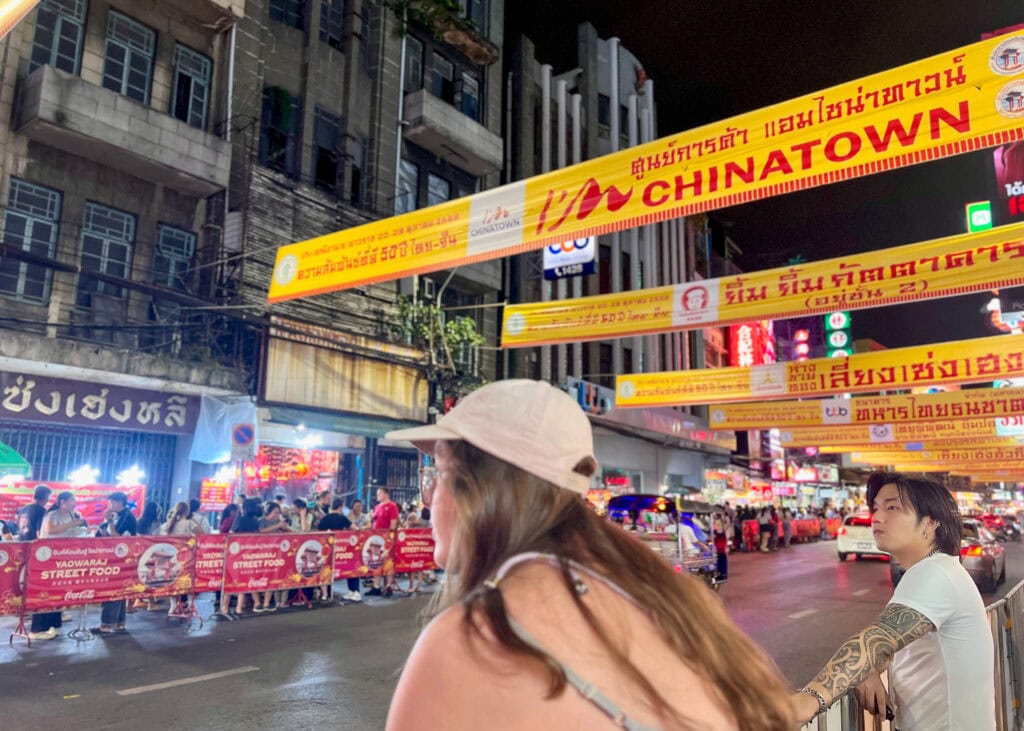
Over generations, their food and traditions blended with local Thai cooking to create what’s now known as Thai-Chinese cuisine.
It’s why soy sauce and fish sauce are used interchangeably, why dim sum sits beside sticky rice desserts, and why the city’s food feels both distinctly Thai and unmistakably Chinese.
Connections Between Guides and Vendors in Chinatown
Uma’s connection with the vendors was one of our favorite parts of the night. She joked easily with the cooks, greeting them like old friends, and you could tell she was genuinely respected.
When someone asked a question she didn’t know, she didn’t guess — she went to the source.
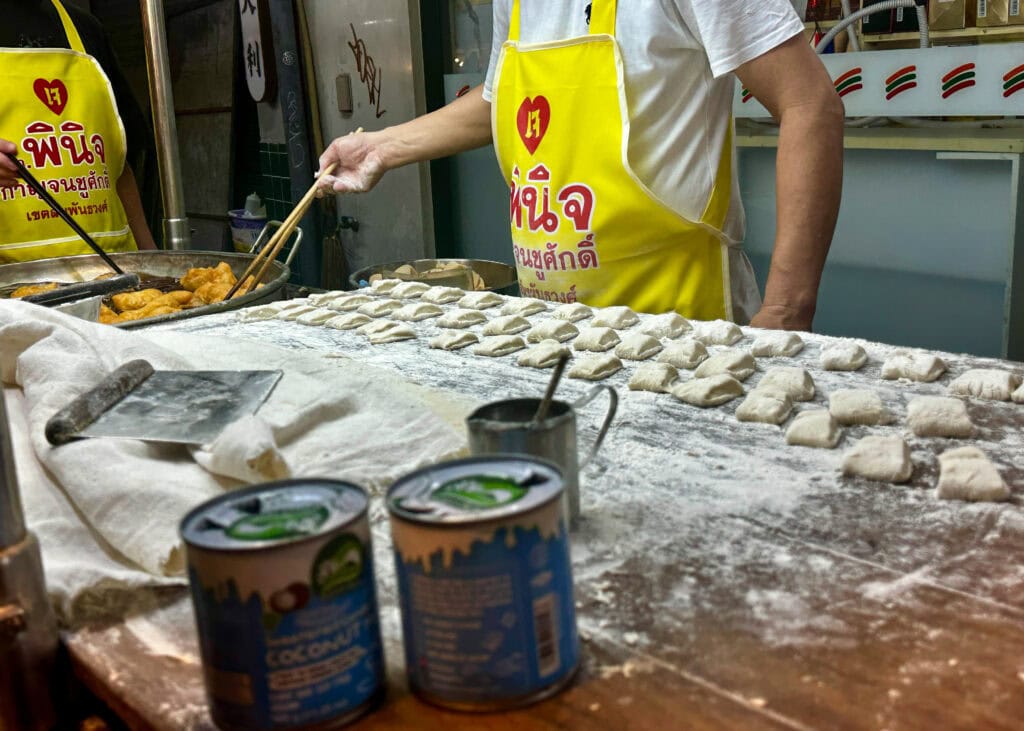
At Nai Ek Roll Noodle, one guest asked how their noodles became so tightly rolled, and Uma went straight to the cook for the answer.
It turns out the noodles roll themselves naturally when boiled because they’re cut into triangles (how cool???).
Side note: Every stall was clean and everything was cooked fresh to order — no mystery reheats here.
We’re usually cautious about food that’s been sitting out (once bitten, never again), but on this Bangkok food tour we felt completely safe eating at every stop.
Understanding Thai-Chinese Food Culture
Between stops, Uma talked about how food in Bangkok is shaped by timing and rhythm. In a city where something is always open, people eat when they’re hungry, not at set mealtimes.
We learned which dishes are traditionally eaten in the morning, which are considered late-night comfort food, and how Bangkok’s mix of cultures has created an endless range of flavors.
By the end of the night, we’d learned as much about history and migration as we had about ingredients.
🥢 If you love learning the stories behind your food, this Bangkok food tour delivers far more than just great meals. Join a tour here and experience the history and flavors that make Bangkok’s Chinatown so unique.
End of the Tour + What We Thought
The tour lasted about three hours, but it honestly flew by. We made eight different stops, and several of them served multiple dishes, so it felt like a full evening of eating rather than a quick tasting.
The variety was incredible — every dish offered a new flavor, texture, or story, so even though we ate a ton, it never felt repetitive.
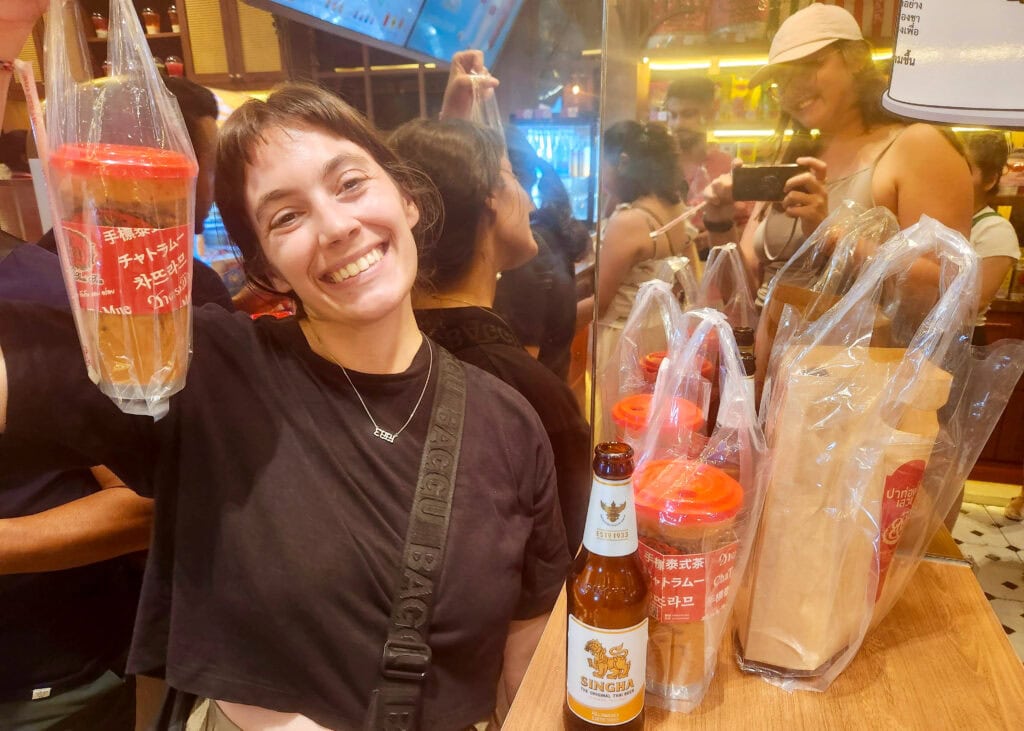
We also loved that drinks were included at four of the stops, which was FAR more generous than we expected.
You could choose anything from soft drinks to a beer if you wanted one, and by the time we reached the stop for Thai tea, we could barely finish it (the cup was the size of Jess’s head and she does not have a small head).
Between the savory bites, the desserts, and all those drinks, this tour covered everything from start to finish.
When we added it up, we realized we’d easily eaten the value of the tour price — maybe more.
Considering the quality of food, the number of dishes, and how much we learned from Uma, this was hands-down one of the best value tours we’ve ever booked.
At the end of the tour, we could barely move. We waddled home full, happy, and already talking about which dishes we’d go back for next time (looking at you, shrimp dumplings).

🎂 And the icing on the cake? Our hotel was in Chinatown so we only had a short walk home unlike everyone else in the group who needed to taxi back to their hotels. Read our post to find the perfect hotel in Chinatown for your visit.
By the time we got back to the hotel, the streets outside were quiet, but we could still hear the faint echo of Chinatown — the hiss of pork hitting a hot wok and the distant whistles of traffic officers cutting through the night.
🥢 If you want to taste this much incredible Bangkok food in one night, book your tour here— it’s easily one of the best-value experiences in the city.
Was It Worth It? Our Honest Review
If you’ve skipped straight here instead of reading our full retelling (no offense taken), here’s the short version: this is one of the best tours we’ve ever taken, and it’s absolutely worth it.
If you’ve ever wondered how locals actually eat in Chinatown at night — not the sanitized stalls you find on travel lists, but the real, family-run spots — this tour is your golden ticket.
Who Will Love This Tour
Honestly, almost anyone who enjoys good food will love this. But to be specific, it’s ideal for:
- Adventurous eaters who love trying new dishes and aren’t afraid of unknown ingredients.
- Returning visitors to Thailand who’ve already explored the main sights and want to go deeper into Bangkok’s food culture.
- First-time travelers who want to learn what and how to eat without feeling overwhelmed by choice.
- Solo travelers looking to meet others and share a great meal with like-minded people.
- Curious food lovers who enjoy the stories, history, and connections that come with local Thai food tours.
If you love a mix of culture, conversation, and seriously delicious food, this experience is made for you.
Who Might Not Love This Tour
It’s not for everyone, and that’s okay. You might want to skip this tour if:
- You’re vegetarian. You absolutely can join, and the guide will do their best to accommodate, but you’ll miss out on many of the dishes that make this experience so special.
- You hate crowds. Chinatown in Bangkok is busy — always. That’s part of the energy, but if crowds stress you out, it might be tough.
- You’re on a shoestring budget. We’d still consider this affordable by Bangkok food tour standards and it’s an incredible value for money, but it may require planning and saving if you’re on a VERY small budget.
One small note for solo travelers: a few dishes, like dim sum and noodle soups, are shared between two people in the group.
You can always ask for an extra bowl if you’d rather not share — it’s a small moment of awkwardness that comes with the territory of solo travel, but it doesn’t take away from the experience.
Why We Loved This Tour
Between the amount of food, the variety of stops, and the insights from Uma, this tour delivers far more than we expected.
It gives you a real look at Bangkok’s backstreets, introduces you to vendors who’ve been perfecting their craft for generations, and serves some of the best Thai-Chinese food we’ve ever eaten in a small-group setting.
Yes, 100% — we’d recommend this as the best street food tour in Bangkok.
🍜 Want to experience it for yourself? Book your Bangkok food tour here and taste why we can’t stop talking about it.
Tips for Booking a Food Tour in Bangkok
Choosing the Right Bangkok Food Tour for You
Bangkok has no shortage of food tours, but not all of them are created equal. Some are walking tours focused on neighborhood stories, others are tuk tuk tours that zip between markets and food stalls.
You’ll also find day tours that explore local markets and night tours that dive into the city’s lively after-dark food scene.
When we were choosing, we prioritized small groups, local tour guides, and a focus on authentic, family-run stalls rather than tourist stops.
We also wanted a company that provided context — not just food tasting, but stories, cultural history, and interaction with the vendors.
We went with Magical Tours, and it exceeded expectations. Uma, our guide, was knowledgeable, friendly, and clearly loved the food she was sharing.
Their tour stood out for including generous portions, four stops including drinks, and a thoughtful route through Bangkok’s backstreets that avoided the most crowded sections of Yaowarat Road where possible.
Before booking, you should check the following:
- Dietary needs: confirm if vegetarian or halal options are available.
- Tour pace and duration: most last around three hours with 7–9 stops.
- Rain policy: many run rain or shine, so bring an umbrella just in case.
- Language: make sure it’s led by a fluent English (or your language of choice)-speaking guide.
If you’re looking for the best Chinatown food tour in Bangkok, we’d recommend this one without hesitation — it’s the perfect mix of food, culture, and local connection.
TOP TIP: Magical Tours runs several Bangkok food tours, not just in Chinatown. You can check out their full list of food tours here.
When is the Best Time for a Bangkok Food Tour
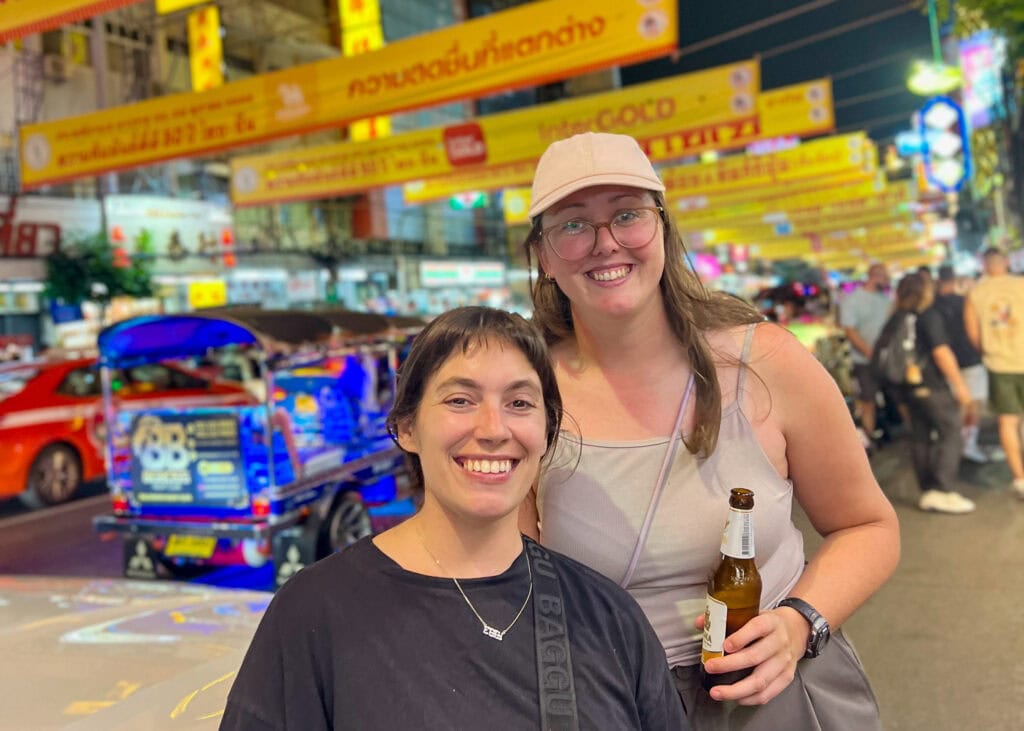
Evening tours are best for atmosphere. The city really comes alive after dark when the lights, crowds, and smells turn every corner into a new discovery.
Try to book a weekday if you can — weekends get even busier.
Book at least a few days in advance, especially during high season or local festivals when tours fill up quickly.
What to Bring on Your Bangkok Food Tour
- Light clothing: Bangkok gets hot, even at night.
- Cash: for extra snacks or drinks along the way. We bought Thai tea mix for Julia’s Dad during the tour (hi Dad if you’re reading this).
- Water: provided at some stops, but always good to have your own.
- An empty stomach: like seriously — you’ll need it.
💸 Planning to explore more of Thailand after Bangkok? Check out our 1 Month in Thailand itinerary for the best-value stays, meals, and hidden gems.
Other Bangkok Food Experiences to Try
If you’re still hungry for more Bangkok food experiences, you might also enjoy:
- A cooking class in Bangkok to learn the techniques behind your favorite Thai dishes.
- A visit to Or Tor Kor Market, one of the city’s cleanest and most colorful fresh markets.
- Exploring night markets beyond Chinatown, like the eclectic Talad Rot Fai Srinakarin (hidden gem!) for a completely different food scene.
🍲 For more foodie inspiration, check out our Bangkok travel guide or our Chiang Mai cooking class review next.
☕ Traveling onward to Vietnam? Don’t miss our guide to coffee in Vietnam — from egg coffee to coconut coffee, we break down every style and where to try the best cup.
FAQs About Bangkok Food Tours
How much does a street food tour in Bangkok cost?
Most Bangkok food tours cost between 1,500 and 2,500 THB (or $45-70 USD) per person, depending on group size and what’s included.
Expect to pay around $50 USD for a high-quality night food tour like the one we took — with eight stops, drinks, and a local guide, it’s incredible value for money.
It’s a little on the pricier side, but we booked through TripAdvisor and got a solid discount as first-time users — definitely worth checking if you’re looking to save a bit.
Can I do a self guided food tour in Bangkok?
You can absolutely explore Bangkok’s food scene on your own, but a guided tour takes it to another level.
Having a local guide means access to hidden stalls, cultural context, and confidence ordering dishes you might not otherwise try.
If it’s your first visit to Bangkok, a food tour is the perfect introduction.
Already planning to explore solo? Check out our guide to the best places to eat in Bangkok Chinatown — it’s packed with local favorites, hidden food stalls, and authentic restaurants you can visit on your own (including a few we discovered on this tour).
Are Bangkok food tours suitable for vegetarians?
Yes, but with limits. Most tours can adjust some dishes for vegetarians, but you’ll miss a few highlights like pork noodles or dim sum.
If you eat seafood or eggs, you’ll still have plenty to enjoy — otherwise, it’s best to ask the company about their vegetarian-friendly tours before booking.
How long do Bangkok street food tours last?
Most tours last around 3 to 3.5 hours and cover 7–9 stops. The pacing is relaxed, and you’ll have time to chat, ask questions, and enjoy each dish without rushing.
Is the food safe to eat in Bangkok?
Yes — especially on guided tours. Our guide chose vendors known for cleanliness and high turnover, so everything was freshly cooked and safe even for sensitive stomachs.
Do you tip your tour guide on food tours in Bangkok?
Tipping isn’t mandatory but is appreciated — around ฿100–200 per person for great service. We tipped our guide 200 Baht for her exceptional service.
What should I wear on a Bangkok food tour?
Casual, light clothing and comfortable shoes — you’ll walk about 2 km through narrow streets.
🥥 First time in Thailand? Don’t miss our 10-Day Thailand itinerary — it’s packed with iconic food spots, cultural must-dos, and easy travel routes for your first trip.
Final Thoughts on Our Bangkok Food Tour
After three trips to Bangkok, we didn’t expect a food tour to completely change how we saw the city — but it did.
Learning the history behind the dishes, meeting the vendors, and tasting food we’d never have found alone gave us a new appreciation for just how diverse and layered Bangkok’s food culture really is.
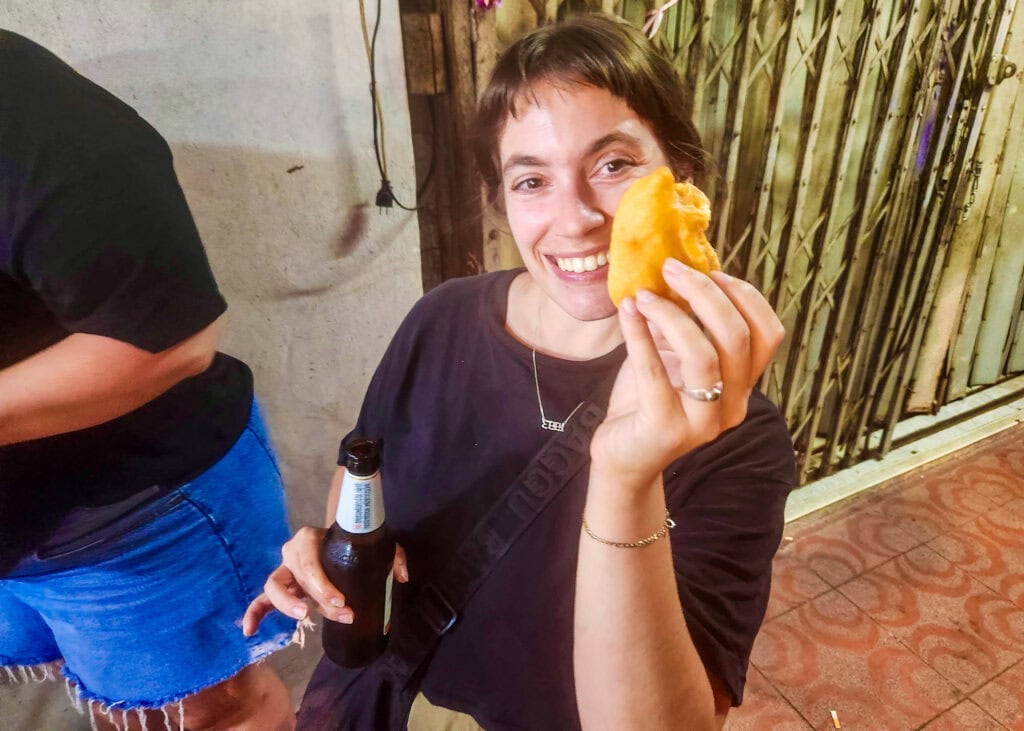

If you love exploring through food, connecting with local people, and eating your way through backstreets most travelers miss, this Bangkok food tour is absolutely worth it.
It’s ideal for anyone who wants more than just good food — it’s about understanding why it’s so good.
🍜 If you’re ready to experience Bangkok’s best street food for yourself, book your tour here— we’d take it again in a heartbeat.
Beyond Bangkok: Planning the Rest of Your Southeast Asia Trip
🌏 Loved the sound of this Bangkok food tour? Our 3 Weeks in Thailand itinerary covers the country’s highlights and offbeat foodie finds — perfect if you want more authentic meals beyond the big cities.
🚆 Heading north after Bangkok? Here’s our full guide on how to get from Bangkok to Chiang Mai — we compare bus, train, and plane options so you can pick the best route for your trip.
❣️ Want to know the ins and outs of visiting Thailand? We cover etiquette, safety, the best places to go and tips learned from over 2 months spent in Thailand.
🍜 Still hungry? Our Hanoi Old Quarter food guide dives into the city’s best street eats, hidden local spots, and must-try dishes for every kind of traveler.
