
How to Plan a Trip to Sri Lanka Without Overplanning
If you’re trying to figure out how to plan a trip to Sri Lanka, you’ve probably noticed that most advice skips straight to the itinerary.
That’s helpful to a point. We write itineraries too!
But if you’re an independent traveller, a day-by-day route only gets you so far.
What you really need is to understand how to make the trip fit you — your budget, your interests, your pace, and the kind of experience you actually want to have.
Because in Sri Lanka, not everything always feels obvious once you arrive. It was our eighth country in Asia, and we still got caught out.
We ran into scams (both attempted and successful), made a few frustrating transport choices, and had to work harder than expected to find places that felt like the right mix of comfort, quality, and location.
Planning the trip ended up mattering a lot more than we expected.
So rather than giving you a fixed route to follow, this guide shows you how to plan a trip to Sri Lanka step by step using the same framework we use for every trip.
We’ll cover how to choose your dates, map out a route, decide how long you need, figure out transport, book accommodation, budget realistically, and avoid the most common first-timer mistakes.
The goal is simple: help you build a Sri Lanka trip that works for you.
DISCLOSURE: This post may contain affiliate links, which means we may earn a small commission if you book or buy something through them – at no extra cost to you. We only recommend things we’d actually use ourselves. Read more in our Privacy Policy.
Step 1: Choose Your Sri Lanka Travel Dates
The Only Weather Rule You Need for Sri Lanka
The one thing you need to know: don’t try to plan around “Sri Lanka weather” as a whole — plan around your route.

There are two different monsoon seasons in Sri Lanka, which means one side of the country can be sunny while the other is getting heavy rain.
To avoid the worst of it, you should aim for:
- South and West Sri Lanka (Southern beaches, Colombo): December to March
- North and East Sri Lanka (Jaffna, Anurhadhapura, Arguam Bay): April to September
Central Sri Lanka (Sigiriya, Ella, Kandy) has more stable weather, so you’ll be less impacted by the monsoons, but you can still get rain (or mist) here pretty much anytime.
Best Time Based on Your Route (Not the Whole Country)
It can be hard to plan a longer Sri Lanka trip and avoid rain completely, but realistically, you don’t need to.
When you’re planning your Sri Lanka trip, the better question is: Where do I care most about having good weather?
For most people (including us), that’s the beach.
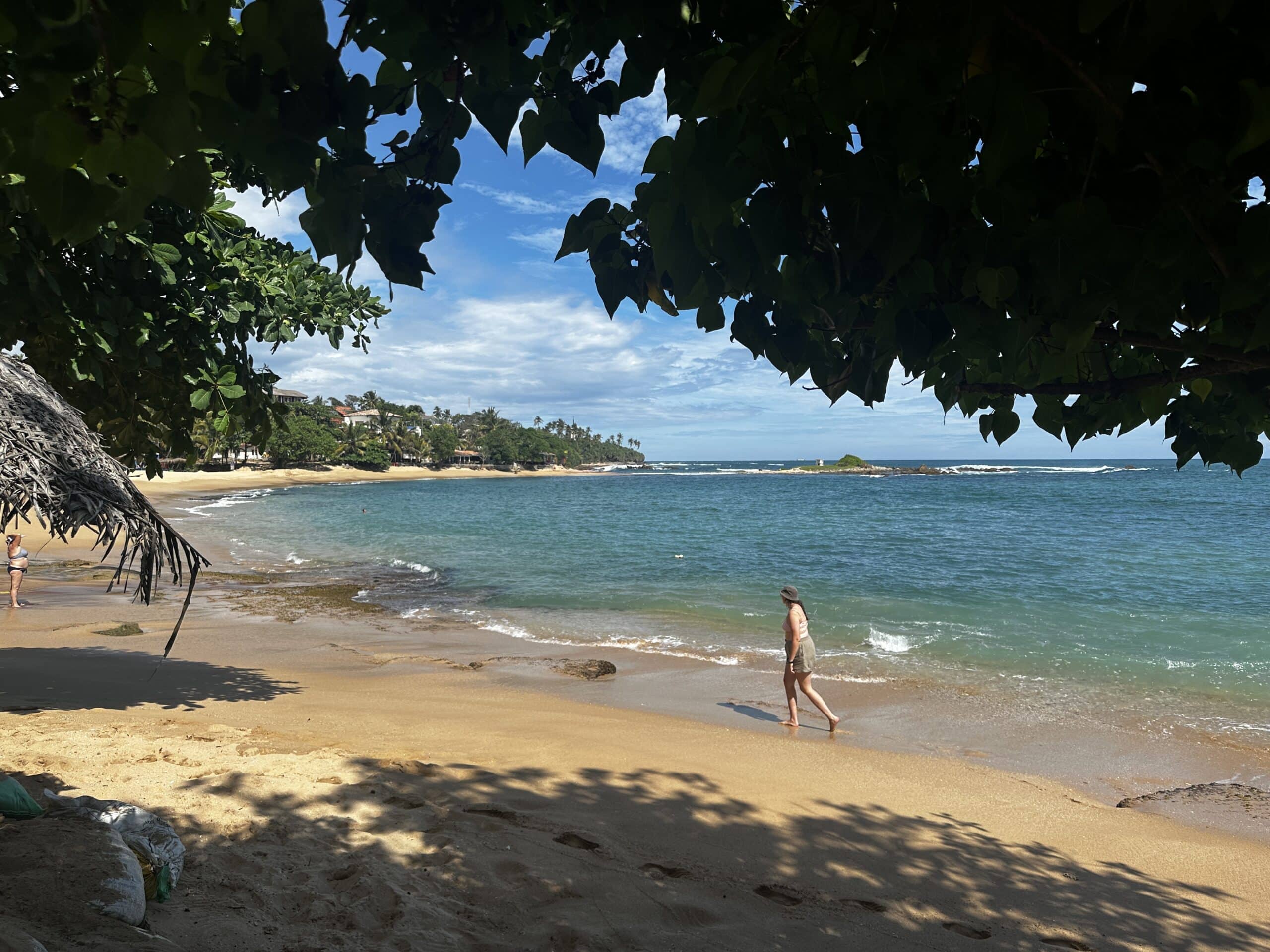
If that’s you, it makes more sense to plan your trip so your beach time falls in the dry season, and accept that you might get some rain elsewhere along your route.
So for a classic first-timer route, try to visit Sri Lanka between December and April for the best chance of sunny beach days (because the beaches down south are the best in our opinion… more on that later).
How We Chose Our Dates (And What We’d Do Differently)
We spent the month of November in Sri Lanka. We knew it was a risk for rain, but our decision had multiple parts:
- We were traveling for 4 months total from August to the end of November (we had to get back to the UK to get married in December!), and the cheapest flight back to Manchester at that time was from Colombo.
- We were also balancing the best times to visit Indonesia and Malaysia to avoid the worst of their rainy seasons.
- We planned to visit the North, East, and South of Sri Lanka, so we decided to risk visiting Jaffna (in the North) at the verryyyy start of their rainy season and the South beaches at the end of their monsoon season — and just hope for a bit of luck with the weather.
Spoiler: We were MOSTLY just fine!! We had maybe 4 fully rainy days out of 30, which we count as a win.
We actually wouldn’t do anything differently. We headed North to Jaffna after one day in Colombo and slowly made our way south via the center of Sri Lanka until we got to the beach at the end of November.

Our plan definitely could have backfired, but this is exactly what we mean by planning based on your route — not trying to chase perfect weather across the whole country.
If you’re willing to risk a bit of rain, we think November is still a great time to visit.
Quick Decision Shortcut
If you’re overwhelmed with choice, here’s the simplest way to plan your Sri Lanka trip:
👉 Visit between December and March, focus on the south coast, and build your route around that. That’s your best bet for great weather in the places you’ll care about most.
👉 If you want to avoid crowds and chase the best weather around the country, visit in November.
Step 2: Decide How Many Days You Need in Sri Lanka
Sri Lanka looks small on a map, but once you start planning your Sri Lanka trip, you’ll realise how much there actually is to see.
You’ll see rural villages, old colonial history, sacred Buddhist sites, elephants in the wild, misty rainforests, and sooo many beach towns.
So the real question is not just how many days in Sri Lanka you have, but how you want to spend that time.
7 vs 14 vs 30 Days (What’s the Difference?)
If you only have 7 days in Sri Lanka, you’re realistically going to see a maximum of 2 to 3 places. You’ll spend a lot of time moving, and not much time actually being anywhere.

If you live nearby or plan to come back, a one week trip is fine. Otherwise, we’d actually recommend waiting to visit Sri Lanka until you have more time.
Two weeks is where most people land if you’re on holiday. It’s enough to see the main highlights, but you’ll be moving every couple of days, which can feel a bit fast depending on your travel style.
Three or more weeks in Sri Lanka is our personal sweet spot. This is when the trip starts to feel more relaxed and flexible. You can:
- Stay longer in places you actually like
- Take your time getting to places like Jaffna without it feeling like a wasted travel day
- Adjust your itinerary if something doesn’t go to plan
- Beach hop instead of committing to just one spot
It also gives you more breathing room with the weather. Sri Lanka weather can be fickle, so having extra time means you’re not locked into doing a hike or safari in the rain if your schedule is too tight.
The Biggest Mistake First-Timers Make
Overpacking your itinerary. Just go where you actually want to go.
If you aren’t interested in history, skip Anuradhapura. If you don’t like big hikes, skip Adams Peak like we did.

A lot of Sri Lanka itineraries include the same stops, but that doesn’t mean they’re right for you. When you’re planning your Sri Lanka itinerary, take a bit of time to:
- Look at a few different routes
- Notice what places keep coming up
- Decide if those places actually sound interesting to you
If not, skip them. It really is that simple!
We’d much rather spend an extra day somewhere like Ella, do some manageable hikes, and enjoy it than force ourselves into something we know we won’t like just because it’s “popular.”
Our Trip Length + What We’d Change
We spent about a month in Sri Lanka, and we probably could have done a similar route in 3 weeks by spending a couple fewer days in places where we stayed 4 to 6 days.
If we were planning our Sri Lanka trip again, we’d change a few things.
Beach Time
For the beach, we’d be more intentional. Instead of staying longer in one place, we would split our time between a couple of beach towns with different vibes (like Tangalle and Hiriketya).
Safari Planning
We’d also rethink how we planned safaris. We booked time in Udawalawe but ended up changing our plans completely.
We found a safari in Sigiriya that was far less busy and had amazing reviews, so we cancelled our accommodation in Udawalawe and went there instead.

This only worked because we had enough time to be flexible. If we had a bigger budget, we probably would have:
- Kept Udawalawe as well
- Gone to Yala to try and see leopards
- Or added a bird safari from somewhere like Tangalle
Instead, we just spent more time at the beach, which we were very happy about anyway. None of these were huge mistakes, but they still made a big difference in our trip.
Step 3: How to Plan Your Sri Lanka Route (Without Overplanning)
This is the step that overwhelmed us when we first started planning our Sri Lanka itinerary.
You open a few blog posts, see 10 different Sri Lanka itineraries, and wonder how you could possibly fit everything into one trip without burning out.

You don’t.
Planning your Sri Lanka trip is a lot easier if you start with finding the places you want to go, then narrow it down before planning your route.
The 3 to 5 Stops Max Rule
The easiest way to plan your Sri Lanka route is to limit how many places you go.
As a general rule:
- 7 days → 2 to 3 stops
- 10 to 14 days → 3 to 5 stops
- 3 weeks or more → 4 to 7 stops, with more flexibility
Anything more than this and your trip feels like constant travel instead of actually experiencing places.
It’s also worth remembering that getting around Sri Lanka takes longer than it looks on a map. Trains are slow, roads can be busy, and travel days can easily take up half your day.
- So instead of asking: “What else can I do?”
- Try asking: “What can I remove and still have a great trip?”
The Classic First-Timer Route (Example Only)
If you’re not sure where to start, there is a reason you keep seeing the same general route come up. Most first time trips (including ours) loosely follow something like:
Colombo → Kandy → Ella → South Coast
These are some of the most popular places, but also because:
- It flows well geographically
- It gives you a mix of culture, nature, and beaches
- It’s easy to travel between these places
You don’t have to follow this exactly. From there, you can adjust based on your interests and how much time you have.
How to Pick Your Stops Based on Travel Style
Before choosing specific places, it helps to decide what kind of trip you actually want. Most Sri Lanka routes are some mix of:
- Beach
- Culture and history
- Nature and wildlife
So ask yourself: What do I care about most on this trip?

If you’re here for beaches:
- Focus more time on the south coast
- Don’t ignore the East and West coasts though – the beaches on every coast are different!
If you’re more into culture and history:
- Include places like Kandy or Sigiriya
- Consider adding Anuradhapura or Polonnaruwa
If you want nature and wildlife:
- Ella for hiking
- National parks for safaris
- Maybe the north if you want somewhere less visited
Most people will want a mix, but the key is not trying to do everything.
How We Planned Our Route (Mistakes + Successes)
We knew we wanted to see as much of Sri Lanka as possible, so we planned a route that covered the north, centre, and south.

We started in Jaffna, then made our way down through the centre of the country before finishing at the beach.
What went well:
- Traveling in one general direction (North to South) instead of jumping around
- Ending at the beach so we could slow down at the end of the trip (and before going back to cold England in December)
- Giving ourselves enough time to adjust plans along the way
- Only picking one major history-oriented stop
What we would change:
- We could have spent one more day in Jaffna (we spent only 2 nights in the city)
- We would have split our beach time up more instead of staying in one place for 7 days and doing day trips
TOP TIP: We didn’t feel comfortable renting a tuktuk or scooter ourselves in Sri Lanka, but had we done that, staying in one beach town for that long would have been just fine. We just felt a bit stuck toward the end!
Step 4: How to Plan Transport in Sri Lanka
This is probably the most confusing part of planning a Sri Lanka trip.
There are a few different ways to get around, and it’s not always super clear what the best option is for each part of your route. You really only need to think about four options:
Train / Bus / Tuktuk / Driver
Each one has its place, but they are not always interchangeable.

How to Choose the Right Transport
If you’re not sure what to choose, this is the simplest way to think about it:
- 👉 Long distances → Train
- 👉 Short distances → Tuktuk (PickMe app) or on the street
- 👉 More comfort or tight schedule → Private driver
- 👉 Very low budget → Bus (but… we’ll explain)
We didn’t fully understand this at the start, which is why we ended up using buses more than we maybe would have otherwise.
Trains in Sri Lanka
Taking the train around Sri Lanka is actually as cool as everyone says.
The recommendations you’ll see about booking second class on the Ella to Kandy route are legit. Being able to open the windows and look out is so much fun on that journey.
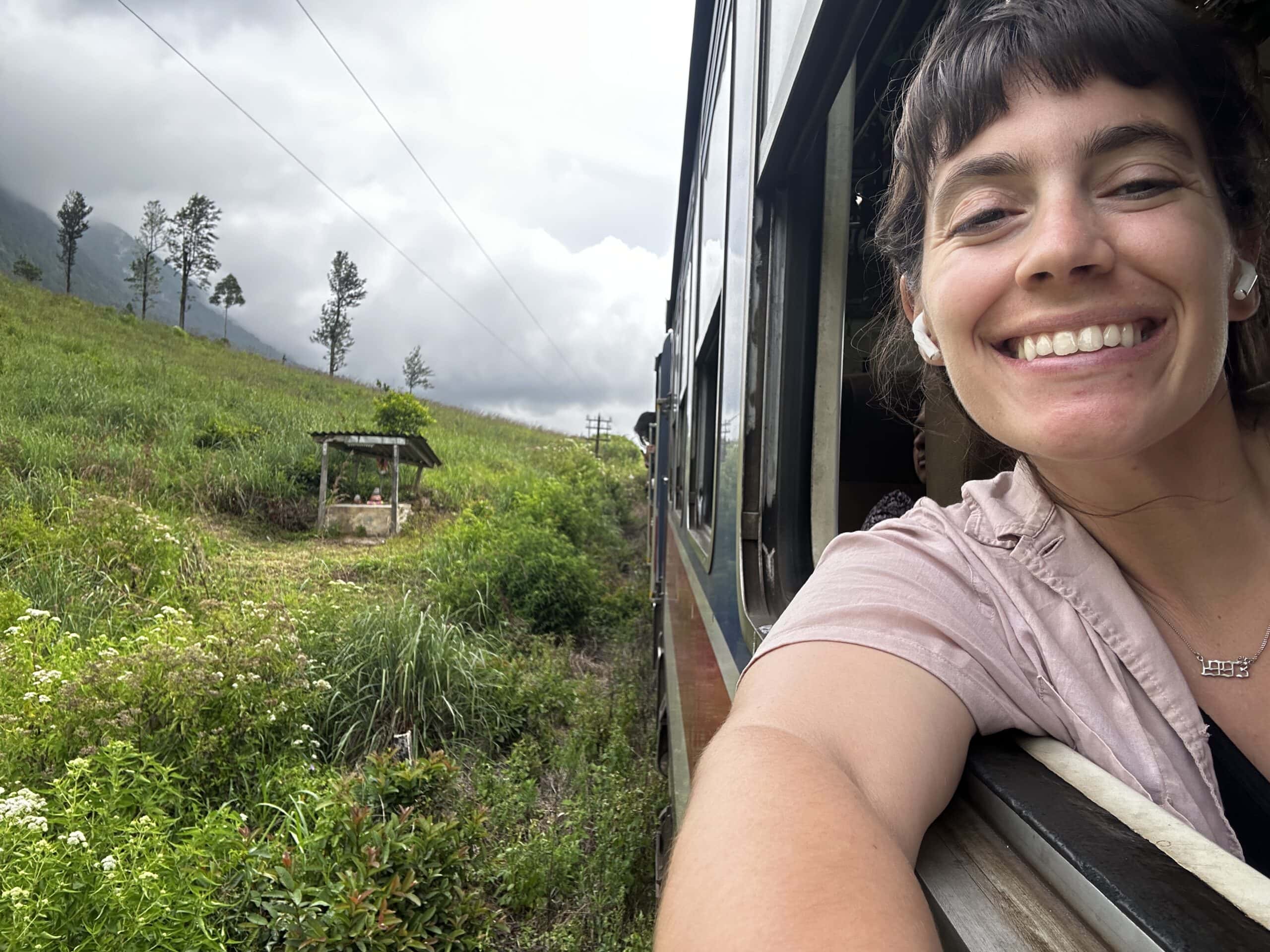
For most other train routes though, hot take, we would just book first class for a small extra cost. You get:
- AC
- More leg room
- Comfier seats
- And just an easier journey overall
The trains are still amazing and you can still see everything in first class.
We booked trains on both the Sri Lanka rail website and 12Go. There was sometimes a price difference, sometimes not. If there wasn’t, we always chose 12Go because it’s easier and the customer service is better.
When you book through 12Go, someone actually buys the ticket for you locally. They’ll either:
- Send you an e-ticket
- Or deliver physical tickets to your guesthouse
We had both happen and both worked well.
🚨 Important: The Ella to Kandy train route is still affected by damage from Cyclone Ditwah. The full route isn’t expected to be operational until at least 2027.
You can still:
- Take a minibus or private driver between the two
- Or do a shorter scenic route like Ella to Badulla (which still goes over Nine Arch Bridge) once you get to Ella
Buses in Sri Lanka (…Not for Us 😅)
Public buses are very cheap and go pretty much everywhere. But they can also be VERY busy depending on your route.
We took buses a few times and… yeah. Not for us.

Imagine hurtling down the road at full speed, standing in the aisle with sweaty hands, crammed in with far too many people, holding on for dear life as the bus brakes every 30 seconds and everyone topples into each other.
Anyone who called that an adventure online needs to get a grip — that was NOT fun for us 😂.
They were fine for short trips with a small day pack, like going from Jaffna to the Delft Island ferry port.
But for anything longer? No chance.
👉 What we’d do differently: We tried to “save money” using buses early on, but it just made everything more stressful.
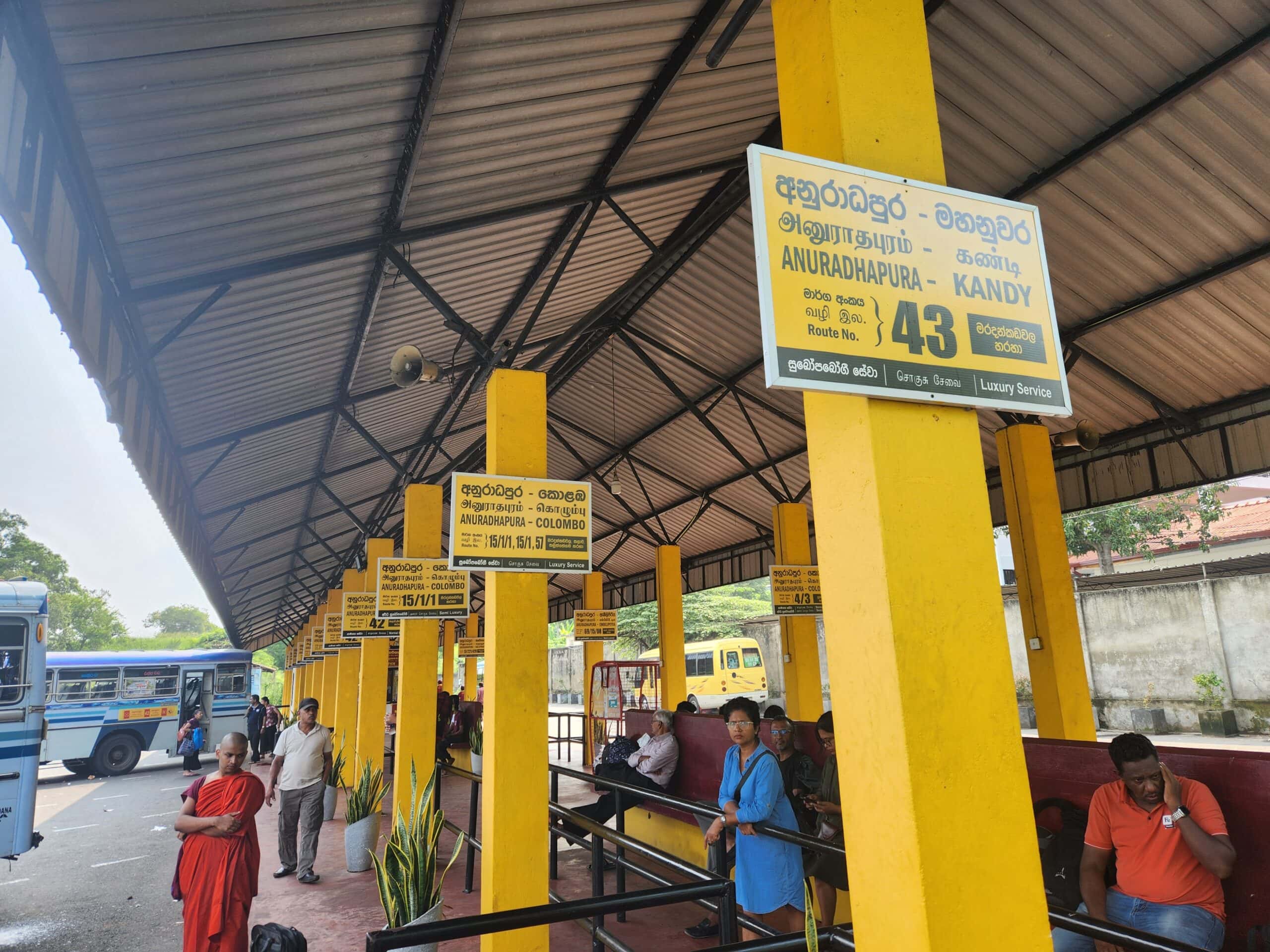
Twenty five year old us would have powered through it. Thirty one year old us said no thank you.
By the end of the trip, we were happily (ok maybe not that happily) spending more on tuktuks or private buses (smaller and not colorful, you’ll know it when you see it) just to avoid them.
Tuktuks and Cars in Sri Lanka
Pick Me is the app for tuktuks and cars if you need one. They are very affordable all around Sri Lanka, but will be a bit more expensive in super touristy places like Ella and Mirissa beach.

You can also flag a tuktuk down on the street, but check the Pick Me price beforehand so you know approximately how much it should be.
TOP TIP: if you only have 40L backpacks or another carry-on sized bag, you can fit two people and two bags in a tuktuk. There is space behind the seats for storage. Don’t book a car for short trips just because you think you won’t fit.
Private Drivers in Sri Lanka
You can find private drivers literally everywhere. Most guesthouses, hotels, and hostels will offer this.
If you’re thinking about having a driver for your whole trip (low key we would probably do this next time with a higher budget), just book in person at each stop.
How to Book Transport Step-by-Step
Here’s what we’d do again:
1. Book your trains in advance. This gives you some structure for your itinerary and you’ll get the train times you want (some are very inconvenient) and the class you want.
You do not want to be sitting or standing in third class for multiple hours with a large backpack. We’ve done it and it’s not pleasant.
2. You generally can’t book buses in advance unless it’s a longer private route, and in that case you should probably just take the train anyway.
For buses, just ask your accommodation where to go and where to stand. They’ll always have the most up to date advice.
3. Tuktuks use the Pick Me app. You can book with the app at any time, or even schedule one in advance like we did for our 5:30am train to Jaffna from Colombo.
4. Some routes are still recovering from Cyclone Ditwah. Check in with your accommodation and on forums like Reddit for current transit status. Most roads are accessible, but some train routes will be on and off for a long while.
TOP TIP: Download and add your card to Pick Me before arriving in Sri Lanka so you don’t have to mess with the app when you actually need the ride.
Step 5: Book Sri Lanka Accommodation Strategically
Where to Stay
Finding accommodation that had the amenities we wanted, good reviews, was in a convenient location, and still fit our budget was harder than we expected in Sri Lanka.
Our best advice is to go on Booking.com and use map view with your rating, amenity, and budget filters on.
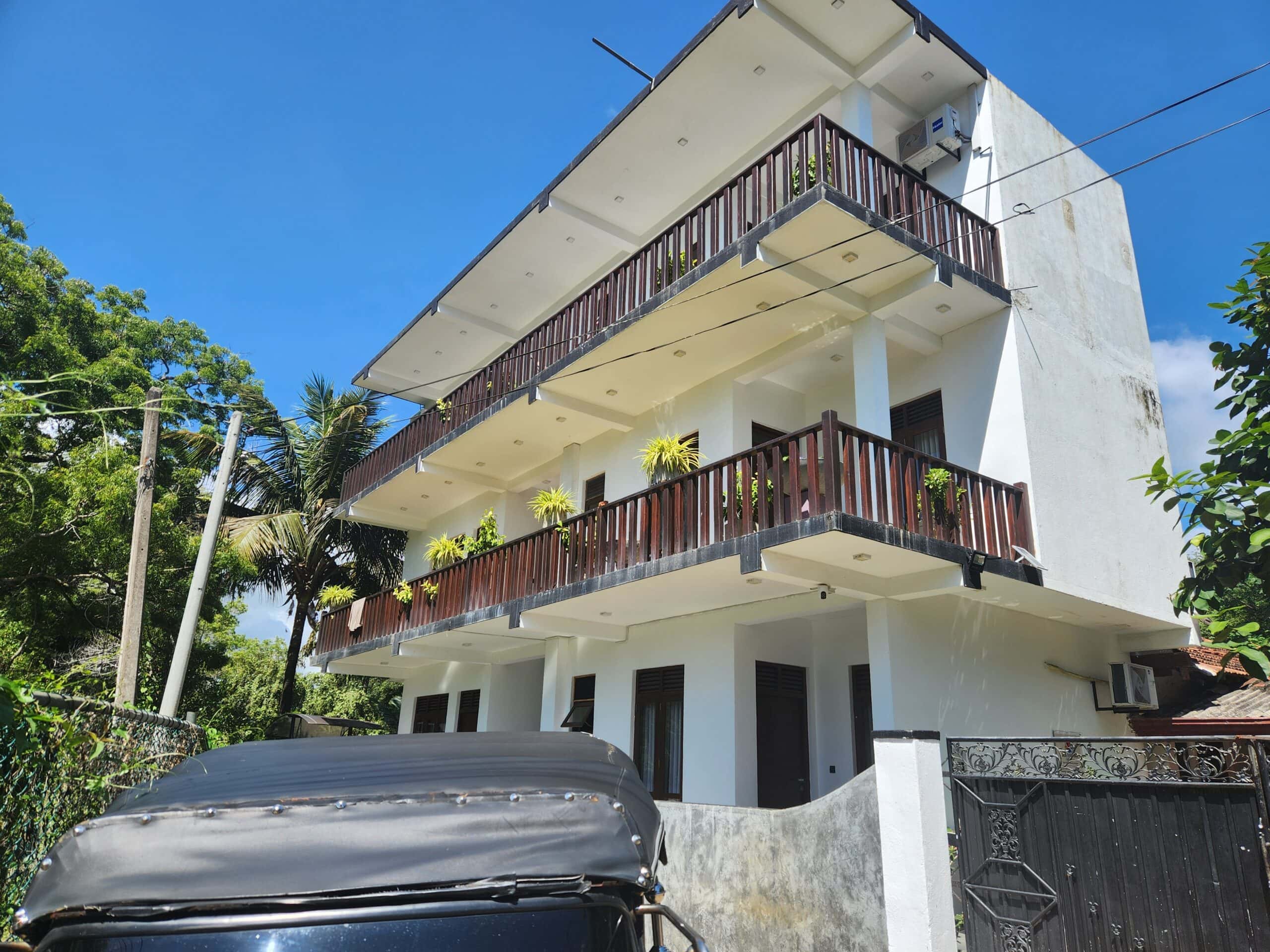
There are so many accommodation options that are technically in the right city but are actually far out of town, meaning away from food and things to do.
You would never realise that just looking at the list view.
If we were considering staying out of town, we would:
- Check directions on Google Maps to see how long it would actually take to get anywhere
- Look for the availability of food options nearby
One thing we’ve learned is that we’re happy to take a tuktuk into town to explore, but not for every single meal.
For example, in Ella we stayed at a guesthouse that was about a 30 minute walk or 10 minute tuktuk into town, but:
- We were close to Nine Arches Bridge and Little Adam’s Peak (some popular things to do in Ella)
- There were plenty of small restaurants within a 10 minute walk
So it worked really well for us.
Ps. We’ll share specific recommendations for where to stay everywhere we stopped in Sri Lanka in other guides.
Guesthouses & Hotels vs Hostels: How Costs Differ
This is where costs can vary a lot depending on how you’re traveling.
Solo vs Couple Costs
Two beds in a hostel was more expensive for us as a pair most of the time, so it made more sense to book private rooms.
That said, a lot of the guesthouses in the most convenient locations, close to where the hostels were, were either poorly reviewed or too expensive for our budget.
So, there are definitely pros and cons to traveling as a couple and sharing costs.
If you’re traveling solo, 99% of the time it will make more sense to stay in a hostel (if that’s what you want).
It might cost you a bit more individually, but it also means you’re usually right in the center of town.
Tuktuk Costs
On the other hand, sharing the cost of a private room also meant we could afford to stay further out of town, because we could split the cost of tuktuks.
In places like Ella, we chose to do this because we wanted to be out in nature. In places like Kandy, we did it because it was simply the more economical option, even with the cost of taking a tuktuk into town.
It’s worth looking into what works best for you, even as a solo traveler.
Accommodation Pricing
We spent:
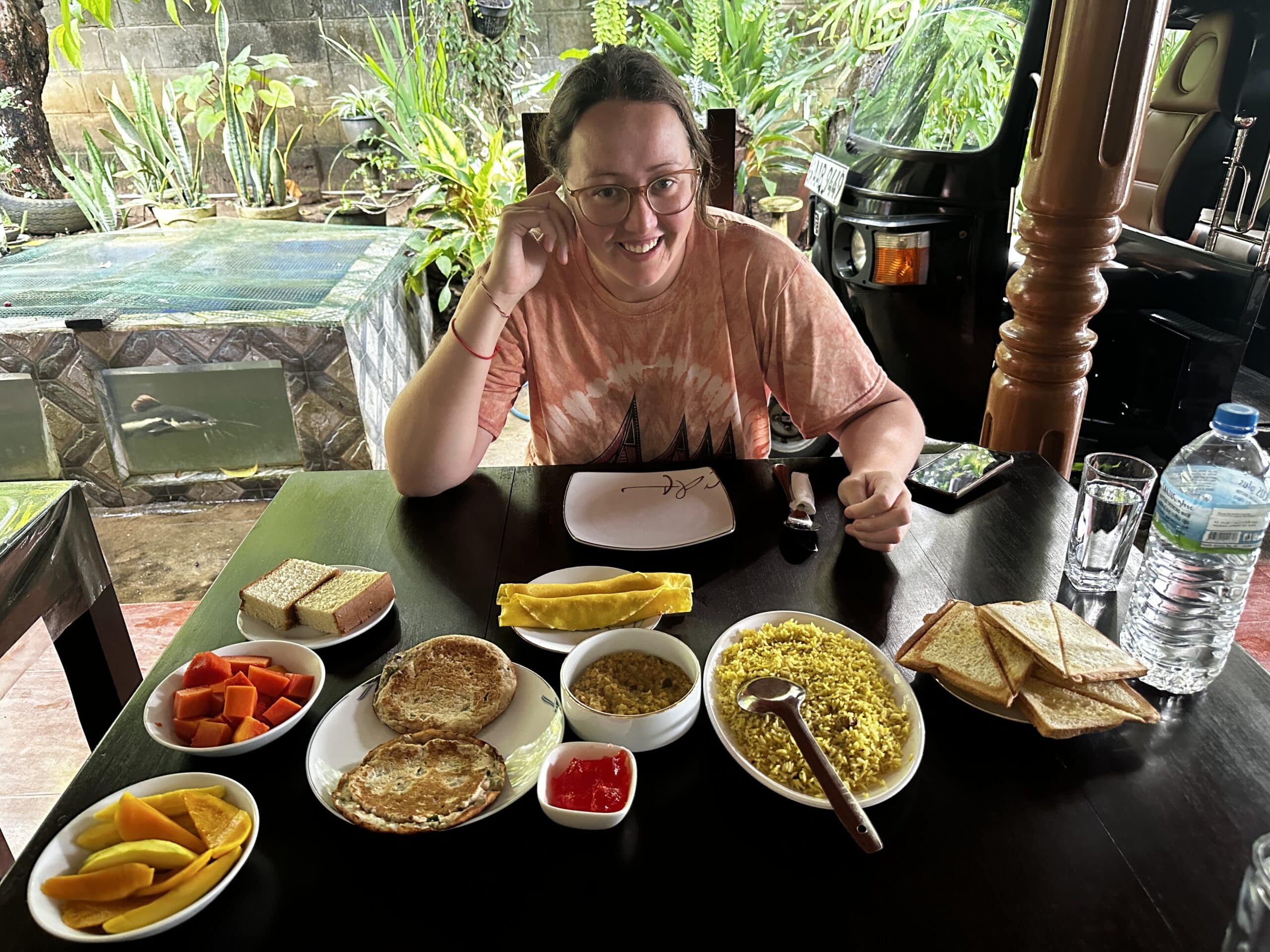
- About $36 USD a night for a seaview guesthouse in Tangalle (and free breakfast)
- About $20 USD a night for a room in Ella with a balcony overlooking the jungle (and free breakfast)
- About $9 USD each per night for a hostel dorm in Colombo
Some places we could have gone cheaper, some we could have spent more, but we picked where we wanted to spend a bit more along the way.
Our Accommodation Mistakes
Sri Lanka has so many accommodation options, but it is also getting very popular.
When we travel long term, we usually like to book 1 to 2 stops ahead and sometimes book the night before we move. To make that easier, we save a few options for each planned stop on Booking.com in advance.
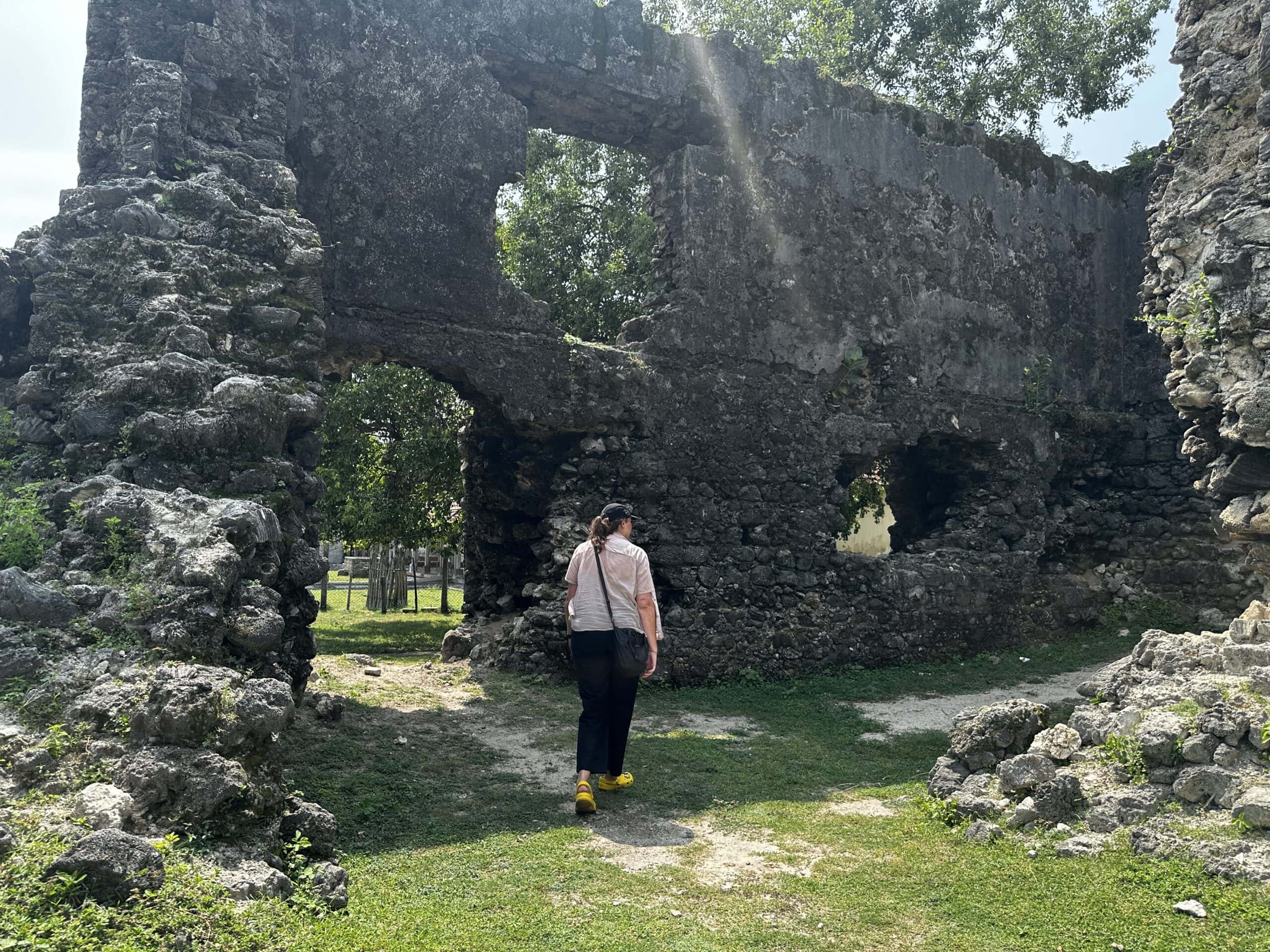
When we did this for Sri Lanka, we kept seeing our saved places get booked up around the dates we thought we would be there.
Because of that, we ended up pre booking almost our entire itinerary, with free cancellation where possible so we still had some flexibility.
At this point in our travels, we’re just not willing to deal with overpriced or disappointing accommodation, and Sri Lanka was at the end of a 4 month trip, so a bad stay would have pushed us over the edge.
So this is something to think about when planning your Sri Lanka trip:
- How far in advance do you want to book?
- How much flexibility do you want?
- What are you willing to compromise on if your first choice isn’t available?
You can always book with free cancellation to lock in a good option, and then change it later if your plans shift. That’s what we did.
Step 6: What to Book in Advance When Planning a Sri Lanka Trip
This is where a lot of people get stuck when planning a Sri Lanka trip. Do you book everything ahead of time, or figure it out as you go?

The short answer is you don’t need to do either fully. A mix of both is best.
What You Should Book Before You Go
Some things are worth booking in advance to avoid stress or missing out.
Train tickets
Book the Kandy to Ella train (or minibus) in advance.
We booked our other train tickets about a week ahead of time, apart from the coastal commuter train which doesn’t take bookings.
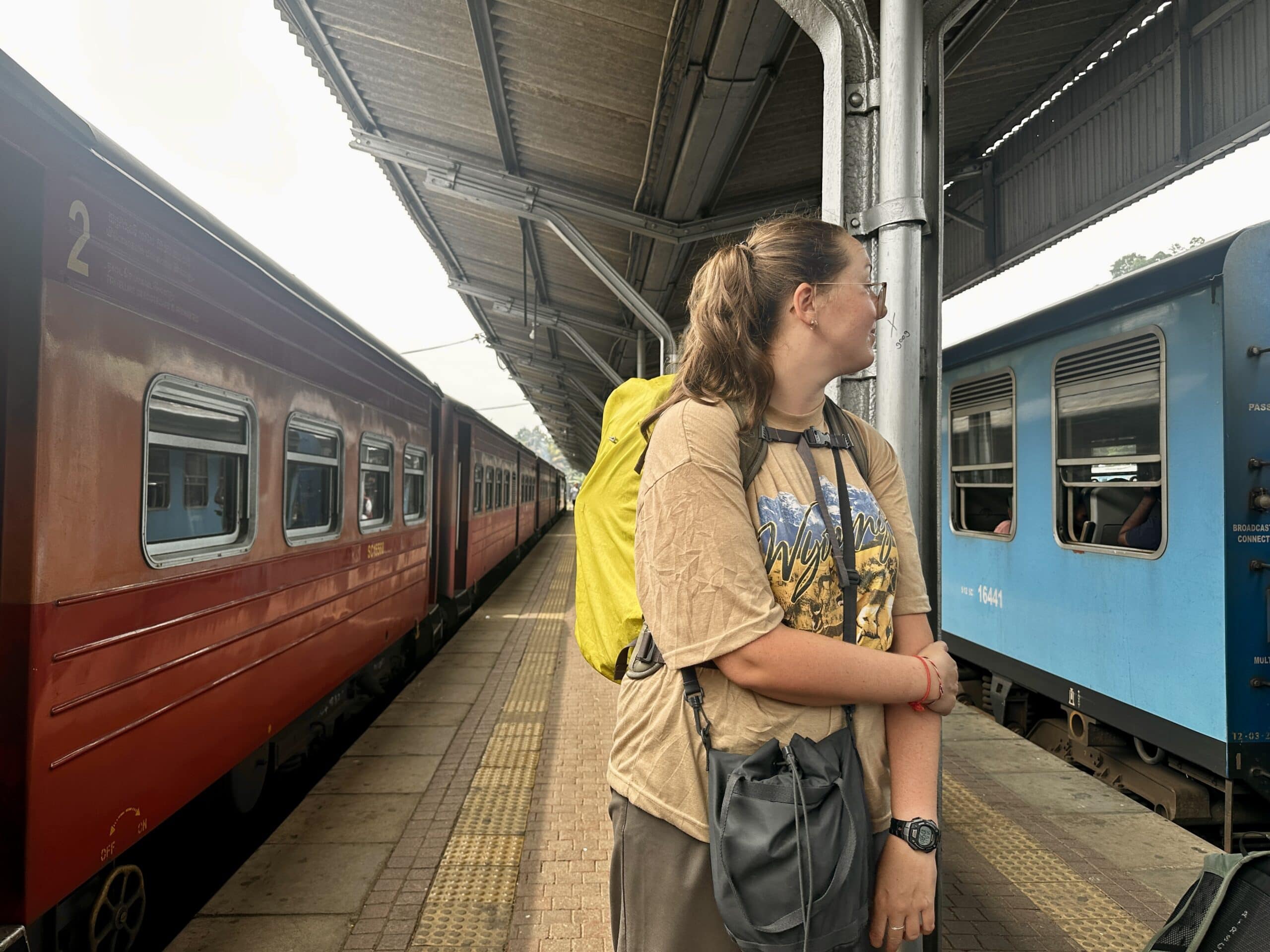
You can probably wing most routes if you’re flexible, but for Ella to Kandy, we would not risk it.
Safaris
We booked ours about 2 weeks in advance, but you can also book the night before through your guesthouse.
That was actually our plan before we cancelled our stay in Udawalawe.
If you are staying in a hostel, we might recommend booking in advance anyway to make sure you get the kind of experience you want.
Popular Stays
There are some really cool hostels and guesthouses in Sri Lanka, and the best ones do get booked up. If you have a specific place in mind, book it in advance or you will miss out.
Like we mentioned earlier, we generally recommend booking accommodation ahead of time.
Most places offer free cancellation a few days before your stay, so you still have flexibility if your plans change.
What You Can Book As You Go
A lot of smaller activities can be booked last minute without any issues. For example:
- We booked tuktuk tours the night before through our guesthouse in multiple places
- We booked a kayaking trip in Tangalle the day before over WhatsApp
Things like this are easy to organise once you’re there. For anything bigger like safaris, trains, or even cooking classes, it’s better to book in advance so you don’t miss out.
Sri Lanka Advance Booking Quick Guide
|
Book before you go: |
|
|---|---|
|
Book 1–2 weeks ahead: |
|
|
Book last minute: |
|
Should You Travel Sri Lanka Independently or Book a Tour?
This is where a lot of people get stuck when planning a trip to Sri Lanka.
We do think it would be really cool to do an organised trip here and not have to figure out all the cultural context on your own.
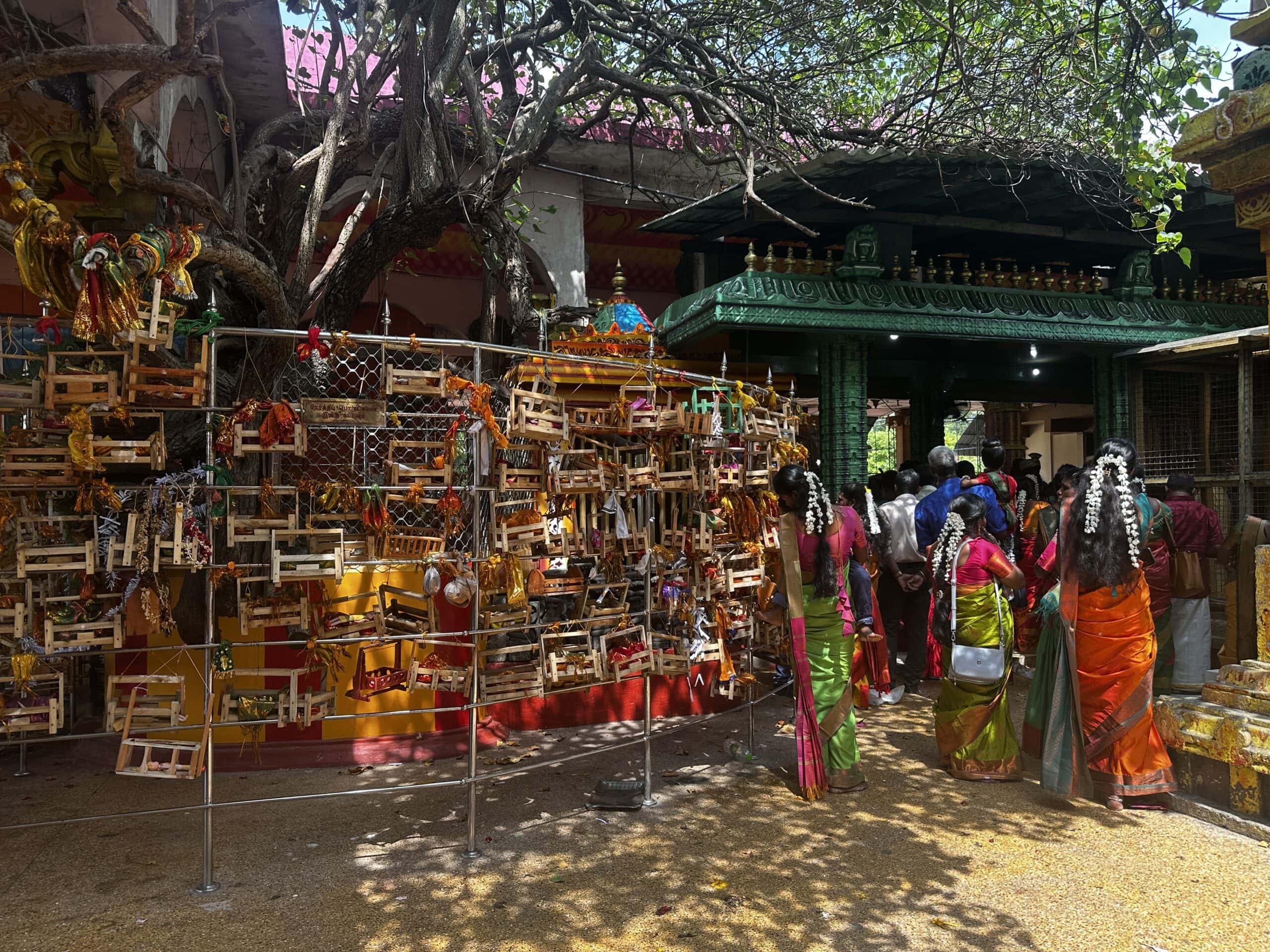
We always say we’d love to visit places a second time in a completely different way. Our first trip was mostly budget, with a few splurges like:
- An elephant safari
- A cooking class in Ella
- A seaview guesthouse in Tangalle
But if we went back, we’d probably do it differently. Stay in nicer hotels, go on more safaris, and maybe even have a private driver for the whole trip.
That said, we wouldn’t change how we travelled the first time.
Sri Lanka is a great independent trip (even for beginner travelers), even if it can feel a bit overwhelming at times. And honestly, figuring things out as we went was part of what made it so fun.
Step 7: Plan Your Sri Lanka Travel Budget
Sri Lanka is a destination where your budget can vary a lot depending on how you travel. This is what we spent, plus what we’d expect at different budget levels.
Typical Daily Budget
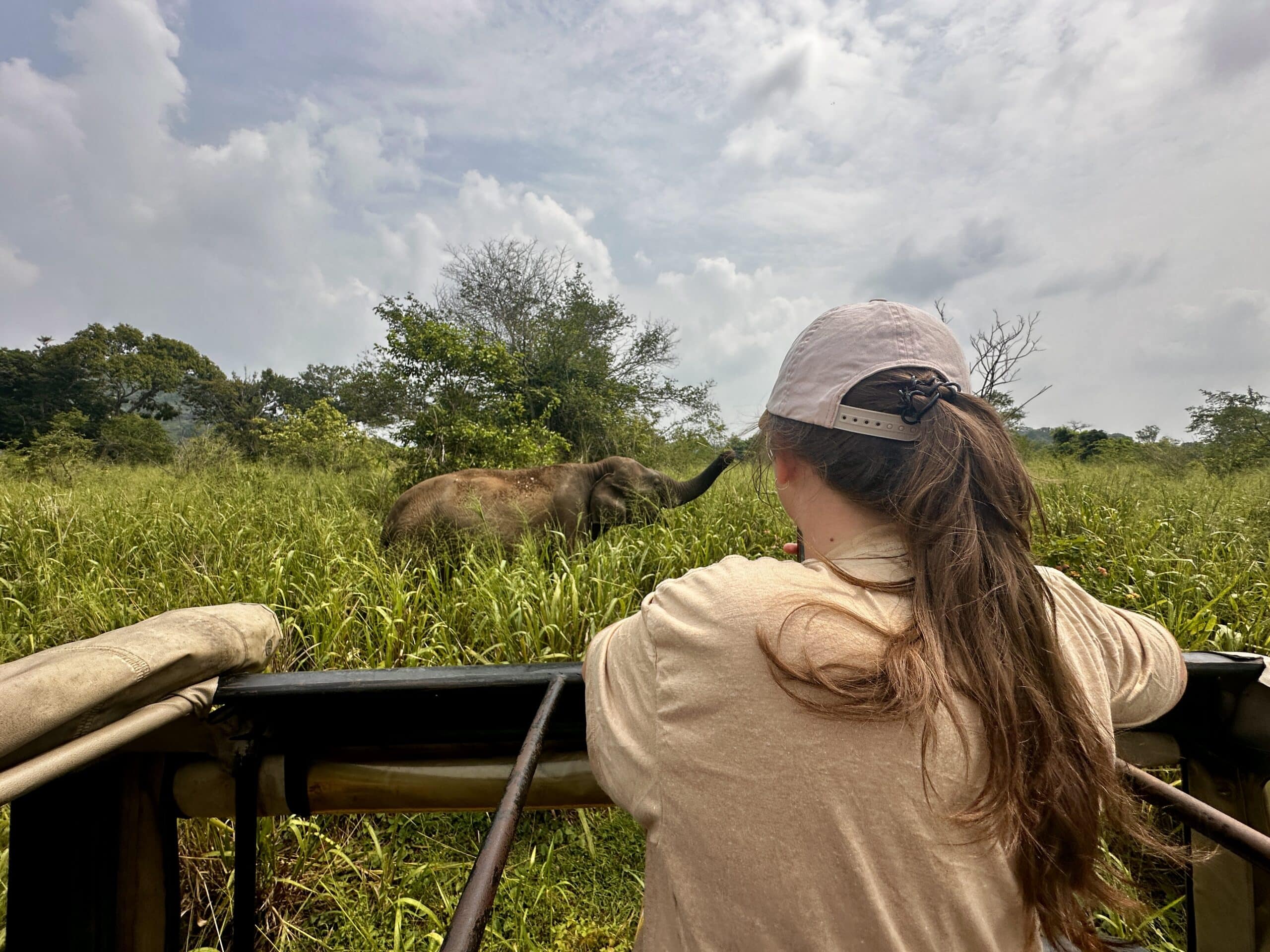
We spent about $31.50 USD per day per person, including everything except flights in and out of Sri Lanka.
If you want to go as cheap as possible, we think you could get that down to around $25 USD per day.
If you want a bit more flexibility to:
- Eat wherever you want
- Stay in nicer places
- Do more activities
Then you’re probably looking at $40-45 USD per day.
You can DEFINITELY spend more or less than we did. We splurged in some places, did some pricier tours and ate dinner on the beach more than a few times.
But we also were very aware of our budget, and didn’t do things like book multiple safaris or get a fancy coffee every day to save money.
Solo vs Couple Cost Differences
Some costs change quite a bit depending on whether you’re traveling solo or as a couple.

Accommodation and Transport
We mentioned this earlier, but:
- Hostels were often more expensive for us as a pair
- Splitting private rooms made more sense
- Sharing tuktuks made it easier to stay further out of town
If you’re solo, those same costs will be a bit higher.
Food
Meals can be massive, so we saved money by splitting traditionally large dishes like kottu.
Getting Around
We didn’t feel comfortable renting a scooter or tuktuk in Sri Lanka like we have in other countries. The rules are stricter and the driving is a bit chaotic.
If you do rent one, it will cost more as a solo traveler than if you’re splitting it.
What Stays the Same
Some things won’t change. Flights, trains, and most meals are usually priced per person, so there’s no saving there.
The Real Difference
For us, there’s also just more temptation to upgrade things when traveling together.
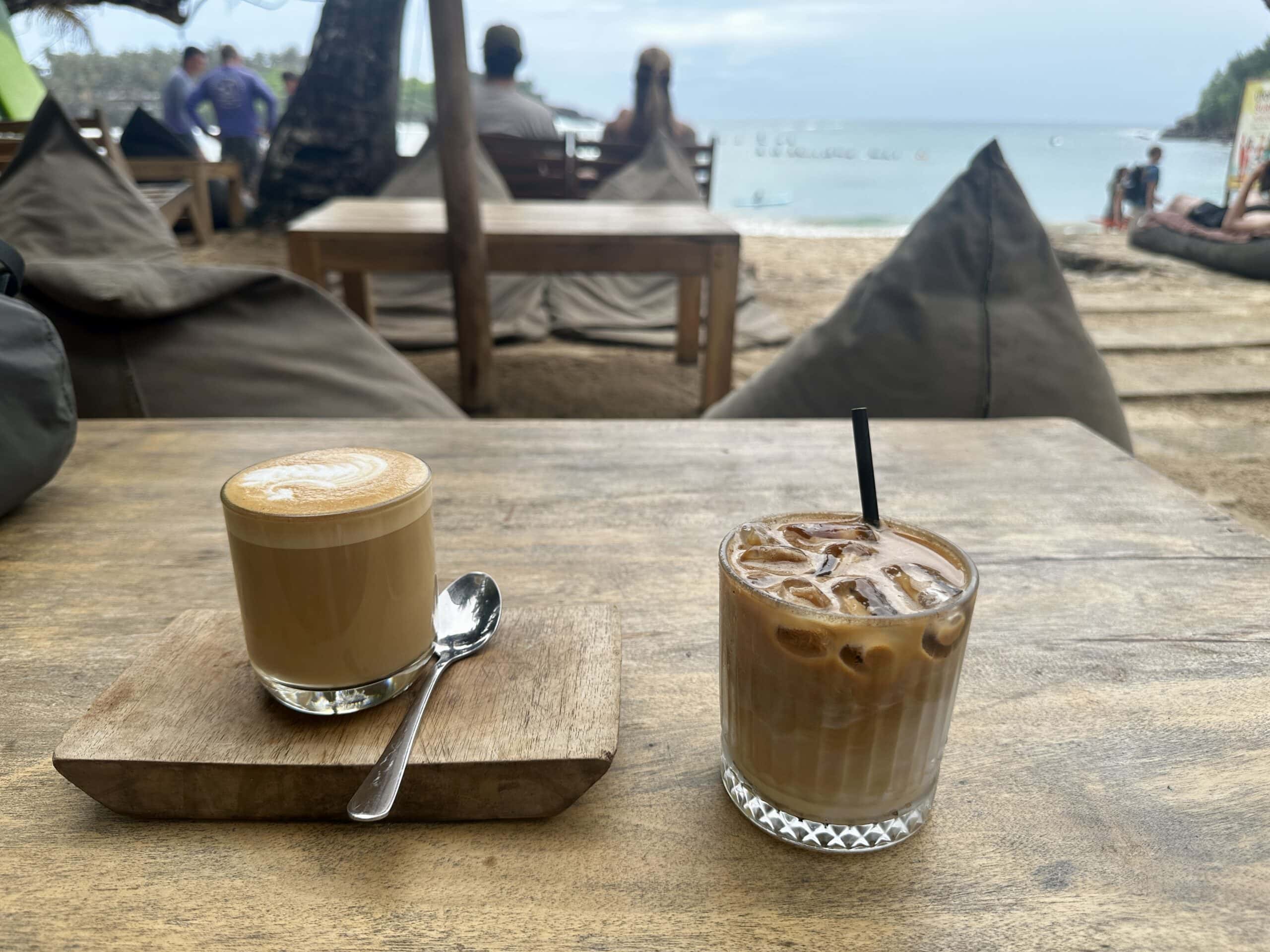
When we travel solo, we’re more willing to sacrifice comfort. When we’re together, it’s easier to justify the nicer accommodation, more activities, and eating nicer food.
Romantic or financially irresponsible, we’ll never know.
Where Costs Add Up Fast
These are the things that caught us off guard:
- Transport and tours (cough, cough, the Ella-Kandy train $$$)
- Buying water constantly if your accommodation doesn’t offer refills
- Western food and touristy restaurants
- Laundry, especially in more touristy areas
None of these are massive expenses on their own, but they add up quickly over a few weeks.
These are a few things that helped us stay on track:
Eat Local
It’s cheaper, often better, and supports local businesses. We’d often walk around and look for small local spots and check Google Maps reviews to see what looked more local.

It’s not always possible, but it helps a lot when it is. We also did not drink much alcohol which adds up very quickly
Book Accommodation With Breakfast
This saved us a lot over the course of the trip.
Our Real Budget Numbers
In total, we spent $1890 USD for two people, which worked out to $945 USD each for one month in Sri Lanka.
That comes out to about $31.50 USD per day per person.
Accommodation was actually way cheaper than we expected. We spent about $290 USD each over 30 days, and that was mostly private rooms, with only one hostel dorm stay in Colombo.
At the time, this felt like so much money because it was at the end of a 4 month trip and we were very aware of our remaining budget.
Looking back, spending that little on accommodation for a full month is kind of wild.
How We Set Our Budget
Before arriving, we aimed for about $100 USD per week per person for day to day spending.
This covered things like food, coffees, entry fees, smaller activities, tuktuks, toiletries, and anything random that came up. It worked out to about $15 USD per day.

This did not include accommodation, transport between cities, or flights in and out of Sri Lanka.
Some days we stayed under that, some days we went over, depending on where we were and what we were doing, but overall it balanced out pretty well.
How To Plan Your Own Budget
The biggest thing that helped us was deciding in advance what we actually wanted to spend money on.
For us, that looked like:
- An elephant safari
- A nicer guesthouse on the beach
- A trip to Delft Island off of Jaffna
- Paying to climb Sigariya (Lion) Rock
- Taking the Ella-Kandy train
Once we had those bigger expenses in mind, it was much easier to work backwards and figure out what we had left for everything else.
It also made day to day decisions easier. If we knew we wanted to prioritise certain experiences, we were more willing to cut back in other areas without overthinking it.
Step 8: Set Your Pre-Trip Essentials for Sri Lanka
A few quick things to sort before your Sri Lanka trip so you don’t have to think about them once you arrive.
Entry Requirements
We both (US and UK citizens) had to pay the fairly high visa fee.
Sri Lanka had announced that some countries, including ours, would get visa free travel, but it wasn’t implemented before our trip and it still looks delayed.
Check your country’s official site and keep an eye on any visa updates.

Apply for your visa online ahead of time (up to 90 days before you travel). It’s slightly cheaper and you won’t have to stand in any lines on arrival. We did ours about a month before we traveled.
Helpful Phrases
English is widely spoken in Sri Lanka, especially in tourist areas, so getting around with basic English is not an issue.
That said, it’s still polite to learn a few words.
In Sinhala:
- Hello is “ayubowan” (aayu bo wan)
- Thank you is “sthuthi” (iss thoo thee)
In Tamil:
- Hello is “vanakkam” (vah nahk kahm)
- Thank you is “nandri” (nun dree)
TOP TIP: Download both Sinhala and Tamil on Google Translate if you’re travelling around the whole country, especially up to Jaffna. Having both was super useful for menus and signs we wanted to translate.
Currency + ATMs + Cards
Sri Lanka uses Sri Lankan rupees. At the time of writing, 1,000 rupees was about $3 USD.
You can use card in more western style restaurants and for some online bookings, but a lot of things are still cash only. We even paid for our safari in cash on the day.
We used:
- Bank of Ceylon
- People’s Bank
- Commercial Bank
All gave us fee free withdrawals with our Wise card and another international fee-free card.

There are ATMs all over the country, but we usually took out cash whenever we were near one just to be safe. Smaller shops, cafes, and tuktuks will almost always be cash only.
We actually met a woman who had lost her card and couldn’t get cash out, but was still trying to continue her trip.
We ended up paying for her bus, which was only a couple of dollars, because the driver was about to leave her on the side of the road.
Don’t be her 😅
SIM Cards + Connectivity
We got a Dialog SIM card at the airport. It was slightly more expensive than buying it elsewhere, but for us the convenience was worth it.
It cost about $10 USD each for 50GB of data, which was actually one of the best deals we found across Asia.
Coverage was good the whole time, so we would recommend using them.
If you don’t want to deal with a physical SIM, you can also use an eSIM. For quick setup, Airalo is an easy option. You can set it up before you arrive and have data straight away.
❣️ If you’ve never used Airalo before, you can get $3 off your first purchase with code JULIA1616.
Health + Insurance
Check your country’s guidance for any recommended vaccinations. We already had ours from previous trips.
We use SafetyWing for travel insurance. We like that you can pay monthly, and whenever we’ve needed help their customer service has been quick to respond.
Step 9: What to Pack for a Trip to Sri Lanka (Based on Real Experience)
Packing for Sri Lanka is a bit all over the place because the weather really changes depending on where you are.
You can go from scorching heat to pouring rain to chilly mist in the same trip, so having a bit of variety makes a big difference.
What You Actually Need (Climate-Based)
We were very grateful to have layers with us due to the drastically different climates throughout the country.
If nothing else, pack:
- Light, breathable fabrics like linen
- A light rain jacket
- An outer layer (we always bring fleeces)
- At least one pair of trousers
You won’t need everything all the time, but when you do, you’ll be very glad you packed it.
We were SO grateful to have our fleeces when hanging out on our misty balcony in Ella and Julia wore her long sleeve button up so often it had holes in it by the end of the trip 😅.
Cultural Considerations (Temples, etc.)
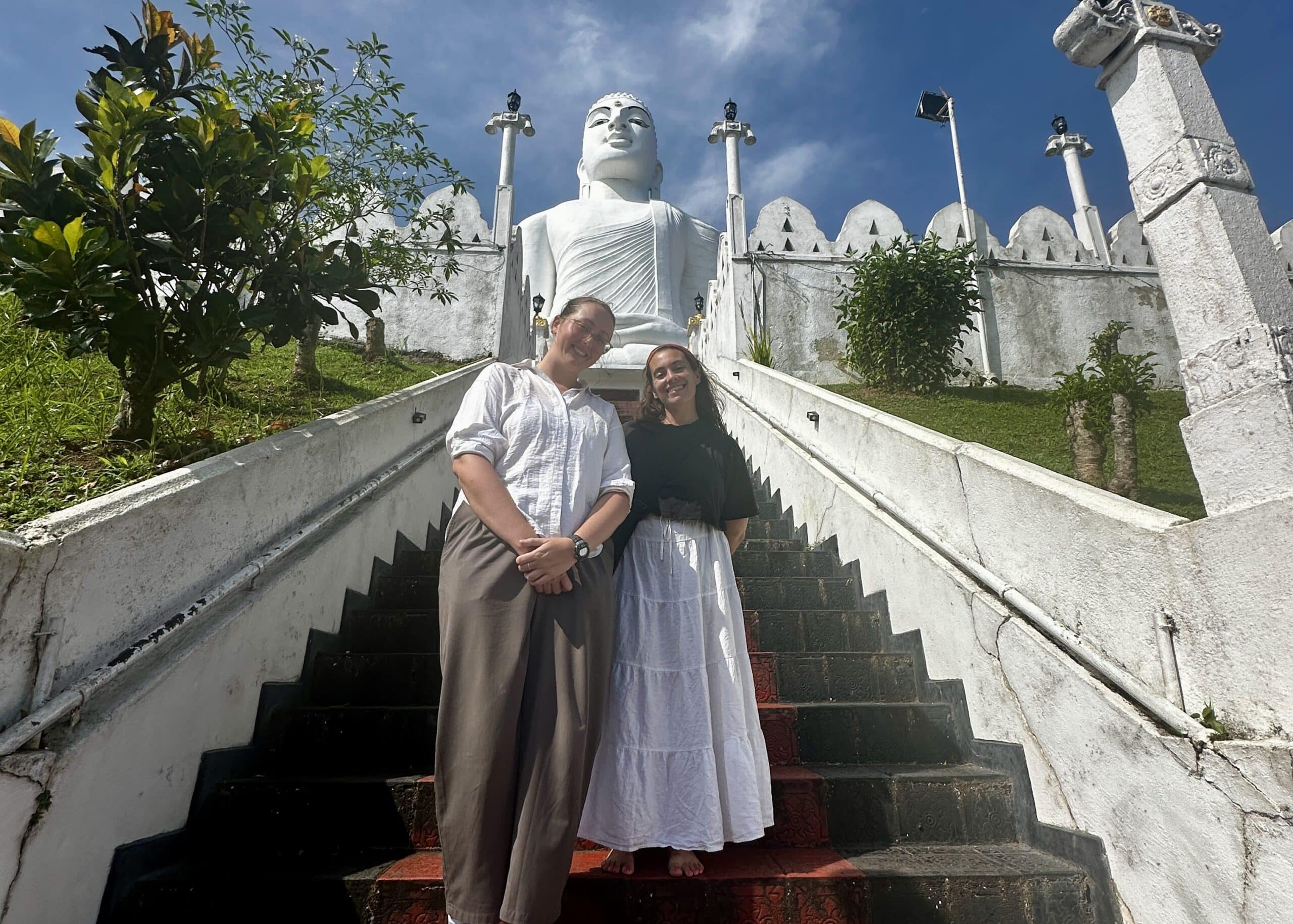
You’ll need to cover your shoulders and knees to enter temples anywhere in Sri Lanka.
We both packed:
- Two short sleeve button ups
- One long sleeve button up
We’d wear them over a smaller top and button them up when we went into temples.
We also both carry a scarf for the same reason. You don’t always know when you’ll end up somewhere you need to cover up, so it’s an easy thing to have in your bag.
What We Overpacked / Underpacked
Somehow on every trip we always wish we brought more long trousers, even though we pack more every time.

As women traveling without a man (yes, it does make a difference), we never felt unsafe or had any major issues, but there is still a certain level of unwanted attention.
Loose trousers just made everything easier and more comfortable for us, especially in the heat. Also, we both have big thighs, so sometimes longer bottoms are just easier and more comfy.
Our Exact Sri Lanka Trip Planning Timeline
If you’re not sure where to start, this is the exact timeline we followed to plan our Sri Lanka trip (and pretty much every other trip we take).
You don’t need to follow it perfectly, but it works well as a checklist so nothing gets missed.
2 to 3 Months Before
This is when we figured out the big picture.
- Look at Sri Lanka itineraries and make a list of places you actually want to go
- Write down any bigger experiences you’re interested in that will impact your budget
- Research average accommodation costs in the places on your list
- Price out transport between cities
- Check visa requirements and any recommended immunisations
- Finalise your travel dates if you haven’t already
At this stage, it’s less about locking things in and more about understanding what your trip might look like.
1 Month Before
This is where things start to come together.
- Apply for your visa if you haven’t already
- Finalise your travel budget based on how much you want to spend
- Cut or adjust places and activities if needed
- Make a rough packing list so you’re not scrambling later
- Purchase travel insurance to start from your travel date (SafetyWing can also be purchased after you leave if you forget)
- Book at least your first one or two accommodations so arrival is sorted (this will more than likely be Colombo or Negombo)
- Read blogs on Sri Lanka for more specific advice
- Book any tours or experiences that need advance booking
- Order some local currency from your bank if you want to avoid airport ATMs
1 Week Before
This is all the final admin.
- Figure out how you’re getting from the airport to your first accommodation
- Learn a couple of local phrases like hello and thank you
- Let your bank know you’re traveling so your cards don’t get blocked
- Download the local ride share app and add your card in advance
- Do a test pack to make sure everything fits
- Double check SIM card sellers are open at your flight arrival time or set up an eSIM so you’re connected on arrival
Common Mistakes When Planning a Trip to Sri Lanka
A lot of the stress people have when planning a Sri Lanka trip comes from a few very fixable mistakes.
Trying To Do Too Much
This is the biggest one.
Sri Lanka looks small, so it’s easy to think you can fit everything in. But once you start moving between places, you realise how quickly your time disappears.
We see so many itineraries trying to squeeze in every stop, and it ends up being constant travel instead of actually enjoying where you are.
If you take one thing from this post, let it be this:
- Pick fewer places
- Stay longer
- Don’t try to see everything
We ended up cutting out a few stops from our initial plan because we know we hate travel days and it was just too many bus trips for us.
Underestimating Travel Time
On the same note, getting around Sri Lanka takes longer than it looks on a map. Trains are slow, roads can be busy, and even short distances can take a good chunk of your day.
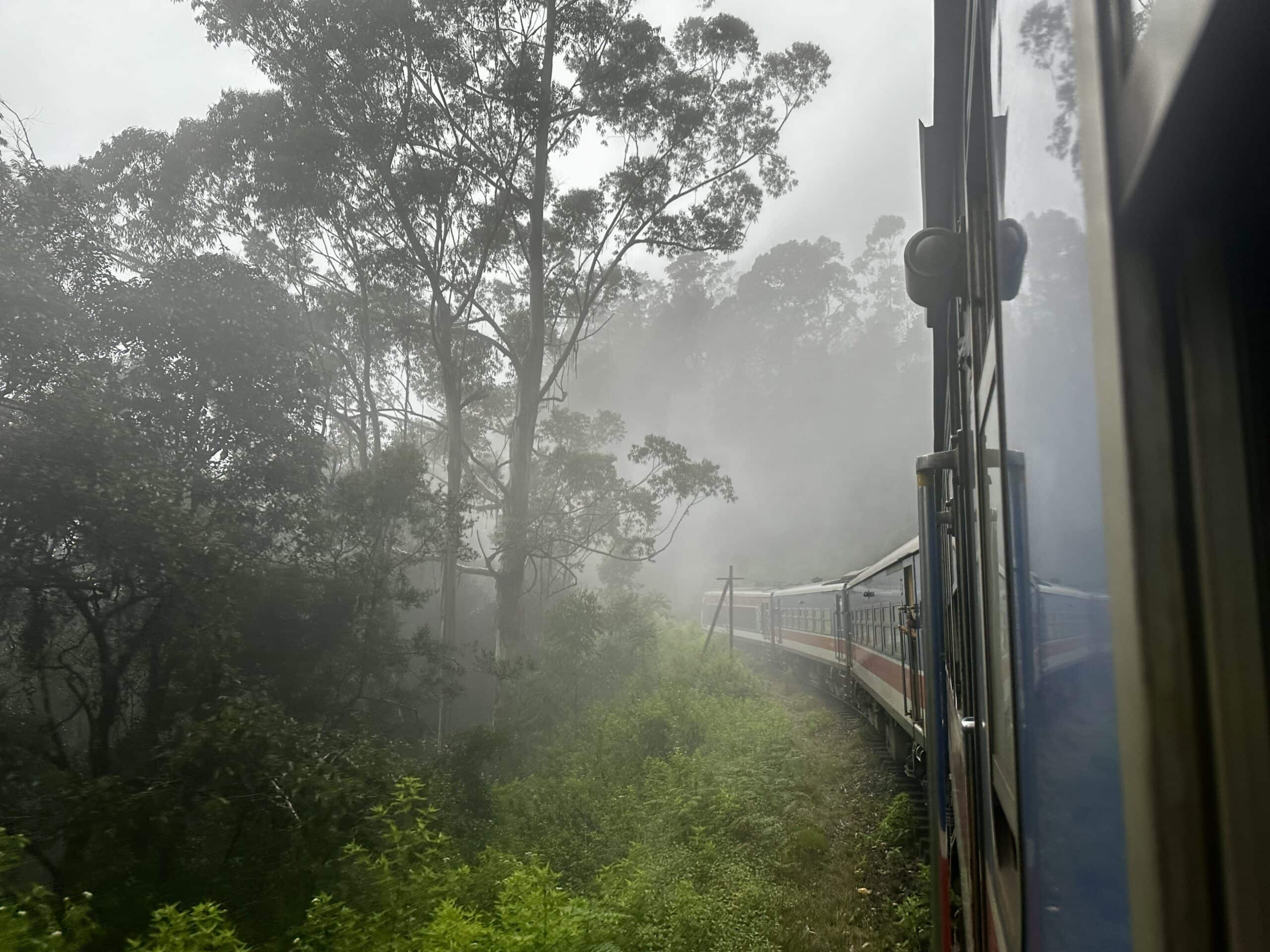
This is why your route matters so much. If you’re constantly jumping between places, you’ll spend more time in transit than actually doing anything.
This is also why we recommend:
- Traveling in one general direction
- Limiting your number of stops
- Building in extra time where possible
Plus, even if it SEEMS like a shorter travel day, you never know what will happen on the way.
One bus ride from Ella to Tangalle should have been about 3 hours, but our bus broke down and we ended up on the side of the road waiting for another for far too long.
Our 3 hour ride turned into more like 5.5 hours by the time we arrived.
Not Understanding Transport Options
Transport in Sri Lanka isn’t difficult, but it’s also not as straightforward as just booking everything online and moving on.
We didn’t fully realise how different each option would be.
For example:
- Trains are great, but you need to book certain routes in advance
- Buses are cheap, but can be very crowded and intense
- Tuktuks are easy, but costs can add up over time
We ended up taking a longer train ride instead of a shorter bus route at the end of the trip because we were just over the crowds.
We also changed up some of our accommodation picks to be closer to town once we realized we’d need a tuktuk to get around.
Overbooking vs Underplanning
This is where a lot of people get stuck. If you book everything in advance, you lose flexibility. If you book nothing, you risk missing out or ending up with bad options.
We’ve done both styles of travel, and for Sri Lanka, a mix worked best.
What worked for us:
- Booking trains and key experiences ahead of time
- Booking accommodation in advance, but with free cancellation
- Leaving space in between to adjust plans
We originally planned to book everything as we went, but quickly realised that good accommodation was getting booked up.
At the same time, having some flexibility meant we could change plans, like when we swapped our safari location 10 days before our booking.
How to Plan a Trip to Sri Lanka Step by Step (Quick Recap)
Figuring out how to plan a trip to Sri Lanka can seem like a lot at first, especially when you’re trying to piece everything together from different guides.

But once you break it down into steps, it’s actually pretty straightforward.
If you’ve followed this guide, you should now have:
- A rough idea of when to go
- A route that makes sense for you
- A plan for getting around
- Accommodation that fits your budget and travel style
- And a mix of things booked in advance with flexibility built in
From here, it’s just about filling in the details.
Plan The Details Of Your Trip
If you want help with the next steps, these guides will walk you through everything else:
⭐️ We’re building these guides based on our full trip — they’ll be linked here as they’re published. ⭐️
Build Your Itinerary
- Sri Lanka Itinerary (All Options)
- 2 Week Sri Lanka Itinerary
- One Month Sri Lanka
Refine Your Route And Activities
- Best Things To Do In Sri Lanka
- 7 Best Places To Visit In Sri Lanka For First-Timers
- Which Beach To Stay At In Sri Lanka
Book And Organise Your Trip
- How To Book Transport In Sri Lanka
- Best Tours And Activities To Book In Sri Lanka (And How To Find Discounts)
- Where To Stay In Sri Lanka (By Area)
Get Prepared
- Backpacking Sri Lanka: Complete Guide
- Sri Lanka Packing List
- What To Eat In Sri Lanka
