
Albanian Buses: 23 Travel Tips You Need to Know
Worried about figuring out Albanian buses – where to catch them, how to pay, or if you’ll even end up in the right town? You’re in the right place.
They might look chaotic from the outside, but buses are the cheapest and most authentic way to get around Albania. Expect budget-friendly fares, plenty of character, and the chance to travel the country just like locals do.
This guide is based on our own experience riding buses across Albania while living in the Balkans. You’ll get practical, up-to-date advice – not outdated timetables – on everything from how to pay to cultural quirks (like why your driver might pull over for a coffee mid-route).
By the end, you’ll know exactly how to navigate Albania’s wonderfully unpredictable bus system like a pro.
And once you’ve got buses mastered, you can use one of our detailed itineraries to plan your adventure:
- A 7-Day Itinerary for First-Timers
- 10 Days in Spectacular Northern Albania
- A Relaxing Week on the Famous Beaches of South Albania
DISCLOSURE: This post may contain affiliate links, which means we may earn a small commission if you book or buy something through them – at no extra cost to you. We only recommend things we’d actually use ourselves. Read more in our Privacy Policy.
Real Talk: Before We Start
Let’s be honest – the best way to get around Albania is by car (we know, we know, this is a guide to buses in Albania, sorry!!!).
But Balkan driving isn’t exactly chill. If hairpin mountain roads, minimal signage, and make-it-up-as-you-go traffic laws don’t sound like your thing, buses are a solid plan.
👉 Check Rental Car Prices in Albania
That said, traveling Albania by bus is totally doable – we’ve done it more than once and it’s still the most popular (and affordable) way to travel around Albania.
You won’t be able to stop in every tiny village on a whim, but you can reach most major highlights (and even a few hidden gems).
And if you’re craving something further off the beaten path, taxis or day tours can usually fill the gap.
PS: These tips definitely apply to Kosovo too, and a lot of them carry over to other Balkan countries like Montenegro, Bosnia and Herzegovina, and Serbia.
1. You Can’t Pre-Book Most Buses in Albania
With the exception of a few companies, most Albanian buses still run on a “just show up” system.
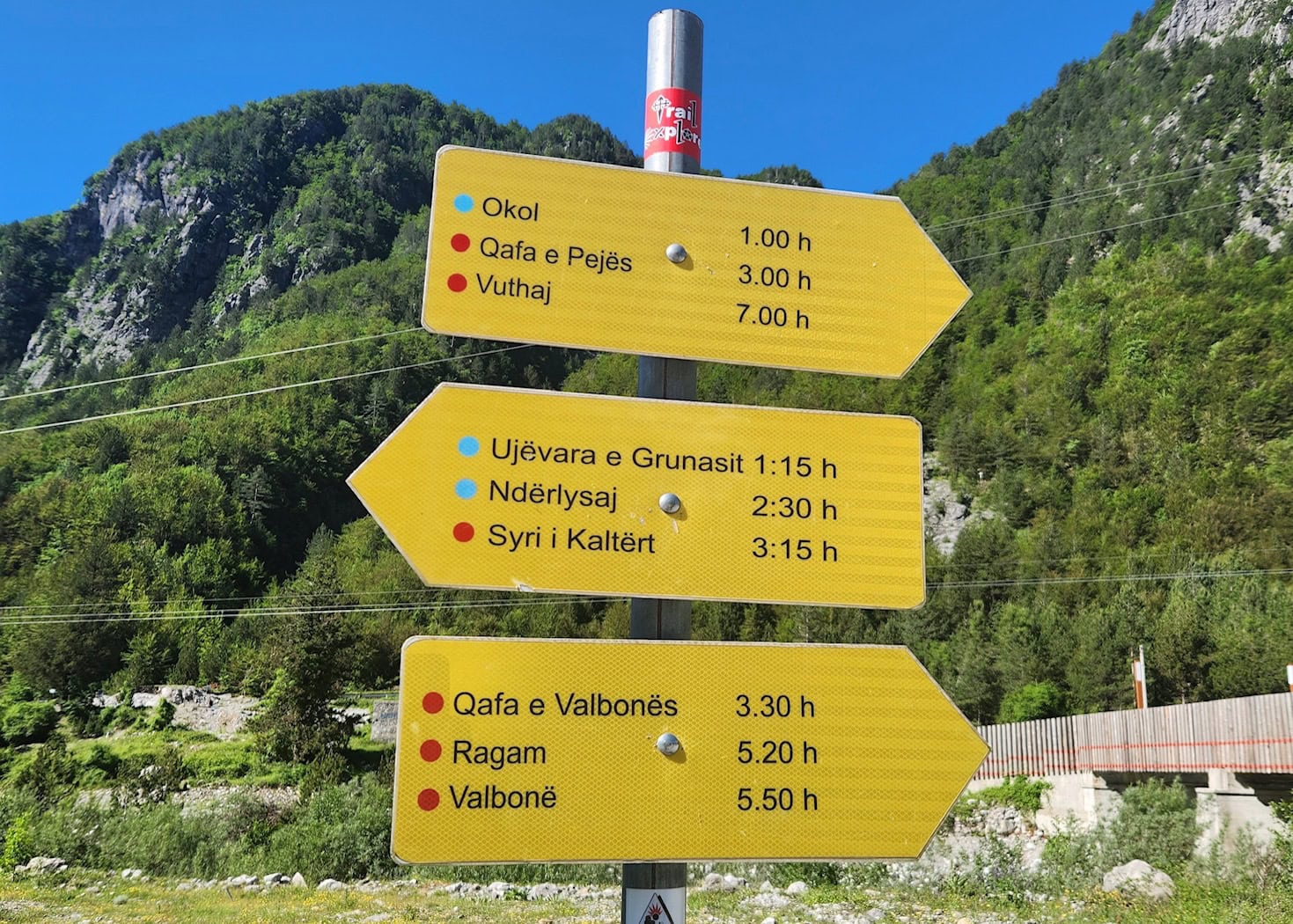
There are rough timetables for popular routes like Tirana to Durrës or Sarandë, but smaller lines will often just leave when the van fills up.
📌 Starting in Tirana? Read our travel guide to the capital.
That said, a few bus companies have caught on (honestly, smart move with the rise in foreign tourism) and now allow pre-booking through sites like 12Go.
For example, if you’re heading to the Albanian Alps to hike the Valbona Pass, you can book your bus from Tirana to Shkodër in advance.
Once you get to Shkodër, though, it’s back to the usual – either book through your guesthouse, or just show up to catch the ride to Theth or Valbona.
You can check which routes are available here: Buses around Albania
2. Bus Timings are… Fluid
Especially in the off-season, your best bet is still to check locally for bus timings. Sure, sites like Gjirafa (another local timetable & booking site) and the occasional rogue Facebook page exist, but honestly?
Nothing beats asking a real live human. In high season, you might luck out with more buses than expected.
In low season? You’ll need a flexible schedule, a backup plan, and the emotional stability to handle a last-minute curveball.
TOP TIP: If you’re traveling off-season (or just unsure), go to the bus station the day before and check the schedule in person. Trust us – learn from our mistakes.
3. Kombis (aka Furgons) are a Thing
Shorter distances are often covered by kombis (also called furgons), aka shared minivans. They don’t leave until they’re full(ish), so bring your patience along with your backpack.
This usually isn’t a huge issue if you’re going between popular spots, but if you’re bouncing between smaller villages, be prepared to wait a while.
4. Bus Stations are Rarely Central
Many Albanian cities are OLD (much like most of Europe), with narrow, windy, cobblestone streets. So no, you probably won’t be rolling up to a shiny terminal in the city center.
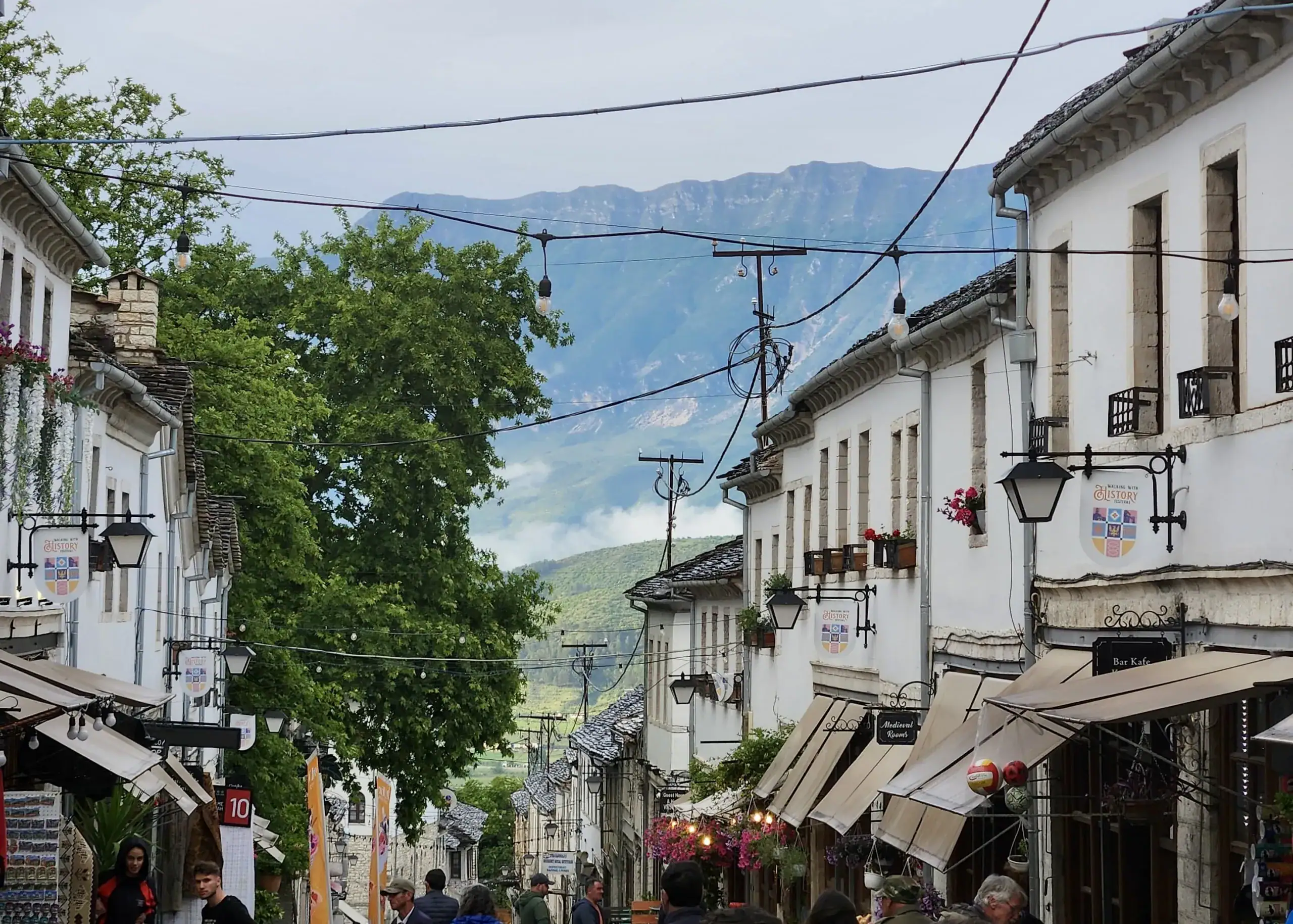
Albanian buses often leave from informal lots on the outskirts of town. Budget for a taxi or a local bus to get there – or be mentally prepared for a 30-minute walk with your backpack.
If the city is big enough, there’s sometimes a local bus from the historic center. That’s definitely true in places like Tirana, Saranda, and Berat. We’ll cover local buses more in Section 5.
Related: The Best Things To Do in Berat (+ more info on local buses)
5. Buses May Stop Randomly for Coffee
Yes, that’s a real thing. On longer rides, the driver might casually pull into a roadside café for a break. You’ve usually got 10–15 minutes. Use the bathroom. Grab an espresso.
But don’t wander too far – while the bus attendant will probably glance around to make sure no one’s missing, don’t count on being remembered (lol).
If you’re traveling solo, it’s a good idea to buddy up with another traveler and keep tabs on each other. Also, coffee stops usually mean the drive is longer than whatever time estimate you saw online.
We always add an extra hour to any schedule just to be safe. It’s basically the same vibe as traveling in Asia or South America – except now you’re on Balkan time.
Check out all of our favorite Albanian dishes here – so you know what to grab for lunch on your coffee break stop!
6. How to Pay for Albanian Buses
Sometimes it’s the driver, sometimes a separate attendant, but someone will come around asking where you’re going and tell you the price.
Be prepared for a slight tourist markup – but it’s still super affordable.
Try to have small change on hand because they may not be able to break big bills, and you might have to wait until more people pay so they can give you your change.
➡ Related: Get our itinerary for 5 days in Albania – the perfect intro to one of our favorite countries!
7. Cash is King
You’ll usually pay in Albanian lek, but sometimes Euros are accepted – just ask. Don’t be surprised if your change comes back in a confusing mix of both. This is normal. Just go with it.
TOP TIP: Don’t leave Albania with lek – it’s hard to exchange outside the country, and you’ll be stuck with useless cash. Also, paying by card is not a thing on buses here (and probably won’t be for a while), so don’t even try.
8. No Ticket? No Problem
Most of the time, you won’t get a physical ticket. Just pay the attendant when they come around. It’s informal but somehow weirdly effective.
The bus attendant will remember who’s paid and who hasn’t – it’s actually so impressive.
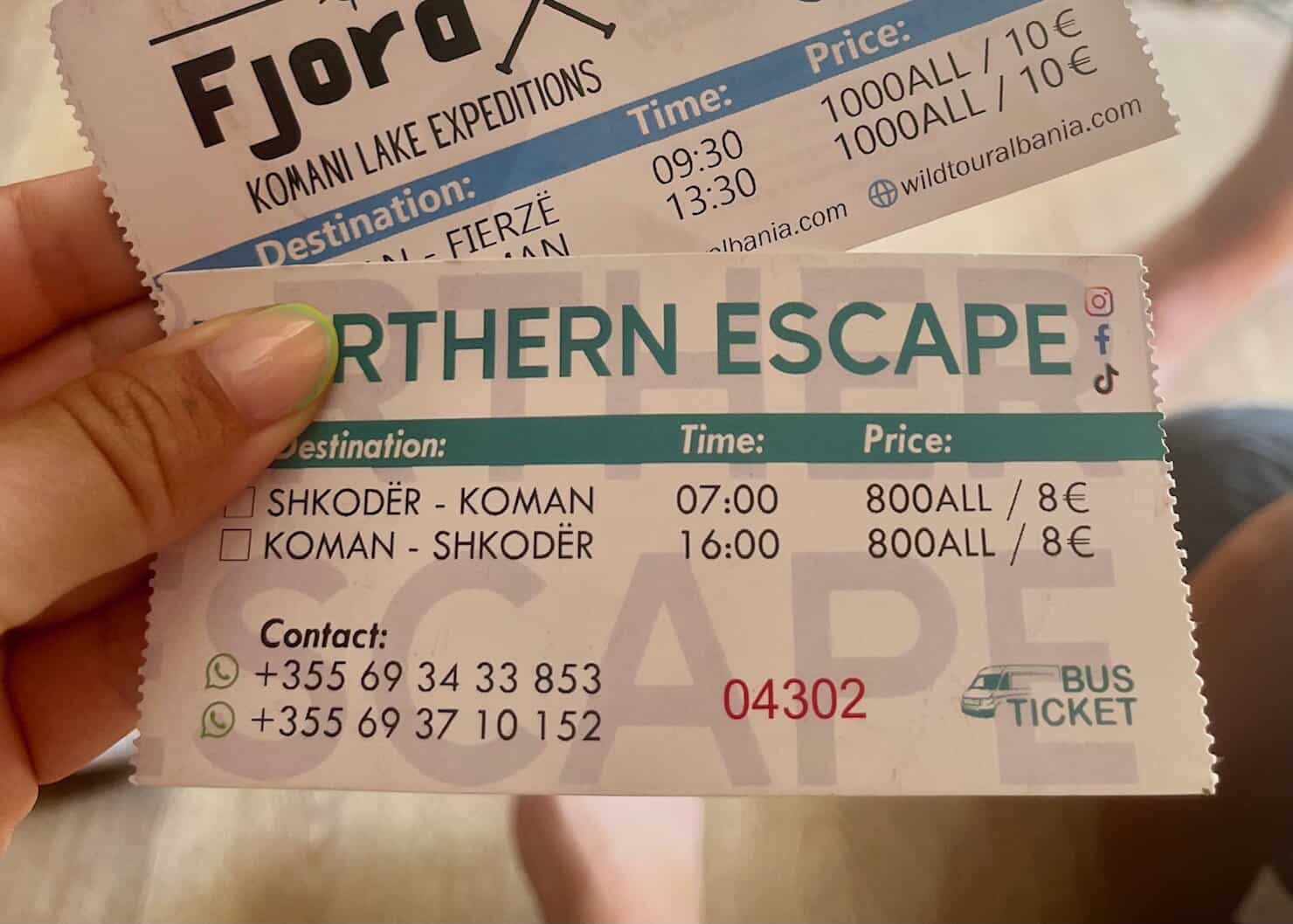
Occasionally, on longer or international routes, you might get a tiny printed ticket. Just keep it in your bag or pocket – you probably won’t be asked for it again unless there’s a change of staff.
TOP TIP: The word for “ticket” in Albanian is billeta – so if someone comes around asking for it, that’s what they’re saying.
9. Popular Routes Exist – But Don’t Expect Signs
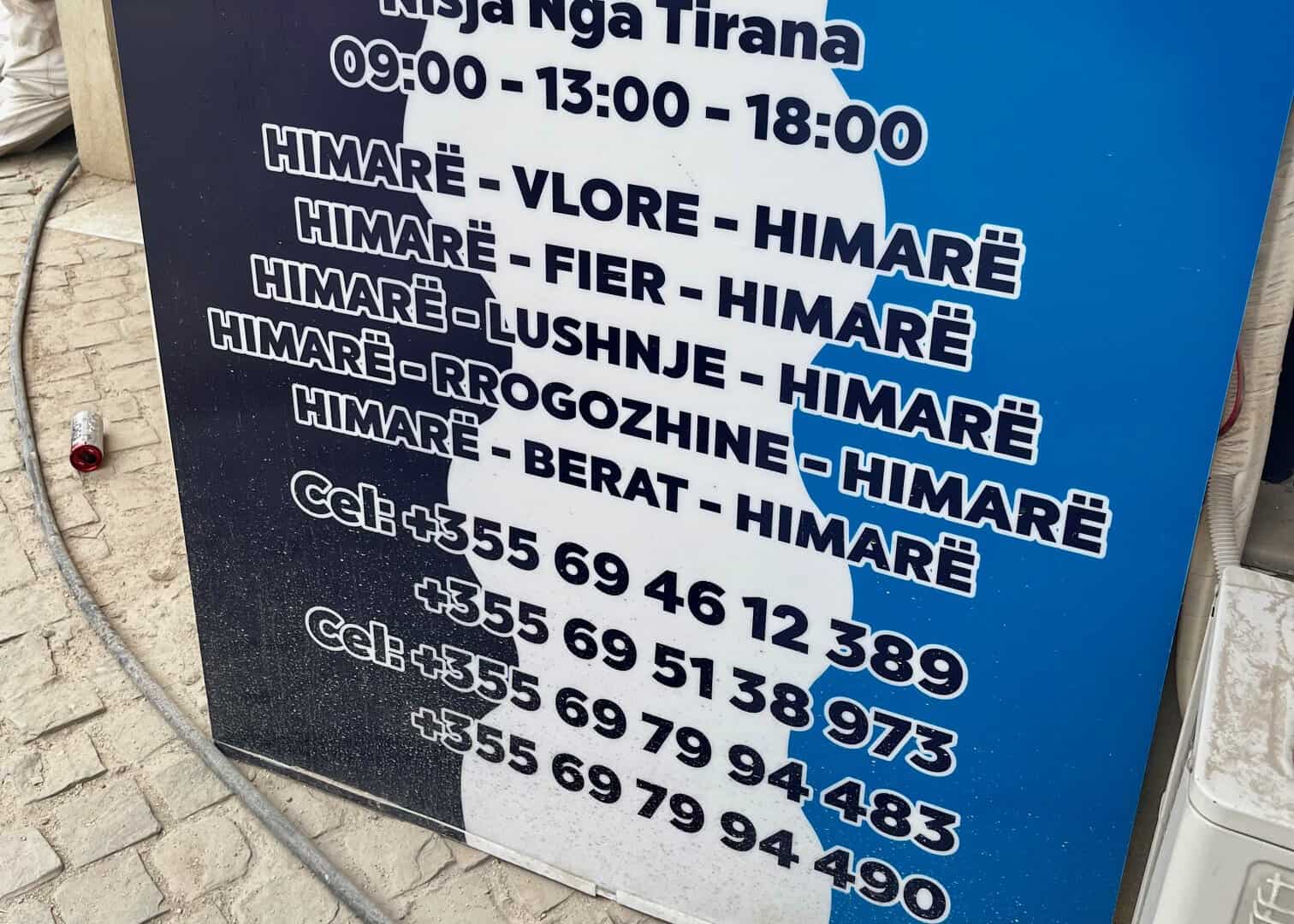
Tirana to Saranda, Berat to Gjirokaster, Shkoder to Valbona… these routes are fairly standard. But clear signage? Don’t count on it.
Sometimes it’s in Albanian, sometimes it’s a handwritten paper stuck in the front window, and sometimes it’s just… vibes.
Your best bet? Confirm with the driver or another passenger. Don’t be shy about it.
Many cities and towns are serviced by buses that are continuing on a longer route, so your exact stop might not even be listed on the front.
But Albanians are incredibly helpful, and tourists do stand out – so just say your destination out loud and someone will 100% point you to the right bus.
We’ve winged it more times than we can count and we’ve always made it to where we were going. Someone will help you – always.
Heading to Gjirokaster? Read our complete guide to the city here.
10. You Might Have to Transfer… On the Side of the Road
To keep things moving “quickly,” some longer routes are broken into chunks. That means you might be dropped off on the side of a road to catch another van.
Himare to Berat, for example? That one involves getting let off on a random stretch of highway and waiting for another bus to scoop you up.
It’s weird. It’s normal. Don’t panic.
The second driver will know why you’re there, and the first one might even give you a heads-up (ours did – in rapid Albanian – but Julia translated for the confused group of travelers, and all was well).
➡ Related: Find all the best beaches in Himarë + local tips with our full guide to the city.
11. Save Your Seat Early
If you’re the type who needs a window seat or can’t handle the back row over the wheel well, you’ll want to show up early.
There’s no such thing as seat assignments, so it’s first come, first claimed. Toss your sweater, backpack, or a bag of chips on your preferred seat and you’re golden – people will respect it.
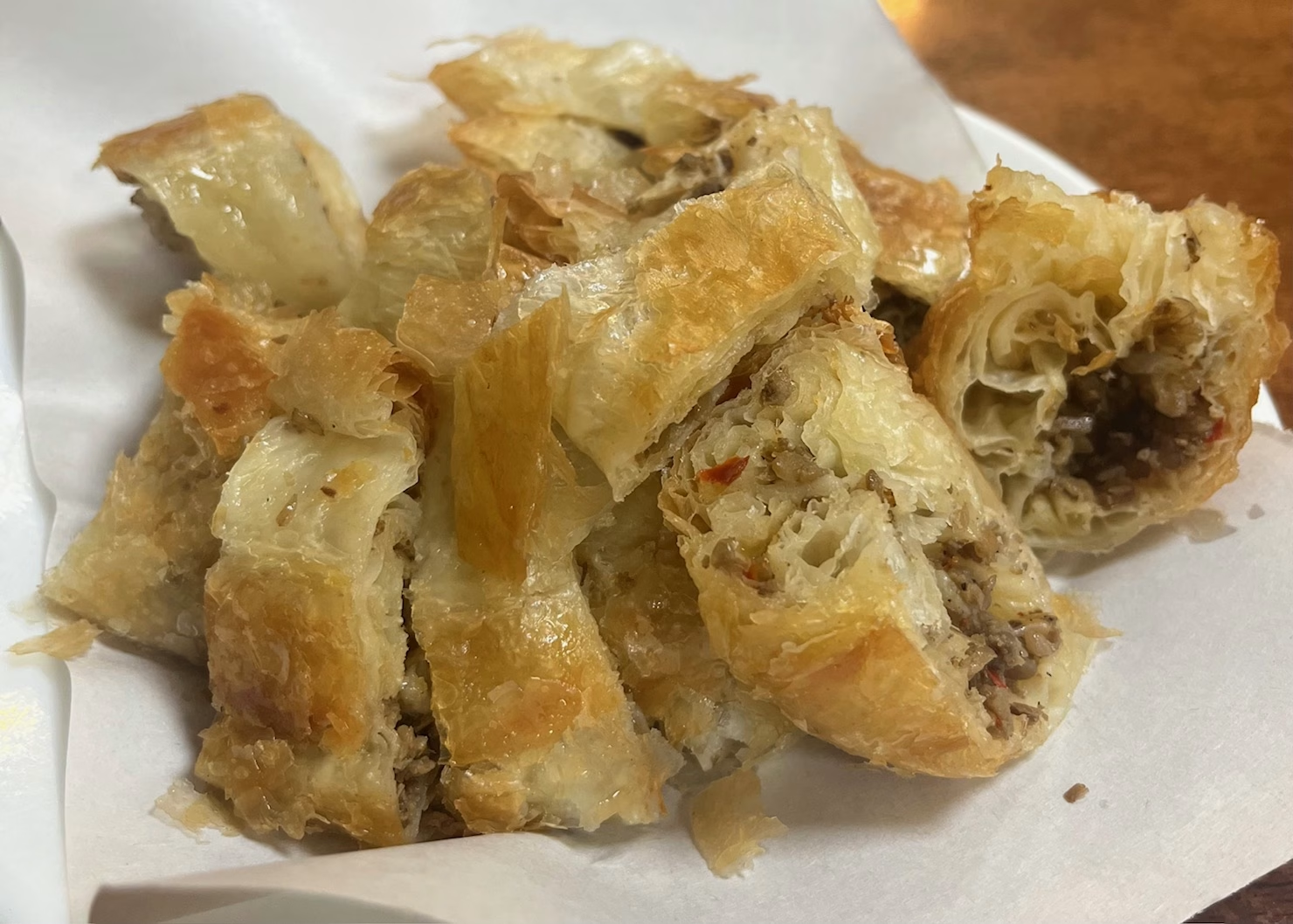
Most stations have little cafés or kiosks, so you can grab a snack or espresso after claiming your spot. Just be back on the bus 10–15 minutes before departure. When in Albania, do as the Albanians do!
Important exception: If you’re on a furgon (shared van) that’s waiting to fill up before leaving, don’t wander off. You will get left behind if the driver decides it’s full enough and you’re not there.
12. Some Routes are Extra Bumpy
Looking at you, road from Shkoder to the Komani Ferry terminal. It’s hands-down one of the bumpiest rides in the country – but also one of the most beautiful.
Definitely pop a motion sickness pill if you’re sensitive.
We’re hoping this road gets repaved soon – it’s the main route to the start (or end) of the Theth-Valbona hike, which is getting more popular every year.
But until then, just be prepared: Albania is mountainous, and the roads can be rough.
Traveling to Theth? Make sure you pick the best place to stay in town with our top recommendations (based on your travel plans!).
13. Albania is Mountainous – Pack Motion Sickness Meds
On that note: drivers in Albania don’t mess around. The roads are twisty, the mountains are high, and the gas pedal is apparently just a suggestion.
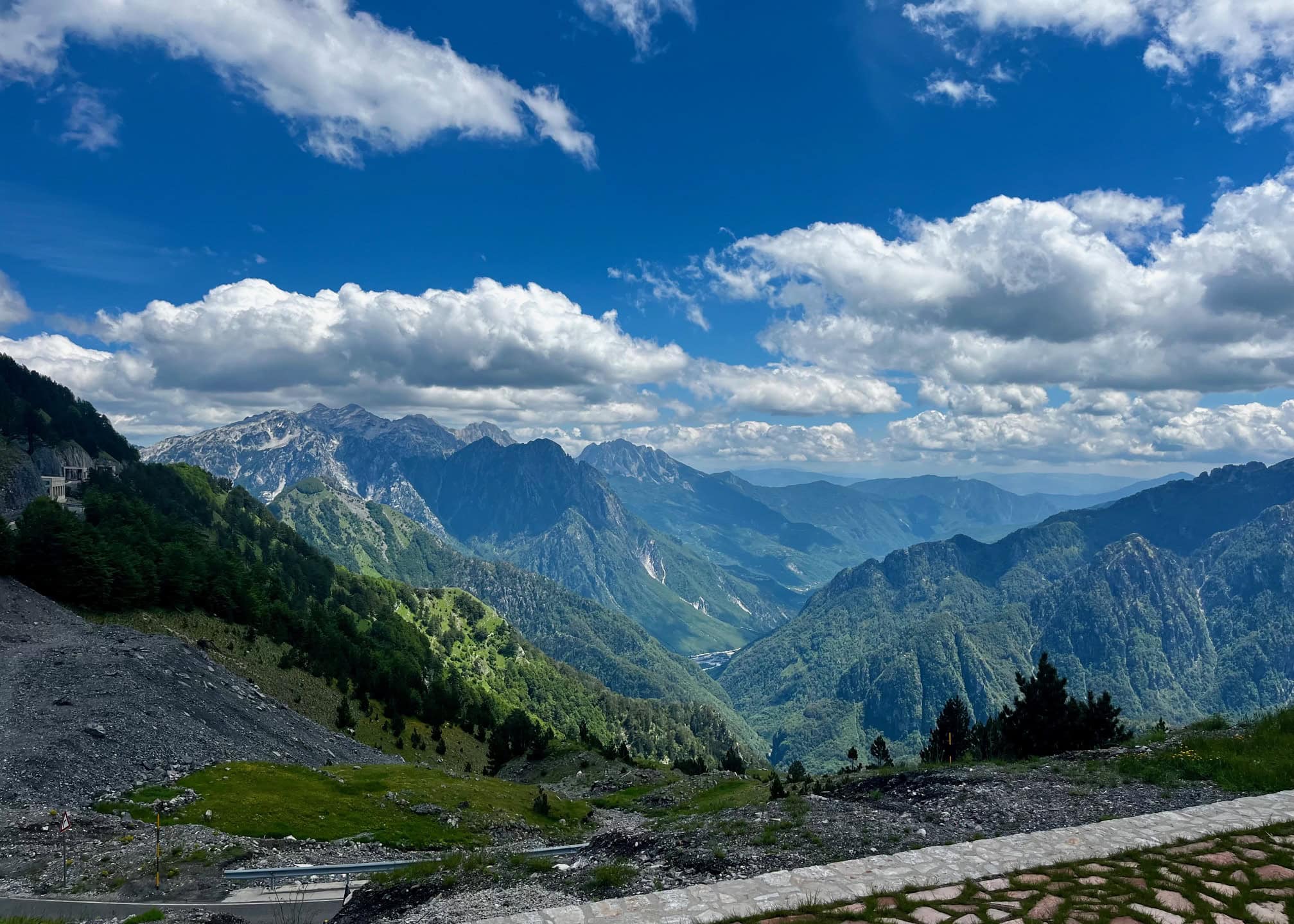
If you’re prone to motion sickness, check your route ahead of time – if it snakes through the mountains, take the meds.
We’ve been eternally grateful to be drugged up while other poor souls around us are breathing deeply with their eyes closed (and missing out on some truly epic views).
Just be prepared and you’ll have a way better time.
14. No Toilets On Board
There are no bathrooms on buses, so those cafe stops? Use them wisely. Bring tissues and hand sanitizer for the random roadside squat situation.
Sometimes that coffee break we mentioned earlier is the toilet break, but sometimes it’s only a toilet break – no espresso in sight.
If your bladder isn’t super strong, go every time you stop. And remember: you might be bouncing around for hours.
15. Luggage Goes Wherever it Fits
On bigger buses, luggage goes underneath like you’d expect. But on furgons (shared minivans), it’s more of a “wherever it fits” vibe.
Under the seat, on your lap, crammed behind the last row – there’s no system and definitely not much luggage storage.
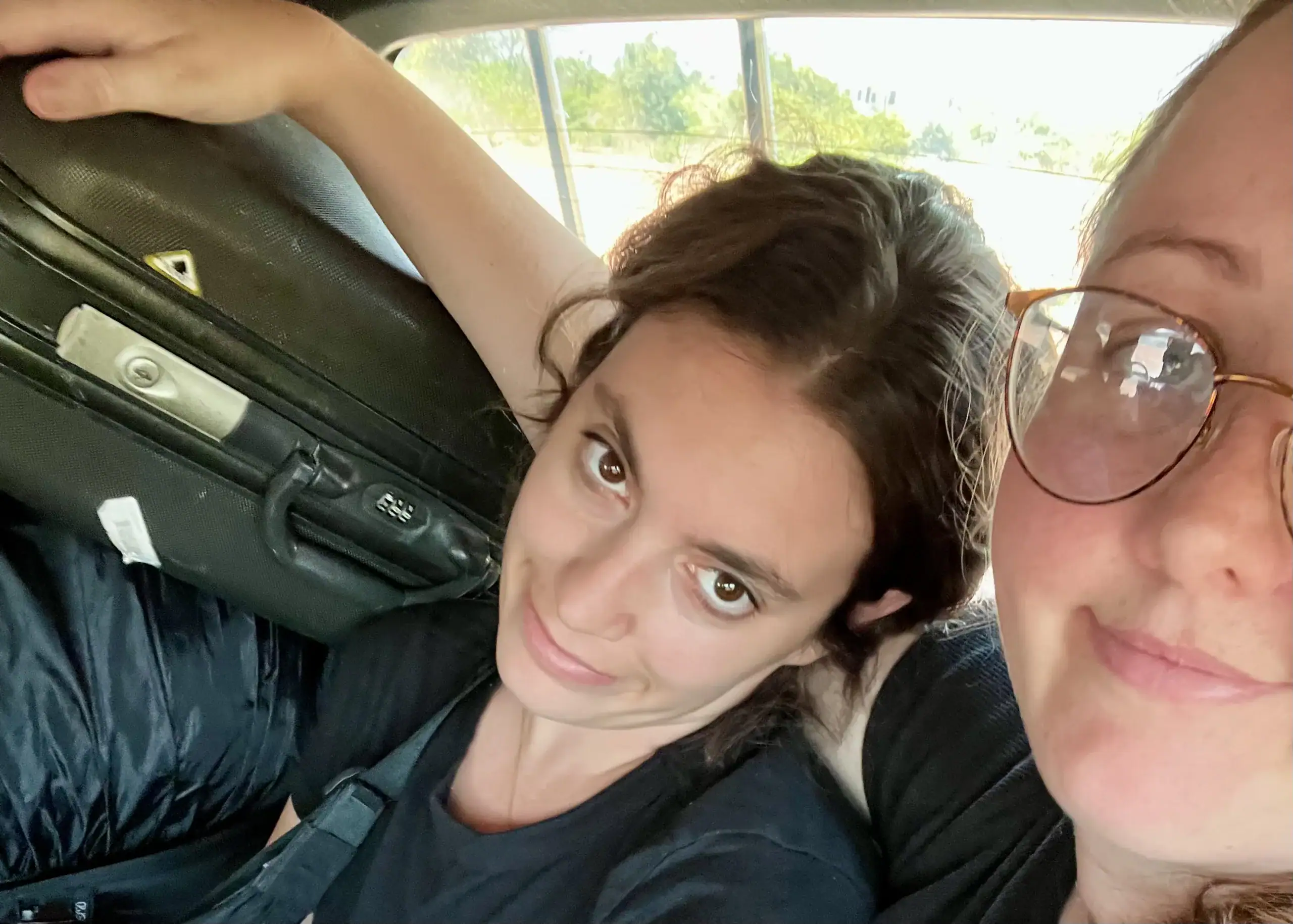
These vans were made for locals with small bags, not backpack-toting tourists. Be ready to sacrifice your legroom or cuddle your pack for a few hours.
Bigger buses won’t have this problem, but if you’re taking a furgon, lower your expectations.
➡ Related: How to spend a perfect 10 days in Albania (complete itinerary)
16. Smoking Might Happen
Technically illegal. Occasionally ignored. It’s not common, but if your driver lights up mid-drive, don’t be shocked. We’ve had it happen more than once. It’s not exactly pleasant, but… this is Albania.
And hey – if it’s keeping the driver awake and alert, we’re not going to argue. Just chalk it up to cultural differences and crack a window if you can (they definitely will).
17. Don’t Expect AC to Always Work
Sometimes buses have it. Sometimes they don’t. Sometimes it’s there but they just don’t turn it on. Dress in layers and pray for open windows if you’re traveling during summer high season.
That’s it. That’s our advice.
18. Inner-City Buses in Tirana are on Google Maps Now
If you’re trying to get around Tirana, you can see bus routes and stops on Google Maps. Just keep in mind that the stop names and locations don’t always match up perfectly in real life.
Also – don’t trust the timings. It’s more useful for figuring out which bus goes where than when it’ll actually show up.
19. Local Buses Work Differently
You might pay as you get on, or buy a ticket from a kiosk beforehand. Sometimes an attendant comes around to collect fares once you’re on board. Just watch what locals do and follow their lead.
Inner-city buses are super budget-friendly – expect to pay around 40 lek (about 40 cents), give or take. This is true for Tirana as well as cities like Berat and Saranda that also have city buses.
20. Don’t be Afraid to Ask
Drivers, fellow passengers, random shopkeepers – just say the name of the town you’re going to and someone will definitely help. Albanians are absurdly helpful, even if their English is limited.

Don’t stress about having the perfect pronunciation if you’re asking about a city – say it with confidence (or pull up a map on your phone) and someone will usually walk you right over to the correct van.
We’ve even had people call the driver for us or walk us across a parking lot to make sure we got on the right bus. Iconic behavior.
Planning a visit to South Albania? Read our guide to the best beaches, castles, and cultural experiences here.
21. There’s No Shame in Double-Checking
Confirm your destination before you get on – especially if there’s no sign on the front (which is often). Say the name of the town and make sure you get a nod or a “po” (yes in Albanian).
And when you’re getting off? Confirm that too. If your stop isn’t the final destination, don’t assume the driver will remember. A quick “Himarë?” or “Gjirokaster?” when you’re getting close goes a long way.
We’ve been on buses where the driver had to slam on the brakes because someone didn’t say anything until they realized they missed their stop. Learn from them. Reconfirm. Don’t worry, it’s not annoying.
22. Roads are Improving (But Still Slower than Google Says)
Compared to our first trip in 2017, things are dramatically better. New highways and paved roads are going in all the time, especially around major tourist routes.
But still, travel times in Albania almost always take longer than Google Maps claims – even if you’re driving yourself.
Secondary roads are still a mixed bag: potholes, gravel, unexpected construction zones, and slow-moving tractors are all part of the charm.
For example, the road between Permet and Gjirokaster is stunningly scenic but still has enough rough patches to turn a two-hour drive into three.
And if you’re heading to smaller villages or mountain areas, definitely pad your travel time.
23. Be Flexible or Go Somewhere Else
Albania is for travelers who can go with the flow. If your itinerary is color-coded and you break into hives if a bus is 20 minutes late… maybe Croatia or Slovenia is more your style.
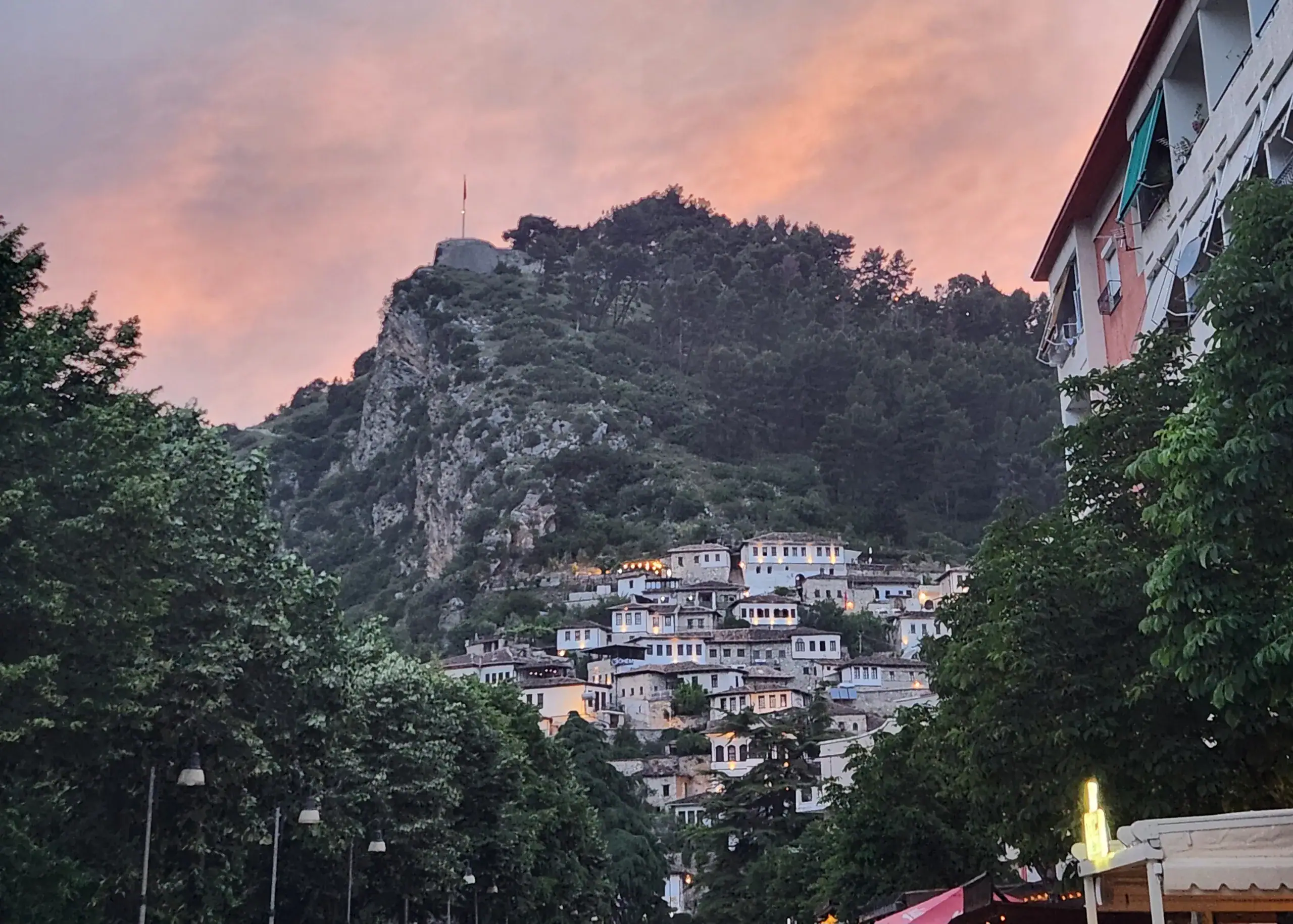
This is a country where the driver might stop for coffee, the van might not leave until it’s full, and your transfer could involve standing on the side of the road for a bit.
But if you’re down for the chaos – with a dash of mountain views and the most generous strangers you’ll ever meet – you’ll be just fine.
The magic of Albania is in the unexpected.
Other Ways to Get Around Albania
So you’ve read all of our tips and decided that winging it at roadside bus stops or getting cozy in the back row of a furgon isn’t for you.
Fair enough. Here are your other options – and the pros, cons, and real talk that come with each:
Rent a car
This is by far the best option for flexibility, especially if you’re short on time or want to hit up remote beaches or small mountain villages where public transport just doesn’t reach (or would take a full day and several kombis).
Driving in Albania isn’t that bad, but it’s not for the faint of heart either. Expect aggressive overtaking, random livestock in the road, and the occasional van barreling toward you around a blind curve.
A small SUV is ideal (but any car will be fine, really) – helpful for rougher roads and the occasional off-road parking situation.
Google Maps is decent, but remember what we said about drive times being optimistic.
👉 Check rental car prices in Albania here 👈
Taxis & shared rides
Definitely faster than the bus, and while more expensive, it’s still pretty affordable by Western standards – especially if you’re splitting the ride.
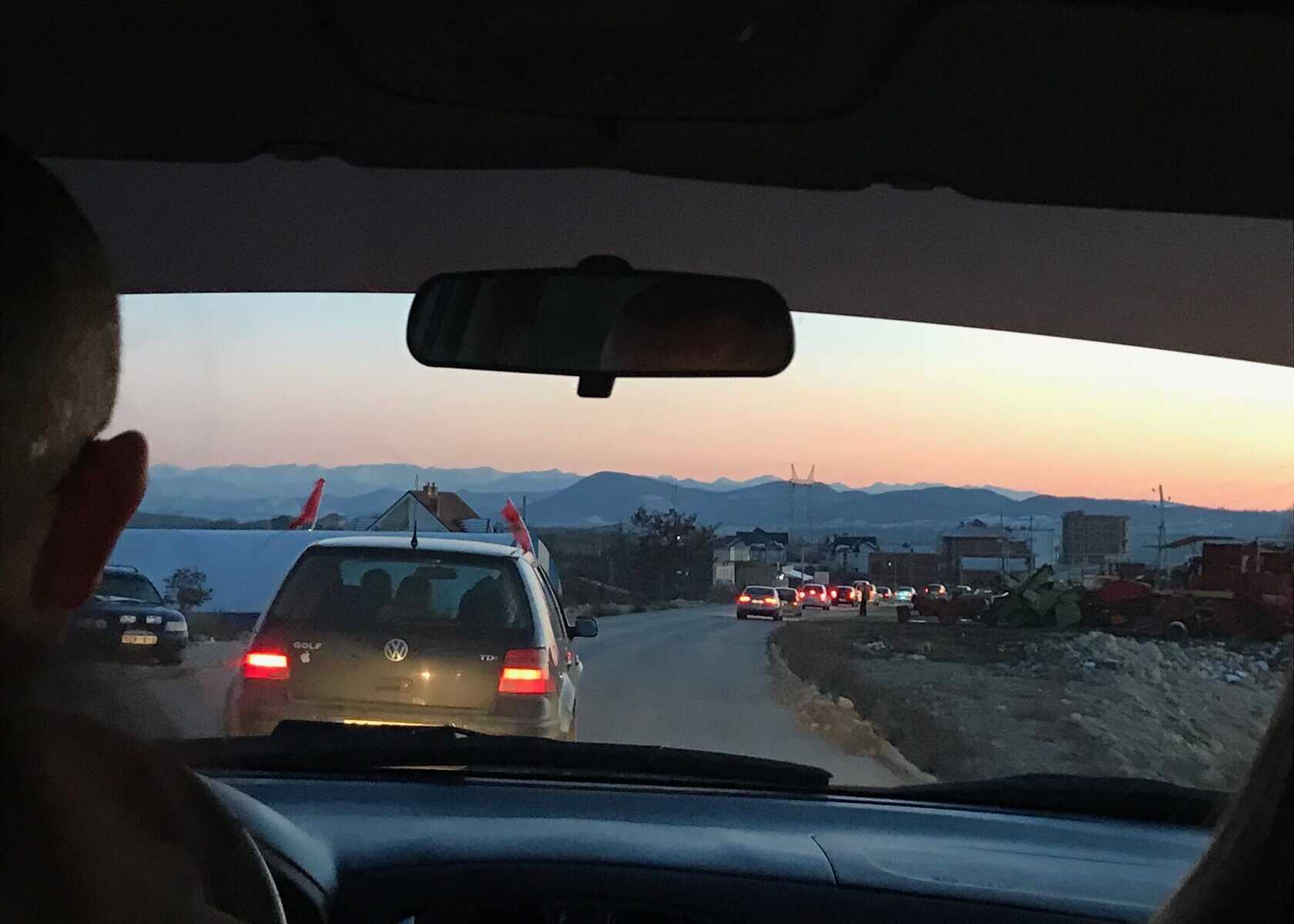
You can often negotiate directly with drivers, or ask your guesthouse to arrange a fixed-price transfer.
For popular routes (like Saranda to Gjirokaster or Shkoder to Theth), many travelers connect and share a ride to cut costs. Facebook groups and hostels are great for this.
Hitchhiking
Totally a thing in Albania. It’s relatively safe and even pretty common, especially in rural areas where buses are sparse.
Albanians are famously hospitable and many will happily give you a lift just to chat or help you out.
That said, it’s still hitchhiking – use your judgment, go with someone if you can, and don’t count on it as your Plan A if you’re on a tight schedule.
Also, don’t be surprised if the driver refuses payment, but it’s polite to offer.
Using Albanian Buses in Your Albania Itinerary
Now that you know how to navigate Albanian buses with confidence, it’s time to put that knowledge to use in your trip planning.
Buses connect nearly every corner of the country, making it easy (and affordable) to explore without a car.
To help you turn routes into a full journey, check out our detailed itineraries that show exactly how to link destinations together:
- A 7-Day Itinerary for First-Timers – the perfect intro to Albania’s highlights
- 10 Days in Spectacular Northern Albania – mountains, valleys, and alpine villages
- A Relaxing Week on the Famous Beaches of South Albania – sun, sea, and laid-back charm
With the right plan, Albania’s wonderfully unpredictable bus system isn’t just transportation – it becomes part of the adventure.
